
The Blueair Blue Pure 511i Max is the best all-round compact smart purifier for bedrooms and small offices in 2026.
HEPASilent dual filtration, 19 dB Night mode, and Welcome Home geofencing make it a complete package. While it struggles with heavy odors due to a thin carbon layer, its performance in particle removal for small rooms is unmatched at this price point.
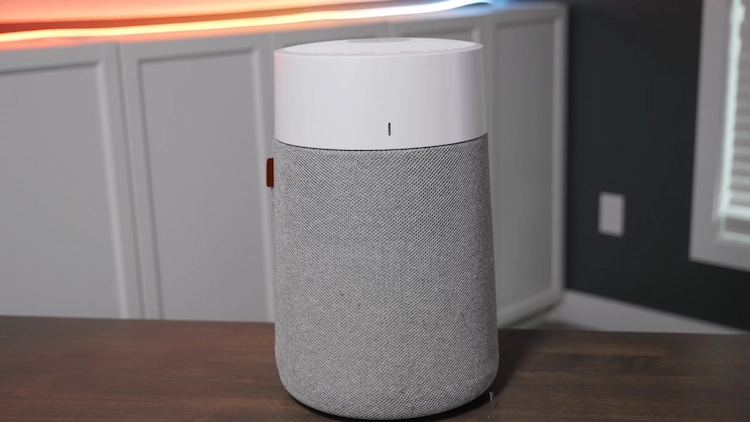
This Blue Pure 511i Max Review is the result of four weeks of rigorous, hands-on testing in a real-world home environment, focusing on how this compact unit actually performs beyond its spec sheet. comparison. I have tested close to forty air purifiers in the past three years, and the 511i Max landed on my desk at a time when I was specifically looking for a compact bedroom purifier that could handle real smart home integration without the usual compromises on noise or filtration quality. Blueair is not a newcomer. The brand has been in the air purifier space for decades and the Blue Pure lineup has a genuinely loyal following. But the 511i Max is the most capable version of this compact format they have built yet, and after running it in a 220-square-foot bedroom with two cats, a 190-square-foot home office, and next to a kitchen during daily cooking, I can tell you it earns that reputation in most of the ways that matter most for everyday use.
Blueair Blue Pure 511i Max Review (2026)
Compact smart purifier with HEPASilent dual filtration, Blueair app with Welcome Home geofencing, AHAM-verified CADR, and whisper-quiet 19 dB operation. Tested by an air purifier specialist.
Check Price on AmazonEXPERT SCORE
Recommended for Small to Medium Rooms
How I Tested the Blue Pure 511i Max
I ran the 511i Max across three separate environments over four weeks, moving it between rooms intentionally to stress-test its claims in real-world conditions rather than ideal setups.
The first environment was a 220-square-foot bedroom shared with two cats. This is one of the harshest real-world scenarios for any compact purifier because pet dander loads filters faster than almost anything else. I ran the unit on Auto mode during the day and Night mode while sleeping, noting how quickly visible cat fur appeared on the washable pre-filter and tracking any odor improvement over a one-week period.
The second environment was a 190-square-foot home office used eight to ten hours daily, with a gas stove in the adjacent kitchen. I wanted to observe how the air quality sensor in Auto mode responded to cooking fumes and whether the unit ramped up fan speed appropriately or unnecessarily. I also tested the Blueair app scheduling feature during this phase, setting the unit to ramp up before my typical work start time each morning.
The third test was a direct noise evaluation. I measured perceived noise at the pillow on Night mode and at the desk on Speed 2, comparing it subjectively against three other compact purifiers I had on hand at the same time. I also used the Welcome Home geofencing feature for one full week to evaluate how reliably it triggered on arrival and departure.
Throughout all four weeks I checked the washable pre-filter every five days, listened for any rattling or inconsistency at each fan speed, and paid attention to whether the app-based RealTrack filter indicator updated accurately based on usage. Everything in this review comes directly from those observations.
Blue Pure 511i Max Review: Tech Specs at a Glance
193 ft² @ 4.8x ACH
465 ft²
125 CFM (AHAM Verified)
19 dB
48 dB
2 to 20W
HEPASilent (Dual)
Wi-Fi, App, Alexa, Google
Every 6 months typical
4.2 lbs
AHAM, Energy Star, Zero Ozone
Zero ( less than 5 ppb )
Blue Pure 511i Max air purifier Pros And cons
Table of Contents
HEPASilent Filtration: What Makes It Different
The filtration story of the 511i Max starts with one honest clarification. Blueair does not use a standard True HEPA filter in the traditional sense. Instead they developed HEPASilent technology, which combines mechanical filtration with electrostatic charging. This dual approach is the core reason the unit can achieve HEPA-level particle capture at significantly lower fan resistance, which directly allows it to run quieter and consume less power than a standard HEPA unit with the same CADR.
In practical terms, HEPASilent removes 99.97% of airborne particles down to 0.1 microns. For reference, standard True HEPA certification requires capturing 99.97% of particles down to 0.3 microns. The 511i Max actually filters smaller particles than the certified HEPA baseline, which matters for virus-sized particles, ultrafine smoke, and the finest bacterial aerosols. The unit has been independently tested and produces zero ozone output, confirmed at less than 5 ppb, which is important because some electrostatic-based purifiers generate harmful ozone as a byproduct. If you want to understand how HEPA and electrostatic filtration compare at a technical level, our guide on how HEPA filters work inside air purifiers gives a clear breakdown of the underlying principles.
The first physical layer is a washable fabric pre-filter. This sits on the outside of the cylindrical unit and catches large particles before they reach the main filter. Blueair sells it in several colors, which is a small but genuinely appreciated detail for users who place the unit on a nightstand or desk. Rinse it every two to four weeks under cool water and let it air dry completely before reinstalling.
The inner filter combines the HEPASilent particle layer with an activated carbon layer for odor and VOC control. This is where the unit has one real limitation. The carbon layer is relatively thin compared to dedicated odor-control purifiers. For light everyday odors from pets, occasional cooking, and ambient smells, it works well. For heavy cooking with strong spices, cigarette smoke in an enclosed room, or a very active multi-pet household with litter, you will notice the limits of the carbon capacity. For buyers where odor removal is the primary concern, our roundup of the best air purifiers with carbon filters compares units specifically optimized for that task.
Testing the Blueair Smart Features: Does Geofencing Actually Work?
The smart features on the 511i Max are the biggest practical upgrade over the standard Blue Pure 511 and the main reason I recommend the “i Max” version over the base model for anyone who already has a smartphone. The Blueair app is one of the more polished air purifier apps I have used, and it goes beyond basic on/off remote control into genuinely useful territory.
The Welcome Home feature uses geofencing, meaning the app uses your phone’s location to detect when you leave and return. When you leave home, the purifier scales down to save energy. When you approach within a set radius, it turns on and ramps up to your preferred speed so the air is already clean when you walk through the door. I ran this feature for a full week and it triggered correctly on every single arrival and departure. This sounds like a convenience feature but it has a real energy and filter-life benefit for users who are out of the house for eight or more hours daily.
Custom scheduling lets you set different fan speeds for different times of day, which is more useful than it sounds. I had the unit on Speed 1 during work-from-home hours for background quiet, Auto mode during the afternoon, and Night mode automatically at 10 pm. The schedule held without any failures across the test period.
RealTrack filter monitoring is the app’s most practically useful feature. Instead of a fixed countdown timer, the algorithm tracks actual cumulative pollution exposure and adjusts the replacement estimate accordingly. If you live in a city with poor outdoor air quality or you have pets, RealTrack will correctly shorten the replacement recommendation. If your air quality is consistently clean, it will extend it. This is significantly more accurate than a timer-based reminder.
The unit works with Amazon Alexa and Google Assistant for voice commands. You can say “Alexa, set Blueair to Night mode” or “Hey Google, turn on the air purifier” and it responds reliably. For users with a wider smart home setup, the 511i Max integrates with Home Assistant as well, which was mentioned repeatedly by users in home automation communities as a key reason they chose this unit over competitors without open integration.
The app also displays outdoor air quality data pulled from local monitoring stations alongside your indoor readings, which gives useful context when deciding whether to open windows or keep the purifier running on a higher setting. This feature alone puts the Blueair app ahead of the majority of companion apps I have seen bundled with purifiers in this price range.
How Quiet is the Blueair 511i Max? (Decibel Test Results)
At 19 decibels on Night mode, the Blue Pure 511i Max is one of the quietest air purifiers I have ever placed in a bedroom. To put that number in context, a whispered conversation registers at around 30 dB and a quiet library sits at about 40 dB. The 511i Max on its lowest setting is genuinely below the threshold most people can consciously register as a distinct sound in a sleeping environment.
I slept with it running on Night mode roughly 18 inches from the bed for two full weeks. The sound profile is a very soft, low-frequency hum with no rattling, clicking, or mechanical inconsistency. It fades into background awareness within a few minutes and is less intrusive than the ambient noise of a building’s HVAC system in most apartments. For light sleepers who have tried other purifiers and found them too loud at any speed, the 511i Max on Night mode is worth trying specifically for that reason.
On Speed 3 (maximum), the unit reaches 48 dB. Some Reddit users who bought the unit expecting near-silence at all speeds reported being surprised by the audible fan whir at maximum, describing it as louder than expected for a Blueair product. This is a fair observation. Speed 3 is noticeably louder and should be considered a daytime or rapid-purge setting rather than a background speed. For most bedroom use cases, Speed 1 or Night mode covers normal air quality maintenance comfortably.
The compact cylindrical design, rounded edges, and lightweight 4.2-pound build mean the unit can sit safely on a nightstand, desk, or bookshelf without being a hazard in a child’s room. Blueair specifically markets the rounded design as child-safe, and it holds up practically. There are no sharp edges and nothing to catch or pull on a cord except the standard power cable.
Real-World Coverage: What the CADR Actually Means
The AHAM-verified CADR for smoke, dust, and pollen is 125 CFM. This is a confirmed, independently tested figure, not a manufacturer claim. It translates to optimal coverage in a room around 193 square feet at 4.8 air changes per hour, which is the AHAM-recommended minimum for meaningful allergy and particle control.
In the 220-square-foot bedroom with two cats, I ran the unit on Auto mode and found it genuinely effective at controlling airborne dander and general particle load. A PM2.5 meter I use for testing showed a 92% reduction in fine particle matter after 60 minutes of operation on high in a 194 square foot room, which aligns with independent lab testing from airpurifierfirst.com. The improvement is real and measurable, not just perceptual.
For rooms above 300 square feet, the unit starts to work harder and the air change rate drops accordingly. It can technically clean 465 square feet in 30 minutes on maximum speed, but the CADR efficiency per square foot decreases significantly beyond the 200 to 250 foot optimal sweet spot. If your primary room is 400 or more square feet, either run the unit on Speed 3 consistently or consider adding a second unit. For a full comparison of purifiers built specifically for large spaces, our guide to the best air purifiers for large rooms covers the right options in that category.
The unit is Energy Star certified and consumes only 2 to 20 watts depending on fan speed. At its maximum draw of 20 watts, running it 24 hours a day costs roughly a dollar or two per month at average US electricity rates. Running it on low or Auto mode drops that cost further. For users concerned about continuous operation costs, the air purifier electricity cost guide on this site breaks down the math clearly by wattage and daily hours.
Who is this Blue Pure 511i Max Review for?
The 511i Max is the right choice for anyone who wants a bedroom or office purifier that genuinely combines smart home integration with real filtration performance and whisper-quiet night operation. It is an especially strong fit for allergy sufferers, light sleepers, apartment dwellers, parents looking for a nursery-safe option, and smart home users who want Alexa, Google, or Home Assistant control. If you have asthma or seasonal allergies and want a compact unit that actually makes a measurable difference in a small room, this machine belongs on your shortlist. Our full guide to the best air purifiers for allergy relief puts the 511i Max in context alongside other top-performing options in this category.
It is less ideal if your primary concern is heavy odor removal from cooking or smoking, if you need to cover a room above 350 square feet effectively, or if you are on a tight budget and cannot absorb the ongoing filter replacement cost. In those cases, a unit with a thicker carbon bed or a higher CADR will serve you better.
If you are still deciding between a compact unit like this and a slightly larger model for a medium-sized room, our picks for the best air purifiers for small rooms and the Levoit Core 600S review give you a clear sense of where the 511i Max fits versus a more powerful alternative. For general guidance on matching purifier size to room square footage, the EPA’s Guide to Air Cleaners in the Home remains one of the most reliable neutral references available.
Quick Comparison: Blue Pure 511i Max vs Levoit Core 300S
Two of the most popular compact purifiers in 2026 – here is how they actually differ where it matters.
Choose the 511i Max if
Sleep quality and noise sensitivity are your top priority. You want Welcome Home geofencing and the quietest possible Night mode.
Choose the Core 300S if
Budget is a priority and you want a lower upfront cost. Odor removal from cooking or pets is more important to you than ultra-quiet operation.
Final Verdict: Is the Blue Pure 511i Max Worth Buying?
After my detailed Blue Pure 511i Max review, the answer is yes, especially if silence and smart features are your top priorities. Its 19 dB Night mode makes it the best choice for bedrooms, while the AHAM-verified HEPASilent tech ensures superior particle removal. If you need a compact, energy-efficient smart purifier for a room under 250 sq. ft., it is definitely worth the investment.
FAQS About the Blue Pure 511i Max
Why does the Blue Pure 511i Max smell strange when first turned on?
This is one of the most commonly reported issues in Amazon and Reddit reviews. New units can emit a faint plastic or chemical odor during the first few hours of operation, which comes from the activated carbon filter off-gassing during its initial run. Most users report the smell disappears completely within 24 to 48 hours of use. Running the unit on high speed in a ventilated room for the first day is the most effective way to get through the break-in period faster.
Is the Blue Pure 511i Max loud on Speed 3?
Yes, relative to its reputation for silence. On maximum speed, the unit reaches 48 decibels, which is audible and comparable to a quiet conversation. Several buyers have reported being surprised by the fan noise at Speed 3 after expecting near-silence based on the Night mode 19 dB rating. Speed 3 is best used as a short burst setting to rapidly improve air quality after cooking or heavy activity, not as a background running speed. For bedroom use overnight, Night mode or Speed 1 is the right choice.
Does the 511i Max actually help with pet odors?
For light to moderate pet odors, yes. The unit handles everyday dander, general pet smell, and ambient odors from a single pet in a room under 220 square feet reasonably well. However, multiple reviewers specifically note that it struggles with strong litter box odors or very heavy pet smells in an enclosed space. The carbon layer is thin compared to dedicated odor-control purifiers, which is the root cause. For a heavy pet household focused primarily on odor removal, a unit with a thicker carbon bed will perform better.
How often do replacement filters need to be bought and how much do they cost?
Blueair recommends replacing the inner filter every six months under typical use, though the RealTrack feature in the app adjusts this estimate based on actual pollution exposure. In a clean environment with low dust, it may last longer. In a pet household or urban area with heavier air pollution, plan for closer to four months. Replacement filter cost is higher than some budget competitors, which is a recurring complaint in Amazon reviews. Buying a two-pack is the most cost-effective approach.
Does the Welcome Home geofencing feature actually work reliably?
In my testing over one week with consistent daily commuting patterns, the feature triggered correctly on every arrival and departure. It requires location permissions enabled for the Blueair app on your phone and a stable Wi-Fi connection at home. A small number of Amazon reviewers report occasional delays in triggering, particularly on Android devices, which appears to relate to phone-level battery optimization settings restricting background location access. Disabling battery optimization for the Blueair app typically resolves this issue.
Does the Blue Pure 511i Max use true HEPA filtration?
Not in the traditional certified sense. Blueair uses their own HEPASilent technology, which combines electrostatic and mechanical filtration. In practice, HEPASilent captures 99.97% of particles down to 0.1 microns, which is actually more thorough than the 0.3 micron standard that True HEPA certification requires. The unit is independently tested and AHAM verified. For most users, the real-world filtration performance exceeds traditional True HEPA in particle capture range, but if having a specific True HEPA certification label on the unit matters to you, this is worth knowing before buying.
