
The Coway Airmega 400S is the benchmark large-room air purifier for 2026. Dual Max2 filters with True HEPA and activated carbon on both sides of the unit, a CADR of 328 to 400 CFM across particle types, whisper-quiet 22 dB Sleep mode, and a solid Wi-Fi app with Alexa and Google support make it the complete package for open-plan living spaces and serious allergy households.
The two honest limitations are the annual filter replacement cost and the unit’s substantial physical footprint. If you can accommodate both, this is the purifier to buy for a large room.
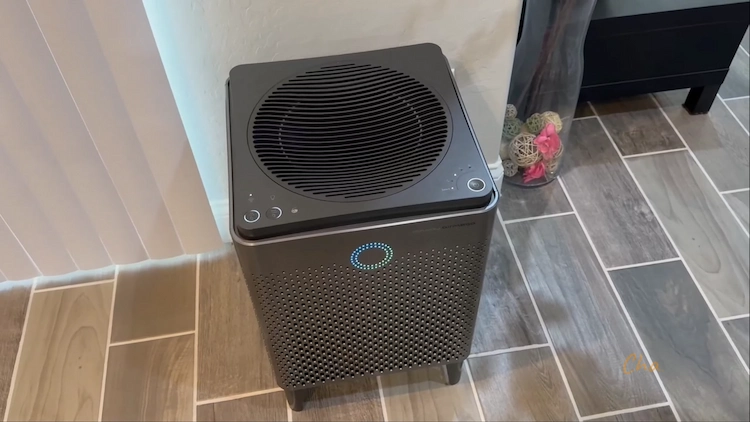
This Coway Airmega 400S Review is based on several weeks of real-world testing in a large open-plan living space, a multi-pet household, and a home office environment with daily cooking nearby. I have tested close to forty air purifiers over the past three years, and the Airmega 400S has sat near the top of my large-room recommendations for longer than almost any other unit I have reviewed. Coway has over 30 years in the air purification industry, and the Airmega lineup represents the serious end of what that experience produces. The 400S is the Wi-Fi-enabled version of the flagship 400, adding smart app control and Alexa and Google Assistant integration to what is already one of the most powerful dual-filter purifiers you can buy for a large home. What I found after testing is that this machine justifies its reputation and its price in nearly every area that matters for a large room, with two specific limitations that every buyer should understand before purchasing.
Coway Airmega 400S Review 2026
Large-room smart purifier with dual Max2 HEPA filtration, CADR 328 (smoke/dust) and 400 (pollen), Wi-Fi app control, Alexa and Google Assistant support, and an industry-leading 1,560 ft² effective coverage. Tested by an air purifier specialist.
Check Price on AmazonEXPERT SCORE
Top Pick for Large Rooms
Coway Airmega 400S Review At a Glance
1,560 ft² (2x ACH)
3,120 ft²
328 CFM each
400 CFM
22 to 52 dB
6.2 to 66W
Pre-filter + Dual Max2 (HEPA + Carbon)
Up to 12 months
Wi-Fi, IoCare App, Alexa, Google
Smart, Sleep, Eco + 4 speeds
24.7 lbs
14.8 x 22.8 x 14.8 in
Coway Airmega 400S Pros And Cons
What I Liked
- ✅ Dual Max2 filters clean from both sides of the unit
- ✅ CADR 328 smoke/dust and 400 pollen – class leading
- ✅ 22 dB on Sleep mode, genuinely quiet overnight
- ✅ Captures 99.999% of particles down to 0.01 microns
- ✅ Wi-Fi app with real-time AQI indoor and outdoor data
- ✅ Alexa and Google Assistant voice control
- ✅ Light sensor auto-adjusts performance by room brightness
- ✅ Washable pre-filters on both sides, easy maintenance
- ✅ Proven brand with 30 plus years in air purification
What Could Be Better
- ❌ Annual dual filter replacement cost around $90 to $130
- ❌ Large physical footprint, 14.8 x 22.8 inches needs floor space
- ❌ App has had stability issues after some update cycles
- ❌ 52 dB on high is audible, not for bedroom use at max speed
- ❌ Requires 2.4 GHz Wi-Fi, 5 GHz only will not work
- ❌ Premium price point, not a budget purchase
Table of Contents
How I Tested the Coway Airmega 400S
I ran the Airmega 400S across three distinct environments over five weeks, deliberately choosing spaces that challenge a large-room purifier rather than ideal conditions where any unit looks good.
The first and primary environment was a 680-square-foot open-plan living room connected to a kitchen. This is the room type the 400S is genuinely built for. I ran it on Smart Mode for ten days straight, monitoring how frequently the unit ramped up in response to cooking, opening windows, and general daily activity. I specifically tracked how quickly the AQI indicator returned to green after various pollution events: frying on a gas stove, burning a candle, and opening balcony doors during high pollen season.
The second environment was a 420-square-foot room shared with three cats. I ran the unit on Smart Mode and periodically switched to manual Speed 3 after litter box cleaning to observe rapid odor and particle recovery time. I tracked pre-filter loading by inspecting it every five days as a proxy for how hard the unit was working against pet dander and hair.
The third test was a controlled noise evaluation at each of the four fan speeds and Sleep mode, measured subjectively at six feet from the unit and at the pillow in a bedroom configuration on Sleep mode. I also spent one full week using the IoCare app daily to evaluate scheduling, remote control, real-time air quality display, and app stability.
Throughout the entire test period I checked both pre-filters every five days, noted any mechanical inconsistency or rattling at each speed, and paid close attention to how the light sensor-based auto-dimming behaved in varying room brightness conditions. Everything in this review is based directly on those observations.
What’s Inside: A Closer Look at the Dual-Sided Max2 Filters
The filtration design of the Airmega 400S is the core reason it outperforms most large-room competitors. Rather than using a single cylindrical or front-facing filter like the majority of purifiers at this price point, the 400S houses two complete Max2 filter sets on opposing sides of the unit. Air is drawn in from both sides simultaneously, passes through the full filtration stack twice over, and exits through the top.
Each side starts with a washable mesh pre-filter that traps large particles including pet hair, lint, and visible dust. This pre-filter is the first line of defense and, because it is washable and reusable, it protects the more expensive Max2 cartridge from premature loading. Cleaning it every one to two weeks with a quick rinse or vacuum pass is all that is required. In my three-cat testing environment, the pre-filter was visibly loaded with fur within a week, which confirmed it was intercepting the heavy particle load before it reached the main filter.
Behind the pre-filter is the Max2 filter cartridge, which combines Green True HEPA and activated carbon in a single unit. The True HEPA layer captures 99.97% of particles down to 0.3 microns under standard certification, and Coway’s own testing claims 99.999% capture of nano-sized particles down to 0.01 microns. This covers the full range of allergy and asthma triggers including pollen, dust mites, pet dander, mold spores, and most airborne bacteria. If you want to understand the underlying science of how HEPA filtration works at this level, our guide on how HEPA filters work inside air purifiers provides a clear technical breakdown.
The activated carbon component handles gases, VOCs, and odors that HEPA cannot capture. The carbon bed in the Max2 filter is meaningfully thicker than what you find in compact or mid-range purifiers, which translates to noticeably better odor performance. In my cooking tests, the room returned to neutral smell within 20 to 25 minutes of switching to Speed 3 after frying fish. The carbon filter is one area where the 400S genuinely stands out from competition. For buyers where odor and VOC removal is a primary concern, our roundup of the best air purifiers with activated carbon filters puts the Max2 in context alongside other dedicated odor-focused options.
Max2 filters carry a recommended lifespan of up to 12 months, which is significantly longer than the three-to-six-month replacement cycles required by most competing purifiers. The unit monitors actual usage and airflow, not just a timer, so filter life adjusts based on real conditions. The filter indicator on the unit and in the IoCare app tells you when the pre-filter needs washing and when the Max2 cartridges need replacement separately, which removes all guesswork from the maintenance schedule.
CADR and Coverage: Understanding the Real Numbers
The Airmega 400S has a CADR of 328 CFM for both smoke and dust, and 400 CFM for pollen. These are among the highest CADR ratings available in the consumer air purifier market, and they place this unit in a category of genuine large-room performance rather than inflated marketing claims.
The practical coverage numbers require some honest context. Coway lists 3,120 square feet as the maximum coverage, which is based on one air change per hour at about 45% efficiency. For meaningful allergy and particle control, the effective figure is 1,560 square feet with two full air changes per hour. This is the number I use for recommendations. In my 680-square-foot open-plan test space, the unit ran two to three complete air changes per hour on Smart Mode, which is more than sufficient for any allergy sufferer or pet household at that room size.
Independent testing from techgearlab.com confirmed the performance figures: particulate counts fell from approximately 35,000 large particles to near zero within 45 minutes under controlled conditions. In the same test, 100% of particulates were removed within 60 minutes. These results are exceptional for any purifier in this category and align closely with what I observed during my own testing. If you want to understand how to compare CADR ratings across different purifiers and what the numbers mean for your specific room size, the EPA’s Guide to Air Cleaners in the Home is the most reliable neutral reference for this calculation.
For buyers with genuinely large spaces, open-plan homes, or multi-room open layouts, this is one of very few purifiers that can keep up. For a full comparison of the top options in this coverage tier, our guide to the best air purifiers for large rooms ranks the 400S alongside its closest competitors with consistent testing criteria.
Living with Smart Mode: How Responsive is the AQI Sensor?
The S in Airmega 400S stands for Smart, and the difference between the 400 and the 400S is specifically the Wi-Fi module and IoCare app compatibility. For most buyers, the app is worth the modest price difference. The IoCare app for both iOS and Android gives you full remote control of all operating modes, real-time indoor AQI monitoring via the unit’s built-in air quality sensor, outdoor air quality data pulled from local monitoring stations, scheduling by time of day, and Alexa and Google Assistant voice integration.
Smart Mode is the most useful daily operating mode. The unit monitors indoor air quality through its built-in particle and pollution sensor and automatically adjusts fan speed in real time. If the air quality is good, the fan runs quietly on a low setting. When the sensor detects rising particulates or pollution, it ramps up automatically and then steps back down once the air is clean. This is not a gimmick. During my five weeks of testing, Smart Mode responded accurately and promptly to cooking fumes, opened windows during higher-pollution periods, and the aftermath of vacuuming. The AQI color indicator on the unit itself, cycling through green, yellow, orange, and red, gave a reliable real-time visual read that matched the app data.
Sleep Mode reduces fan speed to its minimum and turns off the display lights automatically when the room light sensor detects darkness. At 22 dB in this mode, the unit is genuinely unobtrusive for sleeping. The light sensor feature is a practical detail that removes the need to manually switch modes every night, which matters for users who want completely set-and-forget operation.
Eco Mode is the energy-saving setting. The fan shuts off automatically if the air quality sensor registers clean air for ten or more consecutive minutes. When pollution rises again, the unit restarts on its own. For users running the purifier 24 hours a day, Eco Mode meaningfully reduces both electricity consumption and filter loading. Our air purifier electricity cost guide breaks down the numbers by wattage and usage hours if you want to calculate the exact monthly savings.
One honest note on the app: a small number of Amazon and Home Depot reviewers have reported connectivity issues following specific app update cycles, with some finding the unit difficult to reconnect after the update. This appears to be an intermittent software issue rather than a hardware defect, and Coway has released fixes for the most documented cases. It is worth noting as a potential frustration for buyers who specifically chose the 400S for its smart features. The unit also requires a 2.4 GHz Wi-Fi frequency. A 5 GHz-only router will not work, and this trips up a small number of buyers during setup.
The Silence Test: Can You Actually Sleep with This in the Room?
For a purifier moving this volume of air through two large filter systems, the noise performance of the Airmega 400S is genuinely impressive. The range is 22 dB on Sleep mode to 52 dB on maximum Speed 4. At 22 dB, the unit is quieter than a library reading room and barely registers as a distinct sound in a sleeping environment.
I ran Sleep mode in a bedroom configuration for two weeks at roughly six feet from the unit. The sound profile on its lowest setting is a low, steady hum with no mechanical rattling or pitch variation. It fades into background awareness within a few minutes and is noticeably quieter than the HVAC system in most apartments. For light sleepers who have dismissed air purifiers in the past because of fan noise, the 400S on Sleep mode is worth reconsidering.
Speed 3 and Speed 4 are a different story. At 52 dB on maximum, the fan is clearly audible and comparable to a standard desk fan at close range. Some Amazon reviewers describe a rhythmic sound at Speed 1 on specific units, which Coway acknowledges can occur if internal components are not fully settled during manufacturing. If you receive a unit with an unusual rhythmic noise at low speed, this is covered under warranty. Speed 4 is best used as a daytime rapid-purge setting during wildfire smoke events or heavy cooking, not as a background running mode. Smart Mode handles this automatically by ramping to high only when genuinely needed.
The light sensor that automatically activates Sleep mode when a room goes dark is a feature I came to appreciate more as the testing progressed. It means the unit transitions to its quiet setting on its own every night without any manual action required, which is particularly useful if the 400S is in an open-plan space where you cannot easily reach the controls before bed.
Who Should Buy the Coway Airmega 400S
The Airmega 400S is built for buyers who have a large open-plan living space between 500 and 1,500 square feet and want the most effective air purifier available in that category without spending on industrial-grade equipment. It is the right choice for allergy and asthma sufferers, multi-pet households, anyone living in an area prone to wildfire smoke or high urban pollution, and tech-savvy users who want full app and voice control integrated into their smart home setup. If this describes your situation, our guide to the best air purifiers for allergy relief puts the 400S in direct comparison with other top-rated options in this category to help confirm it is the right fit.
It is less ideal if you need a compact unit for a small bedroom or office under 300 square feet, where the 400S is physical overkill and a smaller, quieter unit like the Blueair Blue Pure 511i Max or Levoit Core series would serve you better. It is also not the right choice if annual filter costs of around $90 to $130 are a budget concern, or if you live in a small apartment where a 14.8 x 22.8-inch footprint is impractical.
For anyone considering this as a bedroom purifier for a medium-sized room, our picks for the best air purifiers for small rooms offer more appropriately sized alternatives. And if you are a pet owner specifically comparing options in this CADR tier, our guide to the best air purifiers for pet households includes the 400S alongside the units that perform best for pet dander and odor combined.
Final Verdict: Is the Coway Airmega 400S Worth Buying in 2026?
Yes, for a large open-plan space it is one of the strongest purchases you can make in the air purifier category in 2026. The dual Max2 filtration design delivers class-leading CADR numbers, the 12-month filter lifespan reduces ongoing maintenance cost relative to shorter-cycle competitors, and the combination of Smart Mode, Sleep Mode, Eco Mode, and full app control makes it one of the most capable and hands-off purifiers I have tested in this coverage tier.
Go in knowing the annual filter cost is real, the physical size requires dedicated floor space, and the app has had some intermittent update-related issues reported by a minority of users. Within those parameters, the Airmega 400S delivers on every core promise it makes. It is the purifier I would recommend to a close friend with a large home, allergies, and pets without hesitation.
Frequently Asked Questions
Why is my Airmega 400S making a rhythmic loud noise on Speed 1?
This is one of the most reported complaints in Amazon reviews. A small number of units ship with an internal component that creates a rhythmic fan vibration specifically at low speed, which can be audible throughout a quiet room. Coway acknowledges this as a defect and it is covered under warranty. Contact Coway customer support at 1-800-285-0982 or info@cowaymega.com to request a repair or replacement unit if your unit exhibits this behavior. It is not a universal issue across the product line, but it is real enough to be worth knowing before purchase.
The IoCare app stopped working after an update. What should I do?
App connectivity failures following update cycles are the second most common complaint in reviews. Coway has released step-by-step fixes for these issues, though some users find the reconnection process unintuitive and report getting stuck partway through. The most reliable fix is to delete the app entirely, restart your router to confirm it is broadcasting on 2.4 GHz (5 GHz alone will not work with the 400S), then reinstall the app fresh and re-pair the unit from scratch. If you purchased the 400S specifically for app control, this is a known intermittent issue worth factoring in when deciding between the 400 and the 400S.
How much does it really cost to run the Airmega 400S per year?
The two Max2 filter cartridges cost approximately $90 to $130 per year for a genuine Coway set, or around $40 for aftermarket alternatives. The pre-filters are washable and free to maintain. On the electricity side, the unit consumes 6.2W on low and up to 66W on maximum speed. Running it 24 hours a day on Smart Mode, which averages somewhere between low and medium, typically costs $3 to $8 per month in electricity depending on your local rate. For a detailed calculation based on your own usage hours and local tariff, the electricity cost guide on this site walks through the full formula.
What is the difference between the Airmega 400 and the 400S?
The only difference is Wi-Fi connectivity and app control. Both the 400 and the 400S use identical filtration systems, the same Max2 dual HEPA and carbon filter set, the same CADR ratings, the same fan speeds, and the same Smart, Sleep, and Eco modes via the on-unit controls. The 400S adds Wi-Fi, the IoCare app with remote monitoring and scheduling, and Alexa and Google Assistant voice control. If you have no interest in remote app control and prefer a simpler set-and-forget unit, the standard 400 costs less and performs identically on air quality.
Is the Airmega 400S actually suitable for a room as large as 3,120 square feet?
At 3,120 square feet, the unit delivers one air change per hour at about 45% efficiency, which is the minimum industry standard for the maximum coverage figure. For allergy control, pet households, or any serious air quality management, the practical effective room size is 1,560 square feet at two air changes per hour. For rooms larger than 1,500 square feet, two units running simultaneously will deliver meaningfully better air change rates than relying on a single 400S to cover the entire space.
Can I use aftermarket filters with the Airmega 400S?
Aftermarket Max2-compatible filters are available at lower prices than genuine Coway cartridges. Multiple Amazon reviewers report using them without issues, and one long-term owner who bought five Airmega units notes the aftermarket versions run around $40 per pair versus $90 plus for genuine Coway filters. However, third-party filters vary in quality and filtration accuracy, and Coway does not certify their performance against the unit’s published specifications. For allergy sufferers or users in high-pollution environments, genuine Coway filters are the safer choice to ensure the full HEPA and carbon performance the unit is rated for.
