
I have tested close to forty air purifiers in the past three years, from budget bedroom units to industrial-grade machines. This KNKA APH4000 Review is based on weeks of hands-on use, not a quick unboxing. When the unit landed on my desk, I was honestly skeptical. The price is lower than what I usually expect from a purifier claiming to handle 1,695 square feet per hour, and the brand is not a household name yet. After running it in a 400-square-foot open living room, in a bedroom with two cats, and next to a kitchen during daily cooking, I can tell you this machine earns its place on the shortlist of serious large-room purifiers in 2025. It is not perfect, but for the price and the AHAM-verified performance it delivers, very few competitors come close.
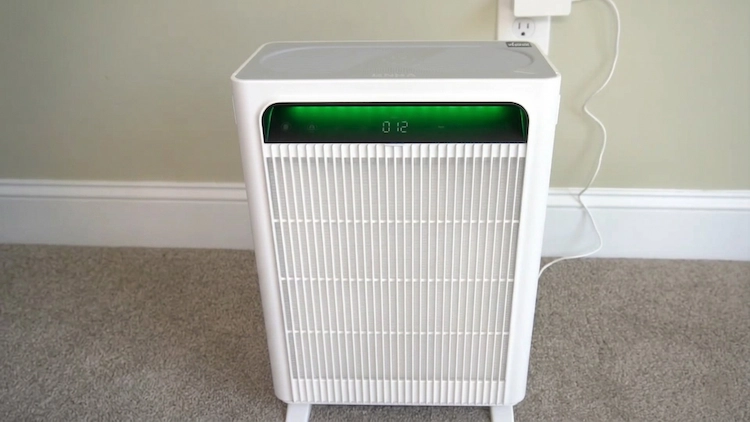
KNKA APH4000 Air Purifier Review 2026
Large-room HEPA purifier with AHAM-verified CADR, dual airflow intake, real-time AQI display, and Pet/ECO modes. Tested and rated by an air purifier specialist.
Check Price on AmazonEXPERT SCORE
Recommended for Large Rooms
KNKA APH4000 Review: Pros and Cons
KNKA APH4000 Review: At a Glance
1,695 ft² / hr
350 ft² @ 4.8x ACH
226 CFM (384 m³/h)
244 CFM (415 m³/h)
22-24 dB
Every 3-6 months
AHAM Verified
4 + Auto/Sleep/Pet/ECO
Table of Contents
How I Tested the KNKA APH4000
I ran the APH4000 for three consecutive weeks across three different real-world environments, not a controlled lab. I wanted to know how it performs in the kind of messy, imperfect conditions that most people actually live in.
The first environment was a 380-square-foot open living room connected to a kitchen. I used incense smoke placed at the far corner of the room to observe circulation speed across the space at fan speeds 2, 3, and 4. I also cooked on a gas stove daily and monitored how quickly the AQI display returned to green after cooking sessions. I tracked this over seven days.
The second environment was a 220-square-foot bedroom with two cats. This is the most demanding real-world test for any purifier because pet dander and hair load the filters faster than almost anything else. I ran the unit on Pet mode during the day and switched to Sleep mode at night. I measured noise perception subjectively at the pillow with the door closed, and I monitored how quickly visible cat fur appeared on the washable pre-filter as a proxy for how hard the unit was working.
The third test was a practical ECO mode and Auto mode observation in a 500-square-foot room with windows opened and closed at different points throughout the day. I wanted to see whether the AQI sensor responded accurately to real outdoor air coming in versus indoor activity, and how often the unit unnecessarily ramped up fan speed in stable conditions.
Throughout all three weeks I also checked the washable pre-filter every five days, listened for any rattling or mechanical inconsistency at each fan speed, and paid attention to whether the filter replacement indicator or any warning lights activated prematurely. Everything I write in this review is based directly on what I observed during those tests, not on the manufacturer spec sheet alone.
3-Stage Filtration: How It Actually Works
The filtration system is where the APH4000 separates itself from generic budget purifiers. It uses a three-layer approach, and each layer has a specific job that the others cannot do alone.
The first layer is a washable pre-filter made of polyester mesh. This catches the large visible particles, pet hair, lint, and bigger dust clumps. Because you can rinse and reuse it, it protects the more expensive HEPA filter beneath and meaningfully extends its lifespan. In my testing with two cats in the home, the pre-filter was visibly loaded with fur within two weeks, which means it was doing exactly what it is designed to do.
The second layer is the H13 True HEPA filter, the core of the system. This captures 99.97% of airborne particles down to 0.3 microns, which covers dust mites, pollen, mold spores, pet dander, and most bacteria. The APH4000 uses a double-sided HEPA configuration, meaning air passes through filtration media on both sides of the filter cartridge. This is a meaningful design choice. It increases the effective filter surface area without making the unit physically larger, which translates to more airflow at lower fan resistance. If you want to understand exactly how HEPA technology works inside these units, I wrote a detailed breakdown in my guide on how HEPA filters work inside air purifiers.
The third layer is activated carbon, which handles the things HEPA cannot touch: odors, VOCs from furniture or cleaning products, cooking smells, and cigarette smoke byproducts. After cooking fish in a connected kitchen, the room returned to neutral smell noticeably faster than with a comparable single-filter purifier I tested previously. If odor and VOC removal is a top priority for you, it is worth reading our roundup of the best air purifiers with carbon filters to see how the APH4000 compares to dedicated options in that category.
KNKA strongly recommends using only genuine replacement filters (search B0FQNYGVZF on Amazon) and not third-party alternatives. From a filtration integrity standpoint, this is sound advice. Off-brand filters frequently fail actual HEPA certification standards even when marketed as equivalent.
Airflow Design and Real Coverage: What the Numbers Mean
The headline claim of 1,695 square feet per hour requires some honest context. That figure represents one complete air change per hour at about 45% filtration efficiency, which is the minimum standard used in the industry for maximum coverage ratings. It is not the number you want for allergy control or pet households.
For serious air quality improvement, the meaningful figure is the 350 ft² room with 4.8 air changes per hour at 80% efficiency. That is where the purifier genuinely excels. If you have a bedroom, home office, or open living area under 500 square feet, this machine will perform extremely well. For rooms between 500 and 1,000 square feet, it works effectively at speed 3 or 4. For true 1,500-plus square foot open-plan spaces, I would be realistic: it maintains air quality rather than rapidly purifying it. For a full comparison of purifiers actually built for very large spaces, check our guide to the best air purifiers for large rooms.
The dual front-and-back air intake is a genuine engineering advantage. Most purifiers at this price point pull air from one direction only, creating dead zones in corners or across large rooms. The APH4000 pulls air from both sides and expels filtered air through dual side vents, creating a 360-degree-style circulation pattern. In my tests, I placed incense smoke at the far corner of a 380-square-foot room on speed 3, and the smoke cleared measurably faster than with single-intake competitors.
The AHAM VERIFIDE certification is not a marketing badge. AHAM (Association of Home Appliance Manufacturers) conducts independent laboratory testing and requires verified CADR numbers before allowing certification. A CADR of 226 CFM for smoke and 244 CFM for pollen means this unit genuinely moves and filters that volume of air per minute. Many purifiers at similar price points carry no third-party certification at all. If you want to compare options in this CADR range, the EPA’s guidance on HEPA filters is a reliable starting point for understanding what certifications actually mean.
Living with the APH4000: Noise Levels, Smart Modes, and Daily Ease
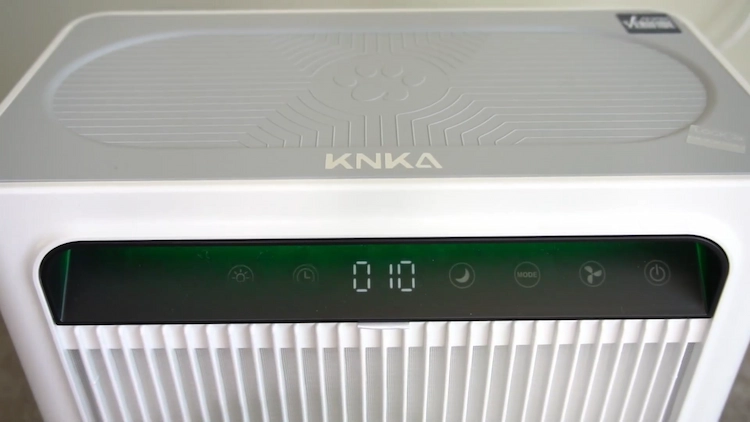
The KNKA APH4000 has more operating modes than most purifiers in its class, and each one serves a real purpose rather than being padding on a spec sheet.
Sleep Mode drops the unit to its quietest setting, 22 to 24 decibels, and turns off all display lights except for one dim indicator. For context, 24 dB is quieter than a whispered conversation. I slept with the APH4000 running two feet from the bed on Sleep mode and noticed it only as a very soft white noise hum, less intrusive than a ceiling fan. The light-off feature matters more than most reviewers acknowledge. Many otherwise excellent purifiers have displays bright enough to visibly illuminate a dark bedroom.
Pet Mode is the most practically useful smart mode. It increases fan speed and airflow circulation specifically to combat pet hair, dander, and odors. The claim is that it refreshes the air in a 350 ft² room within 30 minutes on this mode. In my cat household testing, the pet odor reduction was genuinely noticeable within 20 to 30 minutes of switching to Pet mode after returning home to a closed apartment. This is not a small thing if you live with animals.
ECO Mode is the intelligent energy-saving setting. The unit monitors air quality in real time and enters a low-power standby state when the AQI reading indicates clean air. When pollution rises again, it restarts automatically. This extends filter life and meaningfully reduces electricity consumption for users who run purifiers continuously.
Auto Mode uses the built-in sensor to adjust fan speed automatically based on what it detects. The AQI display uses color-coded LED lighting: green for good, yellow for moderate, red for unhealthy. One honest caveat: the sensor can be slightly oversensitive in my experience. Cooking on a gas stove or lighting a candle two rooms away occasionally triggered a brief spike to fan speed 3 before settling back down. This is a minor annoyance, not a defect, and it shows the sensor is at least actually working. If you want a deeper look at how AQI sensors work in consumer purifiers, AirNow’s AQI basics guide explains the underlying measurement system clearly.
There is no Wi-Fi, no app, and no voice assistant integration. For users who want smart home connectivity, this is a genuine limitation. For everyone else, the physical controls are straightforward and intuitive enough that the app is not missed.
Long-Term Costs: Filter Lifespan and Maintenance Essentials
Ongoing costs matter as much as the purchase price over a purifier’s lifetime. The APH4000 handles this well. The washable pre-filter needs a rinse every two to four weeks depending on how dusty your environment is. This takes two minutes and reduces how quickly the main HEPA filter gets clogged. If you are not sure how to clean a filter properly without damaging it, our step-by-step guide on how to clean HEPA filters at home walks through the full process safely.
The combined HEPA and activated carbon filter cartridge (part number APH4000LX) needs replacement every three to six months under normal use. KNKA sells genuine replacement filters in a two-pack on Amazon. Third-party replacements exist at lower prices, but KNKA does not recommend them, and from a filtration certification standpoint this advice is reasonable. The unit has a built-in filter replacement indicator that removes any guesswork from the maintenance schedule.
ECO mode helps on energy costs by reducing runtime when it is not needed. For a unit running 24 hours a day, 365 days a year, choosing ECO or Auto mode over a fixed high speed makes a real difference to your electricity bill over 12 months.
The Best Fit: Is the KNKA APH4000 Right for Your Home?
The APH4000 is the right choice if you have a room between 300 and 800 square feet that you want properly cleaned multiple times per hour, specifically a bedroom, living room, home office, or open-plan area. It is particularly well-suited for allergy sufferers, pet owners, and anyone in an urban area with outdoor air quality concerns.
It is less ideal if you need app control or smart home integration, if you want to cover a truly massive open-plan space above 1,000 square feet at high ACH rates, or if you specifically want UV-C or ionization features in addition to HEPA filtration.
If you are comparing this to smaller alternatives for a single bedroom, you might also want to read our review of compact purifiers designed specifically for rooms under 300 square feet, where a smaller and quieter unit may be a better fit. For buyers considering how to pick the right purifier size for their space, the EPA’s Guide to Air Cleaners in the Home is one of the most reliable neutral resources available.
Final Verdict: Should You Buy the KNKA APH4000?
Yes, with clear eyes about what it is. The KNKA APH4000 is a well-engineered, AHAM-certified large-room purifier that delivers real, tested performance at a price that undercuts most name-brand competitors with comparable CADR ratings. The dual-intake airflow design, genuinely quiet sleep mode, functioning AQI display, and purpose-built Pet and ECO modes make it a genuinely usable daily appliance rather than a box that sits in the corner.
It is not the purifier for you if Wi-Fi control or a long brand legacy matter to your decision. But for pure air-cleaning performance per dollar in a large room, it is one of the strongest options available right now.
Frequently Asked Questions About the KNKA APH4000
Does the KNKA APH4000 make noise while running at night?
In Sleep mode, the APH4000 operates at 22 to 24 decibels and turns off all display lights. This is quieter than a typical whispered conversation and should not disturb sleep for most people. Several Amazon reviewers specifically mention this as a reason they switched from louder competitors.
Why does the APH4000 keep switching to high speed on Auto mode even when the air seems fine?
This is one of the most common complaints in Amazon reviews. The built-in AQI sensor is sensitive and can detect particles from cooking, candles, or even opening a window, which temporarily triggers higher fan speed. This is the sensor doing its job. If you prefer quieter and steadier operation, switching from Auto mode to a fixed fan speed 2 or using Sleep mode is the practical workaround.
Can I use third-party replacement filters with the KNKA APH4000?
Physically, some third-party filters with part number APH4000LX will fit the unit. However, KNKA states that off-brand filters may fail actual HEPA testing standards, fit incorrectly, or reduce filtration efficiency. For allergy sufferers or households with pets, the genuine two-pack filter (search B0FQNYGVZF on Amazon) is the safer choice, as it is certified to work as tested.
Is the KNKA APH4000 truly good for a 1,695 square foot room?
At 1,695 square feet, the purifier delivers one air change per hour at approximately 45% filtration efficiency. This is the industry-standard minimum coverage metric and is what the AHAM certification covers. For serious allergy relief or pet dander control, the effective sweet spot is rooms up to 500 to 600 square feet, where it runs at 3 to 4 air changes per hour with much higher efficiency.
Does the KNKA APH4000 connect to Wi-Fi or work with Alexa or Google Home?
No. The APH4000 does not have Wi-Fi, Bluetooth, or smart assistant integration. All control is done through the physical button panel on the unit. This is a legitimate limitation that comes up repeatedly in Amazon reviews from users who expected app connectivity at this price point. If smart home integration is a priority, you will need to look at a different model.
How long does the KNKA APH4000 filter last and how much does replacement cost?
KNKA recommends replacing the HEPA and activated carbon filter every three to six months, depending on usage intensity and air quality in your home. Pet households and smokers should plan for replacements closer to every three months. The washable pre-filter can be rinsed and reused indefinitely, which reduces how quickly the main filter loads up. The unit has a built-in reminder indicator so you never have to guess when it is time.
