

Buying a high-quality air purifier is only half the battle. If you tuck it away in a corner or hide it behind a sofa, you could be losing up to 50% of its cleaning efficiency.
To get the most out of your investment, you need a strategic placement plan. Based on our performance testing and industry standards (like CADR and ACH), here is the definitive guide on where to position your air purifier for every room in your home.
Table of Contents
Where is the best place to put air purifier
To get the most out of your device, you need to think strategically about its positioning. Many homeowners wonder, where is the best place to put air purifier units to ensure they actually clean the breath we take? Since a purifier’s Clean Air Delivery Rate (CADR) is measured based on free air movement, placing it in a cramped corner or behind furniture will significantly hinder its performance.
Proximity to Pollution Sources
Efficiency boosts when you place the unit near the “trouble spots.” Whether it’s the kitchen where cooking odors linger or a pet’s favorite lounge area, capturing particles at the source prevents them from spreading throughout the house. Experts from the EPA and Consumer Reports agree that combining source control with high-quality filtration is the most effective way to maintain indoor air quality.
If you are still looking for the right device, check out our guide on the best air purifiers to find the perfect match for your space.
Balancing Performance and Safety
While higher fan speeds clear the air faster, they also come with more noise. The ideal spot is one that balances maximum airflow with your personal comfort and daily habits. Additionally, safety should never be an afterthought:
- Avoid high-traffic zones where the unit could be knocked over.
- Keep cords tucked away to prevent tripping hazards.
- Maintain distance from water unless the device has a specific IP rating (brands like Blueair and Levoit emphasize this for longevity).
Finding Your Ideal Setup Based on Daily Habits
People want detailed guidance on placing air purifiers in bedrooms, living rooms, and kitchens. They search for tips that consider room size, pollutant sources, and where we spend most of our time.
I share key tips: match the purifier’s CADR to the room’s volume, place it near pollutant sources, and ensure good airflow. For better sleep and allergy relief, position the air purifier near your bed but not under furniture.
Quick checklist for immediate placement decisions
- Calculate room volume: length × width × height and compare to its Clean Air Delivery Rate (CADR) to ensure the unit is powerful enough.
- Place the unit near the pollutant source or where people sit most often.
- Keep 1–3 feet clearance from walls and furniture to keep airflow unobstructed.
- Elevate the purifier if targeting light particulates or VOCs, per the manual.
- Use a nearby outlet and route the cord safely; never run the unit inside a closed cabinet.
- Run at medium or high for initial cleaning, then set to a lower speed for maintenance.
Common mistakes that reduce purifier effectiveness
Many people hide their air purifiers in corners or behind sofas. This reduces their effectiveness and slows down pollutant capture. I suggest keeping the purifier open and facing the room.
Another mistake is placing the device far from pollutant sources, like a stove. Pollutants spread quickly. So, the best spot for an air purifier is usually near where pollutants come from or close to where people breathe.
Using a purifier that’s too small or relying on one for big rooms can limit its performance. Brands like Philips, Honeywell, and Levoit advise regular filter maintenance. If you’re unsure how to maintain your device, read our guide on how to clean HEPA filters properly. Skipping this can reduce effectiveness and air quality over time.
Room-specific placement strategies and room air purifier positioning
I focus on practical room air purifier positioning to protect each space well. Small changes can make a big difference, more than buying a bigger unit. Here are tips for bedrooms, living rooms, kitchens, and basements/attics, based on real use and common appliances from Coway, Levoit, Blueair, and Dyson.
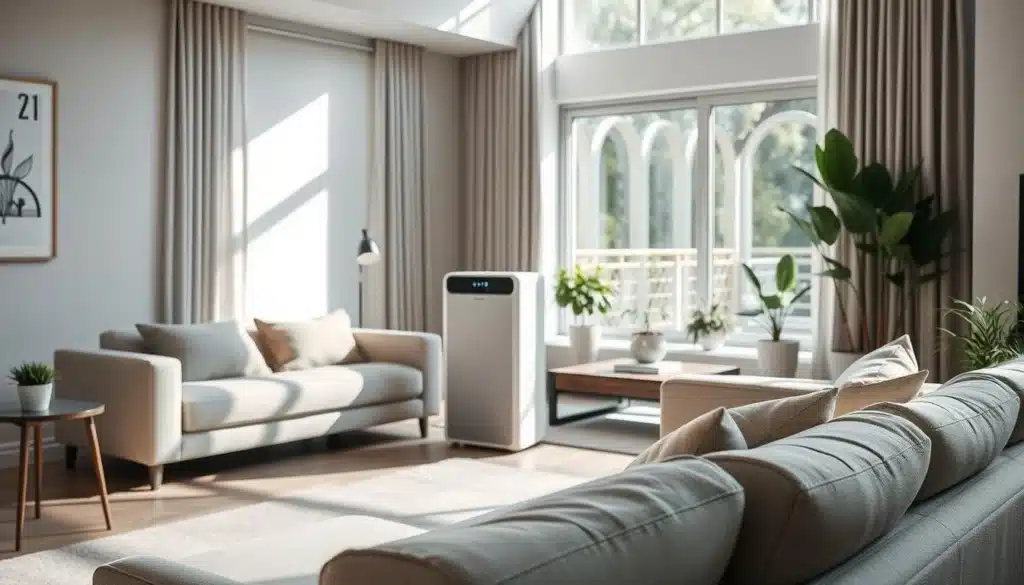
I place units where people spend most of their time for better air quality. In most rooms, the best spot is near where people sit or sleep. Make sure there’s a clear path for air to flow in and out. Elevating the unit a bit helps with air circulation and keeps it away from dust on the floor.
In bedrooms, I follow specific rules. Place the air purifier 3–6 feet from the bed, at bedside table height or a bit higher. Look for models with a quiet night mode under 30 dB, like those from Coway and Levoit. Use HEPA filters for allergens and activated carbon for smells. Make sure bedding doesn’t block the air intake and place the unit on a stable surface.
In living rooms, I aim for wide coverage. Position the air purifier near the main seating area or along a wall where people gather. Avoid corners and large furniture. In open-plan rooms, use two smaller units for better coverage. Choose a stylish unit like a Dyson or Blueair if looks matter.
In kitchens, I target particles and smells. Place the purifier 3–6 feet from the stove, but not directly above it. Use a range hood for heavy smoke and the purifier for lingering particles and smells. Models with strong activated carbon are best for VOCs. Expect to change filters more often if there’s a lot of grease.
Basements need a mix of strategies for moisture and spores. Position the purifier where you spend time or near the HVAC return. Use a dehumidifier too to keep humidity below 50 percent. Choose units that can run continuously and have washable pre-filters for dusty or moldy areas.
| Room | Recommended placement | Best filter type | Notes |
|---|---|---|---|
| Bedroom | 3–6 ft from headboard, bedside height | True HEPA + activated carbon | Quiet night mode under 30 dB; avoid blocked intake |
| Living room | Near main seating or central traffic flow | True HEPA; add carbon for odors | Avoid corners; consider two units for large open-plan areas |
| Kitchen | 3–6 ft from stove, off to the side | HEPA + strong activated carbon | Use with range hood; expect faster filter wear from grease |
| Basement/Attic | Near entry points or HVAC return; where people occupy | HEPA with washable pre-filter | Combine with dehumidifier; choose continuous-duty ratings |
Air circulation and purifier placement: maximizing effectiveness with placement tips
I share tips on air circulation and purifier placement to help you get the most from your air purifier. Small changes in where and how you place it can make a big difference. You won’t need to turn it up or add more noise.
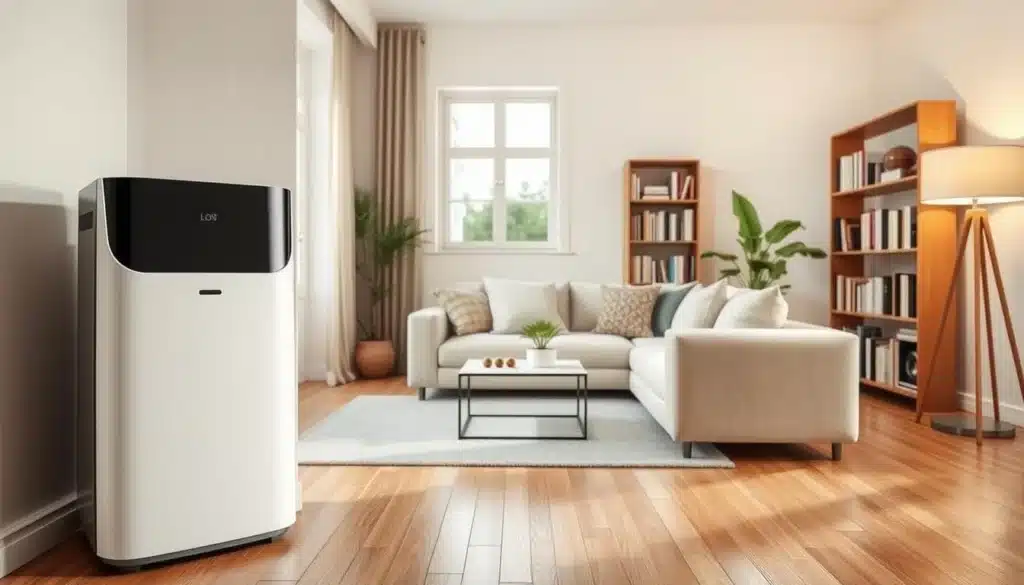
First, check the airflow in your room. Things like vents, open windows, and fans affect how pollutants move. Place your purifier where the air naturally flows towards it. This way, it catches pollutants before they spread.
Use a tissue near the intake and exhaust to see where the air is moving. This helps you find the best spot for your purifier.
When vents push air across a room, put your purifier downstream. Avoid pointing it straight into a vent stream. This can make the air move too much and lower how well it captures pollutants.
Make sure there’s enough space around your purifier. Most makers say 1–3 feet from walls and big furniture. This lets air flow freely. Tower units need space on all sides. Don’t hide your purifier in closets or behind curtains. This can block airflow and cause it to get too hot.
Where you place your purifier depends on the pollution. Mid-height, about 2–4 feet off the floor, is often best. It catches pollutants in the air you breathe and mixes them well. Placing it on the floor helps pick up dust that’s kicked up. Near countertops is good for kitchen smells and smoke.
In big homes, use more than one purifier. Put smaller ones in main living areas like bedrooms, living rooms, and kitchens. This improves air quality in those spaces. Run them at lower speeds to keep things comfortable and save energy.
If your HVAC moves air between rooms, add a purifier near where air returns. This helps clean the air throughout your home. Remember, controlling pollution sources, keeping filters clean, and improving ventilation are also key.
| Placement Factor | Recommended Position | Why it Works |
|---|---|---|
| Downstream of HVAC vent | 1–3 feet from vent, not directly in airflow | Captures circulated air without turbulence that impedes particle capture |
| Clearance from walls | 1–3 feet on intake/exhaust sides | Maintains CADR and prevents overheating or reduced airflow |
| Mid-height placement | 2–4 feet off floor | Balances breathing-zone protection and room mixing for PM2.5 |
| Kitchen or VOC sources | Countertop or elevated near source | Improves capture of gases and smoke that rise or mix quickly |
| Multiple-unit zoning | One unit per main living area | Increases ACH in occupied zones, lowers noise by running units slower |
| Closet or behind furniture | Avoid placement | Blocks airflow and reduces purifier effectiveness and lifespan |
We recommend
I’ve gathered key tips on where to place an air purifier for the best results. The right spot depends on your needs. Place it near pollution sources or where people spend most of their time. Make sure there’s enough space for air to flow in and out.
Match the air purifier’s CADR to your room’s size. Avoid mistakes like hiding it behind furniture. This keeps the air clean and effective.
For different rooms, use bedroom units near beds on low settings. Living-room purifiers should be near seats or in the center. Kitchen units should be 3–6 feet from the stove but not too close to heat.
In basements, use a purifier with a dehumidifier and watch for mold. These tips help catch pollutants early and keep air clean all day.
My home checklist includes measuring room size and checking CADR. Place the unit 3–6 feet from sources or people, with 1–3 feet clearance. Use HEPA and activated carbon filters when needed.
Replace filters as the manufacturer suggests, from brands like Honeywell, Coway, or Levoit. Run the unit all the time at a reasonable fan speed. Pair it with source control, ventilation, and humidity management for the best results.
Thoughtful placement, regular maintenance, and constant use greatly improve indoor air quality and comfort. Follow these tips to find the best spot for your air purifier and keep it working well.
Frequently Asked Questions (FAQ)
Can I put my air purifier in a closet?
No. Enclosed spaces restrict airflow, causing the unit to recirculate the same “clean” air while the rest of the room remains dirty. It can also lead to motor overheating.
Is it better to have one large purifier or two small ones?
For large or open-plan homes, two smaller units are almost always better. They increase the “Air Changes per Hour” (ACH) across different zones more effectively than one giant unit in a single spot.
Should I leave it on all the time?
Yes. To maintain air quality, run your unit on Auto Mode or a low setting 24/7. Modern units from brands like Honeywell and Coway are designed for continuous use with minimal energy consumption.
Next Step for You:
Now that you know where to put it, make sure you have the right device for the job.
Check out our latest review of the Top 5 Air Purifiers for Smoke Smell here
to find a model that matches your room size and budget.
