
If you’re dealing with persistent sneezing or dry nasal passages and keep asking yourself, What is better for allergies: a humidifier or an air purifier?, you’re definitely not alone. It’s one of those questions that comes up a lot, especially when symptoms show up inside your home despite keeping the windows shut.
The truth is, these two devices work in completely different ways. An air purifier works by trapping airborne allergens like pollen and dust mites, while a humidifier adds moisture back into the air to soothe irritated airways.
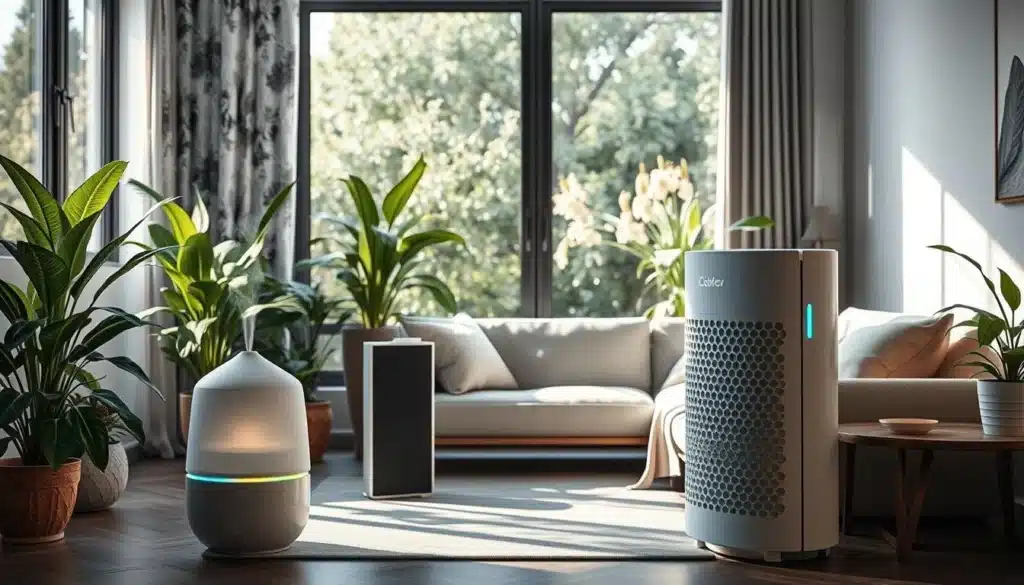
But there’s no single right answer for everyone. What works best for you depends on your specific triggers and your home’s environment. In this guide, I’ll lean on recommendations from the American Academy of Allergy, Asthma & Immunology (AAAAI) and guidelines from the Environmental Protection Agency (EPA) to help you make an informed choice.
Quick Comparison: Air Purifier vs. Humidifier
| Feature | Air Purifier (HEPA) | Humidifier |
| Primary Goal | Removes particles (Pollen, Dander) | Adds moisture to dry air |
| Best For | Sneezing, itchy eyes, asthma | Dry throat, bloody noses, congestion |
| Key Tech | True HEPA Filtration | Ultrasonic, Evaporative, or Steam |
| Maintenance | Change filters every 6–12 months | Daily cleaning to prevent mold |
What You Need to Remember Before You Buy
- Humidifiers relieve symptoms caused by dry indoor air, like dry throat and nose.
- Air purifiers remove airborne particles; pollen, pet dander, and dust- to lower exposure.
- Your ideal choice depends on the trigger: moisture issues call for humidification; particles call for filtration.
- Trusted sources such as the AAAAI and EPA support using both strategies when appropriate.
- I’ll show when to use one device alone and when a combined approach makes the most sense.
How Air Purifiers and Humidifiers Work for Allergy Relief
The Role of Air Purifiers: Trapping the Triggers
Air purifiers with True HEPA filters are the “gold standard” for allergy management. They can remove 99.97% of particles as small as 0.3 microns. This includes common triggers like:
- Pollen and Mold Spores
- Pet Dander (Check out my Levoit LV-H128 Review for large-room dander control)
- Dust Mite fragments
The Role of Humidifiers: Soothing the Symptoms
Humidifiers don’t “clean” the air; they change its texture. By adding moisture, they help thin out mucus and reduce congestion. This supports your body’s natural way of clearing allergens from the nose. However, if the humidity goes above 50%, you risk inviting dust mites and mold back into your home.
Humidifier or Air Purifier – Which One Actually Helps With Allergies?
Many people wonder if a humidifier or an air purifier is better for allergies. The choice depends on what triggers your allergies and the conditions in your home. I’ll explain how each device works and help you decide which one is best for you.
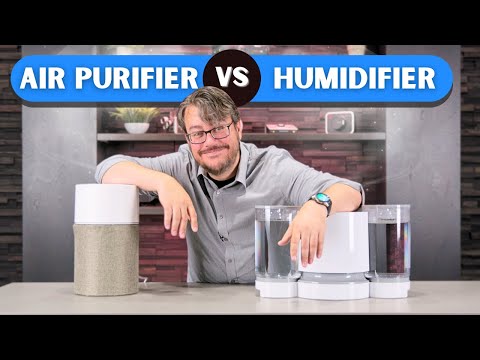
How humidifiers affect airborne allergens and nasal comfort
Humidifiers can make the air feel better by adding moisture. This can help thin out mucus and reduce congestion. It also supports the body’s natural way of clearing allergens from the nose.
But, humidifiers can also make dust settle faster. It’s important to keep the humidity level between 30–50%. If it’s too high, dust mites and mold can grow, making allergies worse.
Not taking care of humidifiers can lead to mold or bacteria. Always use distilled water and clean them as directed. Use a hygrometer to check the humidity level.
How air purifiers capture allergens and improve indoor air quality
Activated carbon filters can remove odors and VOCs. UV-C can kill some germs if the design allows enough exposure. But, ionizers and electrostatic precipitators might produce ozone, which can irritate lungs.
It’s best to size air purifiers for the room they’re in. Place one in your bedroom for better sleep. Run them all the time and change filters as needed. They work best for airborne allergens, but not for allergens in carpets or fabrics.
Situations where one device outperforms the other for specific allergy triggers
For dust mites, controlling humidity is more important than adding moisture. Keep humidity below 50% and use allergen-proof bedding and cleaning. In humid areas, a dehumidifier or air conditioner might be needed.
When dry winter air causes nasal dryness or sore throats, a humidifier set to 30–50% RH can help. This addresses symptoms that air purifiers can’t fix.
| Allergy Trigger | Humidifier Benefit | Air Purifier Benefit | Best Practice |
|---|---|---|---|
| Pollen | Minimal; may help comfort | High; HEPA traps airborne pollen | Use HEPA purifier, keep windows closed during peak |
| Pet dander | Little direct effect | High; HEPA reduces airborne dander | Groom pets, vacuum with HEPA, run purifier in living areas |
| Dust mites | Risk if RH >50%; not primary control | Limited for embedded allergens | Keep RH ≤50%, use encasements, clean fabrics regularly |
| Mold spores | Can worsen if RH >60% | HEPA captures spores; source control essential | Fix leaks, control RH, use HEPA purifier if needed |
| Dry-air symptoms (winter) | High; soothes nasal passages and throat | None for dryness | Use humidifier to 30–50% RH, clean device regularly |
Comparing features, benefits, and best allergy relief devices
I help you see the differences between humidifiers and air purifiers for allergies. We’ll look at features like filters, CADR, noise, and long-term costs. This way, you can choose the best devices for your home and needs.

Filter types, CADR ratings, and what they mean for allergy sufferers
True HEPA filters catch 99.97% of particles as small as 0.3 microns. HEPA-type filters are not as effective. For whole-house systems, MERV ratings show how well they capture particles. I recommend MERV 11–13 for trapping smaller particles without stressing HVAC systems too much.
CADR measures how well a device cleans the air of pollen, dust, and smoke. A simple rule helps: CADR × 1.55 ≈ the room area for one air change per hour. Match CADR to your room size to know what to expect from performance.
Activated carbon filters remove odors and VOCs from cleaners and smoke. But they don’t replace HEPA for particle removal. Noise and energy are important when using purifiers all night. Higher fan speeds increase CADR and noise. Many models list decibels and Energy Star ratings for comparison.
Humidifier types (cool mist, warm mist, ultrasonic) and allergy-related benefits
Cool-mist humidifiers use a wick filter and a fan to evaporate water. They don’t spread minerals into the air. Wick filters need to be replaced sometimes. These models are safe for kids and good for general humidification.
Ultrasonic humidifiers make mist by vibrating water. They are quiet and save energy. But, tap water can create “white dust” from minerals. Using distilled water or demineralization cartridges helps avoid this.
Warm-mist humidifiers boil water to create steam. They might kill some microbes with heat. But, they can be dangerous and use more energy. All humidifier types help dry mucous membranes and ease breathing in dry months. Keep humidity between 30% and 50% to avoid dust mites or mold.
Combined approach: humidifier + air purifier and when I recommend both
Many homes face both dry air and airborne particles. Using a humidifier and air purifier together helps with both. Run a HEPA air purifier in bedrooms and main areas to cut down on particles. Use a humidifier in sleeping areas when humidity is below 30%.
I suggest keeping humidity between 30% and 50% with a humidistat and checking with a hygrometer. This balances symptom relief and prevents dust mites or mold. For HEPA purifiers, consider Honeywell True HEPA models, Coway AP series, Blueair, and Dyson Purifier models. For humidifiers, look at Vicks, Crane, Levoit, and Honeywell across different price ranges.
Alex’s Expert Advice: The Combined Approach
Alex’s Pro Tip: Always monitor your humidity with a separate hygrometer. Keeping your home between 30% and 50% humidity is the “sweet spot” recommended by the EPA for mold prevention.
Maintenance, cost, and practical tips for getting the most allergy relief
Air purifier upkeep includes replacing HEPA and carbon filters every 6–12 months. Clean pre-filters monthly and vacuum around intake grills. Keep units off carpets and follow manufacturer guidance for airflow.
Humidifier care means emptying and drying tanks daily, deep cleaning weekly, and replacing wicks or cartridges as needed. Use distilled water to reduce mineral buildup.
Costs vary. Basic humidifiers cost $30–$100; high-end ones $100–$300+. Air purifiers range from $100–$250 for small rooms to $300–$800+ for high-end models. Remember, there are ongoing costs for filter replacements and energy use. Consider the total cost when choosing between a humidifier and air purifier for allergies.
Practical tips: measure room size before buying, choose certified True HEPA, avoid ozone-generating units, and use smart sensors and auto modes to save energy. Combining devices with source control like HEPA vacuuming and allergen-proof encasements can help.
| Feature | Air Purifier (HEPA) | Humidifier (Typical) | When to Use |
|---|---|---|---|
| Primary benefit | Removes airborne particles (pollen, dust, pet dander) | Raises indoor humidity to ease dry air symptoms | Purifier for particle exposure; humidifier for dry mucous relief |
| Key filter/tech | True HEPA, activated carbon options | Wick evaporative, ultrasonic, warm-mist | Choose True HEPA for particles; pick humidifier type by noise and safety |
| Maintenance | Replace HEPA/carbon 6–12 months; clean pre-filters monthly | Daily tank emptying, weekly deep clean, replace wicks/cartridges | Follow schedules to avoid reduced performance or contamination |
| Noise & energy | Higher CADR = more noise; Energy Star options available | Ultrasonic quiet; warm-mist uses more energy | Balance fan speed and sound for sleep or living rooms |
| Costs | $100–$800+, filters $30–$100+/year | $30–$300+, filter/cartridge costs vary | Budget for purchase plus annual maintenance |
| Health cautions | Avoid ozone models; pick certified HEPA for allergies | Clean regularly to prevent mold; avoid RH >50% | Combine with medical advice for asthma or severe allergies |
I encourage readers to check the AAAAI and EPA for more information. Also, talk to an allergist for severe symptoms. Using the right devices together can effectively manage allergies and improve indoor air quality.
So Which One Should You Actually Buy?
Choosing between a humidifier and an air purifier for allergies depends on your needs. Air purifiers with True HEPA filters are great for removing allergens like pollen and pet dander. Humidifiers are better for dry air that causes congestion and sore throats.
Decide based on what bothers you most. If it’s airborne particles, go for a True HEPA air purifier. For dry air issues, a humidifier is the way to go. Many people find using both helps the most.
Keeping your devices clean and safe is crucial. Regular cleaning and replacing filters are key. Use distilled water in humidifiers and avoid ozone-producing machines to avoid risks.
Start by figuring out what triggers your allergies. Measure your room’s size and humidity levels. If your symptoms don’t improve, see an allergist. Remember, improving air quality is a step-by-step process.
Your Questions Answered (FAQ)
Q: Are humidifiers ever harmful for allergy sufferers?
Yes, if the humidity exceeds 60%, it can trigger mold growth and dust mite infestations. Always use distilled water to avoid spreading mineral “white dust.”
Q: Will an air purifier remove allergens from my carpet?
No. Air purifiers only catch airborne particles. For allergens trapped in fibers, you need a high-quality HEPA vacuum cleaner.
Q: Should I buy an ionizer?
I generally advise against ozone-generating “ionizers.” As noted by the EPA, ozone can irritate the lungs and worsen asthma symptoms. Stick to mechanical HEPA filtration.
My Honest Verdict: Here’s Exactly What I’d Tell a Friend
- Grab an Air Purifier if sneezing, itchy eyes, pets, pollen, or dust are making your life miserable.
- Go With a Humidifier if dry skin, nosebleeds, or a scratchy throat hit you every winter.
- Get Both if you’re serious about breathing clean, comfortable air at home ; just keep them clean!
Still struggling after trying both? It’s time to stop guessing and see a certified allergist.
