
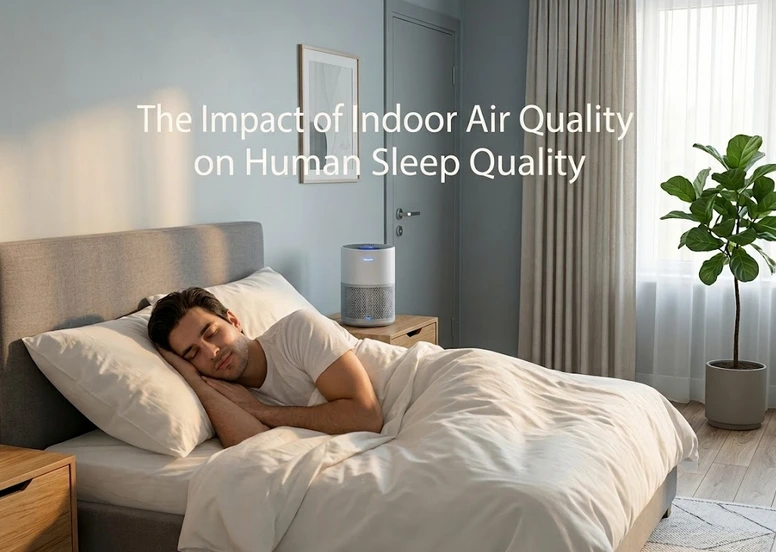
You’ve tried blackout curtains, melatonin, and sleep apps. But what if the real problem is invisible floating in the very air you’re breathing all night?
To effectively tackle these invisible sleep-disruptors, you should look for units specifically designed for quiet operation and HEPA filtration. You can explore our top-rated best air purifiers for Small Rome to find a model that won’t disturb your rest.
Table of Contents
Why Your Bedroom Air Matters More Than You Think
I’ve spent years reviewing, testing, and recommending air purifiers. And the single most underrated conversation I have with people is this one: your bedroom air quality is probably the biggest unaddressed factor in your sleep health.
Most people optimize everything around sleep mattresses, pillows, light exposure, screen time. Almost nobody thinks about the 2,000 liters of air they breathe every single night. Yet the data is unambiguous: poor indoor air quality doesn’t just make you feel groggy it actively disrupts the neurological architecture of your sleep.
According to the U.S. Environmental Protection Agency (EPA), indoor air can be two to five times more polluted than outdoor air. In bedrooms with poor ventilation which most bedrooms are that figure climbs even higher. You’re essentially sleeping in a closed container filling up with CO₂, particles, mold spores, and off-gassing chemicals from your furniture and mattress.

A clean, well-ventilated bedroom environment is foundational to restorative sleep.
Let’s break down exactly what’s happening and more importantly, what you can do about it.
More polluted than outdoor air, indoors (EPA)
Air breathed per night during 8 hours of sleep
Of time people spend indoors each day
Higher respiratory symptoms in high-VOC bedrooms (WHO)
The Science: How IAQ Disrupts Your Sleep Cycles
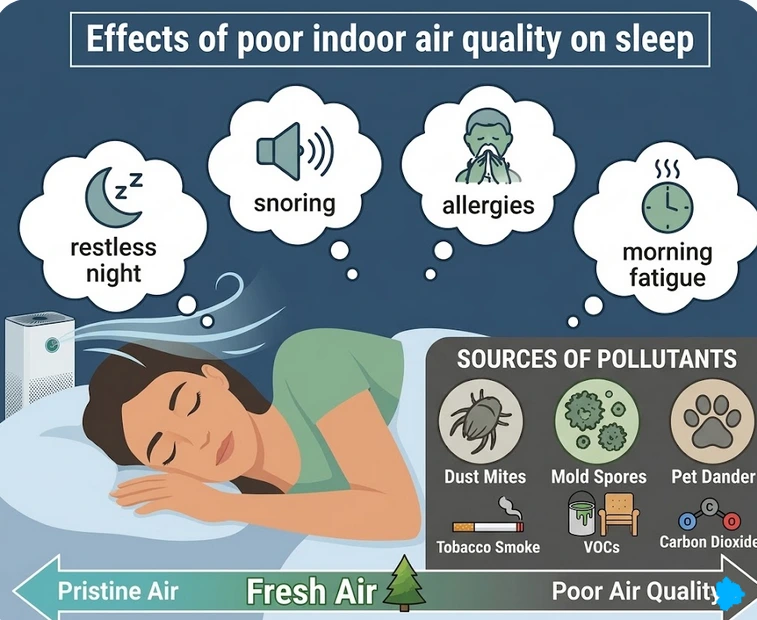
Sleep isn’t a single state it’s a structured sequence of stages: light sleep (N1/N2), deep slow-wave sleep (N3), and REM (Rapid Eye Movement). Each stage serves a critical function: memory consolidation, hormone regulation, cellular repair, and emotional processing. When air quality degrades in your bedroom, here’s what the research tells us happens:
Micro-Arousals You Never Remember
Airborne irritants including fine particulate matter (PM2.5), mold spores, and VOCs trigger low-grade inflammatory responses in your airways. Your body’s immune sensors detect these particles and signal a mild stress response. This doesn’t always wake you up fully, but it causes micro-arousals: brief interruptions to sleep architecture that fragment your deepest, most restorative stages. You wake up technically having “slept 8 hours” but feeling like you ran a marathon.
The Autonomic Nervous System Response
Pollution exposure even at subclinical levels activates the sympathetic nervous system, the branch responsible for the fight-or-flight response. During sleep, you need the parasympathetic system to dominate. Chronic low-level pollutant exposure keeps the nervous system from fully shifting into that restful mode, elevating cortisol and heart rate variability in ways that blunt deep sleep.
A landmark study published in the American Journal of Respiratory and Critical Care Medicine found a direct correlation between PM2.5 exposure and reduced sleep efficiency, as measured by polysomnography. The more particles in the bedroom air, the more disrupted the sleep architecture.
The bedroom should be a sanctuary but for millions of people, it’s a slow-release chamber of pollutants that silently fragment their most valuable hours of rest.
The Invisible Culprits: Key Indoor Pollutants

Common indoor pollutants that directly affect sleep quality and respiratory health.
Here’s a breakdown of the major pollutants likely present in your bedroom right now, and their specific impact on sleep:
| Pollutant | Common Sources | Sleep Impact | Severity |
|---|---|---|---|
| CO2 | Breathing, poor ventilation | Cognitive fog, reduced REM | High |
| PM2.5 | Outdoor air, cooking | Inflammation, poor deep sleep | High |
| VOCs | Furniture, paint, cleaners | Headaches, neurotoxicity | High |
| Dust Mites | Bedding, carpets | Nasal congestion, snoring | High |
| Mold Spores | Humidity >55%, HVAC | Coughing, insomnia | Medium |
| Pet Dander | Pets in bedroom | Airway inflammation | Medium |
| NO2 | Gas stoves, traffic | Breathing disruption | Moderate |
Carbon Dioxide (CO₂) The Silent Sleep Thief
Of all the IAQ factors, elevated CO₂ is the most consistently underestimated. Here’s why it matters so much: in a sealed bedroom with one person sleeping, CO₂ levels can rise from the outdoor baseline of ~420 ppm to well over 1,500–2,500 ppm by morning. At those concentrations, research from Harvard’s T.H. Chan School of Public Health shows measurable declines in cognitive function and sleep quality.
CO₂ doesn’t just make you feel foggy in the morning it actively suppresses the quality of your sleep while it’s happening. Elevated CO₂ causes a slight acidification of the blood (respiratory acidosis), which the brain detects and responds to with mild arousal signals. These aren’t enough to wake you up, but they’re enough to keep you from sinking into N3 and REM sleep as deeply as you should.
The fix here is often simpler than people expect: ventilation. Even cracking a window by 2 inches dramatically reduces bedroom CO₂ buildup. For those in urban environments where outdoor air quality is poor, this is where a quality air purifier with a true HEPA filter becomes essential it allows you to circulate and clean air without introducing outdoor pollutants.
- Keep bedroom CO2 below 800 ppm for optimal sleep. Use a CO2 monitor (like the Aranet4) to baseline your bedroom levels.
- Sleep with a window slightly open when outdoor AQI is below 50.
- A HEPA air purifier on low setting all night maintains circulation without noise disruption.
- Avoid sleeping with the door fully closed and no ventilation: this is the fastest way to elevate CO2.
VOCs, Dust Mites & Allergens: The Triple Threat
Running an air purifier in the bedroom at night can significantly reduce allergen load and improve sleep quality.
Volatile Organic Compounds (VOCs)
VOCs are gases emitted from solid and liquid products and your bedroom is packed with them. That new mattress, the wood furniture, the freshly painted walls, even some bedding fabrics they all off-gas chemicals including formaldehyde, benzene, and toluene. These compounds are classified by the World Health Organization as respiratory irritants and some as probable carcinogens.
During sleep, your body’s detoxification processes are active, but prolonged exposure to high-VOC air in a sealed room strains those systems. More immediately relevant to sleep: VOC exposure has been linked to increased sleep-disordered breathing events and elevated nighttime heart rate.
For VOC removal, you need an air purifier with an activated carbon filter HEPA alone doesn’t capture gases. This is why I always recommend purifiers with dual filtration to my readers. Check our guide to the best air purifiers for VOCs if this is your primary concern.
Dust Mites: The Bedroom’s Most Unwelcome Residents
Dust mites are microscopic arachnids that live in your mattress, pillows, and bedding feeding on shed skin cells. There are potentially millions of them in an average mattress. Their waste particles become airborne when you move in bed and are a major trigger for allergic rhinitis, asthma, and nighttime coughing.
The physical consequence is predictable: a stuffy, irritated nose means you’re breathing through your mouth, which dramatically increases the likelihood of snoring and sleep apnea events. Even sub-clinical nasal congestion increases the effort required to breathe, raising your physiological arousal threshold and fragmenting sleep architecture.
Wash bedding in hot water (above 130°F / 54°C) weekly, use allergen-proof mattress encasements, and run a true HEPA air purifier to capture airborne mite particles. According to the Sleep Foundation, reducing allergen load in the bedroom directly correlates with improved sleep quality in allergy sufferers.
Humidity, Temperature & Particle Size
IAQ isn’t just about what’s in the air it’s about the physical conditions of the air itself. Two factors that are frequently overlooked:
Relative Humidity
The ideal bedroom humidity for sleep sits between 40–55% RH. Too low (below 30%) and your nasal passages dry out, increasing congestion and making you more susceptible to viral infections the mucus lining of your airways is your first defense against pathogens. Too high (above 60%) and you’re creating a paradise for dust mites and mold.
In winter, forced-air heating destroys bedroom humidity. A cool-mist humidifier paired with an air purifier addresses both problems simultaneously. In humid climates or summer months, a dehumidifier helps keep mold and mite populations in check. For a comprehensive solution, explore our top picks for air purifiers with built-in humidifiers.
Temperature & Its IAQ Connection
Your core body temperature needs to drop by about 1–2°F to initiate sleep. Higher room temperatures not only make this process harder they also accelerate VOC off-gassing from furniture and bedding. A cooler bedroom (65–68°F / 18–20°C) benefits IAQ as much as it benefits sleep onset.
Humidity is the invisible dial that determines whether your bedroom is a resilient, clean-air environment or a breeding ground for the organisms most likely to disrupt your sleep.
Expert Solutions: What Actually Works
After years of testing products and reviewing the research, here’s my honest, prioritized list of interventions ordered by impact:
1. True HEPA Air Purifier with Activated Carbon
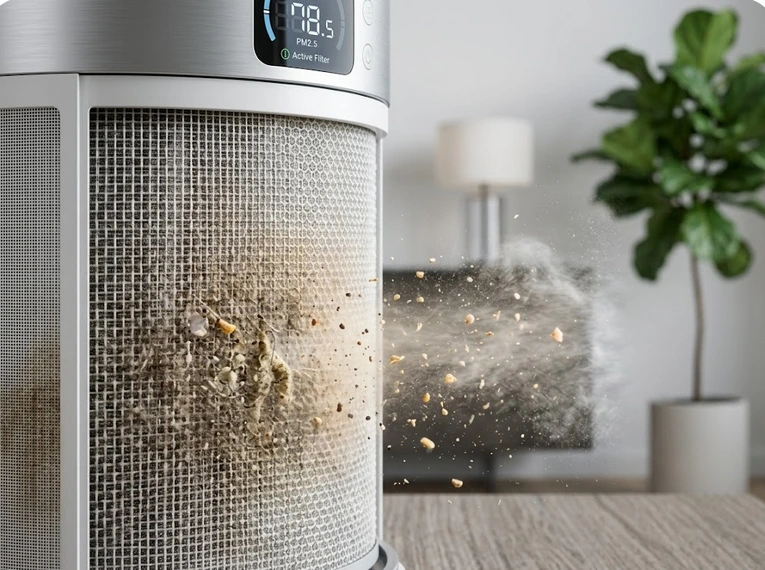
This is the single highest-impact purchase for bedroom air quality. A true HEPA filter captures 99.97% of particles at 0.3 microns including dust mite allergens, mold spores, pet dander, pollen, and PM2.5. The activated carbon layer handles VOCs and odors. Run it on low/medium 24/7 in your bedroom. Look for a CADR (Clean Air Delivery Rate) that covers at least 1.5× your room’s square footage. See our best bedroom air purifiers guide for curated recommendations.
2. Ventilation: The Free Intervention
When outdoor AQI permits, ventilate your bedroom before sleep and again in the morning. Even 10 minutes of cross-ventilation can halve nighttime CO₂ levels and flush accumulated VOCs. Use a free app like AirVisual to check your local outdoor AQI before opening windows.
3. Bedding Protocol
Weekly hot-wash bedding, allergen-proof mattress and pillow encasements, and avoiding carpets in the bedroom (hard floors dramatically reduce dust mite habitat) form the foundation of a low-allergen sleep environment.
4. Monitor Your Bedroom Air
You can’t manage what you don’t measure. A quality indoor air quality monitor (the Aranet4 for CO₂, or the IQAir AirVisual Pro for comprehensive IAQ) lets you understand exactly what’s happening in your bedroom. Most people are shocked by the numbers.
5. Source Control
Reduce the sources of pollution before you try to clean the air. Choose low-VOC paint and furniture. Avoid synthetic air fresheners and scented candles in the bedroom (both generate fine particles and VOCs). Let new furniture off-gas in a ventilated space before moving it into your bedroom.
- CO2 below 800 ppm (monitor with Aranet4 or similar)
- Relative humidity between 40–55% RH
- Temperature between 65–68°F (18–20°C)
- HEPA air purifier running on low 24/7
- No scented candles, synthetic air fresheners, or incense
- Bedding washed weekly at 130°F+ with allergen encasements
- Hard flooring preferred over carpets
- Window opened briefly daily when outdoor AQI ≤ 50
FAQS
Can an air purifier really improve my sleep?
Yes, and meaningfully so. Multiple peer-reviewed studies show that reducing PM2.5 and allergen levels in the bedroom improves sleep efficiency, reduces nighttime awakenings, and decreases snoring in allergy sufferers. It’s not a magic fix for all sleep issues, but for most adults with sub-optimal bedroom air, the impact is measurable within days.
Is it safe to run an air purifier all night while sleeping?
Absolutely. Air purifiers are designed for continuous operation. Run it on the lowest effective setting to minimize noise most modern purifiers have a dedicated “sleep mode” that operates below 35 dB. The benefits of continuous filtration significantly outweigh any concerns. See our full guide on running air purifiers overnight.
What’s the best air purifier placement for a bedroom?
Place the purifier within 6–10 feet of where you sleep, ideally elevated off the floor (on a nightstand or dresser) so it draws air from your breathing zone. Avoid placing it directly against a wall, which restricts airflow. A 360° intake design is ideal for bedroom use.
How do I know if indoor air quality is affecting my sleep?
Common signs include waking up with a stuffy nose or dry throat, feeling unrefreshed despite adequate sleep duration, morning headaches, and increased snoring. The most direct way is to use a CO₂ and PM2.5 monitor overnight and compare readings to your sleep quality data from a wearable device.
Does humidity affect sleep air quality?
Significantly. Low humidity dries mucous membranes, impairing your body’s ability to filter airborne particles. High humidity promotes dust mite and mold proliferation. Aim for 40–55% RH as measured by a hygrometer. A cool-mist humidifier or dehumidifier (depending on your climate) can maintain this range year-round.
Ready to Transform Your Sleep Air?
Browse our expert-tested air purifier recommendations — filtered by room size, budget, and specific concerns like allergies, VOCs, and noise level.
Find the Right Air Purifier →