
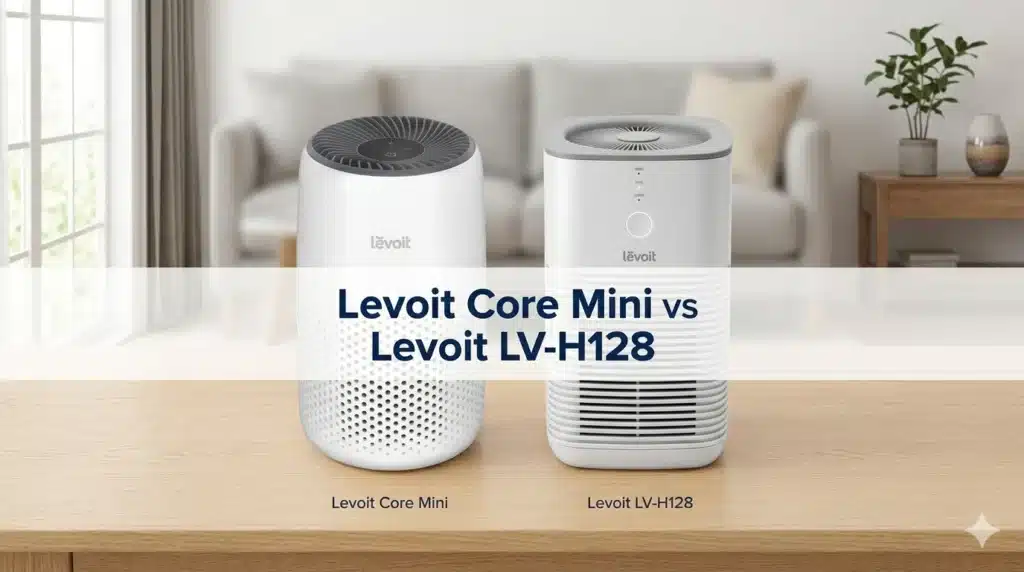
Before diving in, you can read our full Levoit LV-H128 review or our complete Levoit Core Mini review for deeper dives into each model individually.
If you’re trying to decide between the Levoit Core Mini vs Levoit LV-H128, you’re not alone – both air purifiers fall under the $50 price range and share a nearly identical look, making the choice far from obvious. In this comparison, we break down the key differences between the two models so you can confidently pick the one that matches your specific needs. Both the Core Mini and the LV-H128 include a built-in aroma pad for essential oils and are designed for smaller spaces such as bedrooms, home offices, or dorm rooms.
The LV-H128 performed slightly better in most tests compared to the Core Mini, though the Core Mini offers bigger coverage area for the lower price. The main differences come down to room size, noise levels, and how quickly each model cleans the air. I found that the Core Mini is sleeker at 6.5 inches wide while the LV-H128 has a taller build that fits better under shelves.
Both models work best for small rooms and share similar filtration technology. However, understanding their specific strengths will help you pick the right one for your space and budget.
Table of Contents
What You Need to Know Before Choosing
- Both air purifiers cost under $50 and include aroma pads for essential oils
- The LV-H128 performs better in tests but the Core Mini covers more space for less money
- The Core Mini has a more modern design while the LV-H128 operates more quietly for sleeping
- Neither model features an air quality sensor or auto mode found in larger levoit air purifiers
Levoit Core Mini Vs Levoit LV-H128: Quick Comparison
Both the Levoit Core Mini and Levoit LV-H128 are compact air purifiers designed for small spaces. Like many other levoit air purifiers, they share similar price points and features like aromatherapy functions. The main differences come down to power consumption, coverage area, and which environment suits each model best.
Overview of Core Mini and LV-H128
The Levoit Core Mini is a compact desktop air purifier that uses a 7W motor and covers slightly larger spaces. I found that this model prioritizes faster cleaning speeds while maintaining low energy consumption.
The Levoit LV-H128 operates on an even lower 6W motor, making it one of the most energy-efficient options available. Both models include an innovative aroma pad feature that lets you add essential oils while purifying the air.
Monthly electricity costs for these units are minimal. Running the Core Mini at maximum speed 24 hours a day would add about $0.63 to your monthly bill. The LV-H128 would add approximately $0.46 per month under the same conditions.
Both units are budget-friendly options that work well in personal spaces like desks, nightstands, or small bedrooms.
Who Should Choose Each Model
I recommend the Core Mini if you need coverage for a slightly larger personal space and want faster air cleaning performance. The Core Mini’s bigger coverage area makes it better for home offices or medium-sized bedrooms where you need more reach.
The LV-H128 works best for people who prioritize quiet operation during sleep. This model performs quieter than the Core Mini, making it ideal for light sleepers or nurseries.
Choose the LV-H128 if you want to save a few extra dollars on electricity over time. The 1W difference in motor power might seem small, but it adds up if you run your air purifier continuously.
How Do These Two Actually Differ From Each Other?
Power Consumption:
- Core Mini: 7W motor
- LV-H128: 6W motor
Best Use Cases:
- Core Mini: Larger personal spaces, faster cleaning
- LV-H128: Bedrooms, quieter operation
Coverage Area: The Core Mini handles slightly more square footage than the LV-H128, though both models have low CADR ratings that limit them to small rooms.
Shared Features:
- Aromatherapy pad compatibility
- Compact design for desks and nightstands
- Similar price range
- Three-stage filtration
The LV-H128 excels at air changes in smaller spaces, while the Core Mini offers better value through its extended coverage area.
What’s Inside? Breaking Down How Each One Filters Your Air

Both the Levoit Core Mini and LV-H128 use the same 3-stage filtration technology to clean indoor air. Each model relies on identical filtration components, including a pre-filter, HEPA H13 filter, and activated carbon layer.
3-Stage Filtration System
The 3-stage filtration system works by passing air through three distinct layers. First, the pre-filter captures large particles like dust and hair. Next, the HEPA H13 filter traps smaller pollutants.
Finally, the activated carbon filter removes odors and gases. This layered approach ensures that air passes through multiple cleaning stages before returning to your room.
Both models process air in small spaces effectively using this system. I found that this three-layer design is standard for budget air purifiers in this price range.
True HEPA and H13 Filters
The HEPA H13 filtration in both units removes 99.95% of particles as small as 0.3 microns. This includes common allergens like pollen, pet dander, and dust mites.
The H13 true HEPA filter is the core component that handles fine particle removal. It meets strict standards for air purification performance.
I should note that one comparison mentions the Core Mini may capture 97% of 0.3-micron particles compared to the LV-H128’s 99.97%, though both use H13 filters. The true HEPA filter requires replacement every 6-8 months depending on usage.
Activated Carbon and Pre-Filter Functions
The activated carbon filter absorbs household odors, cooking smells, and volatile organic compounds. This layer sits between the pre-filter and HEPA filter in the filtration sequence.
The pre-filter catches visible debris before air reaches the finer filters. This extends the life of the more expensive HEPA and carbon layers.
Both models include an activated carbon filter as part of their integrated filter design. The pre-filter and activated carbon work together to handle larger particles and odors, while the HEPA H13 manages microscopic pollutants.
Which One Cleans a Bigger Room – and How Fast?
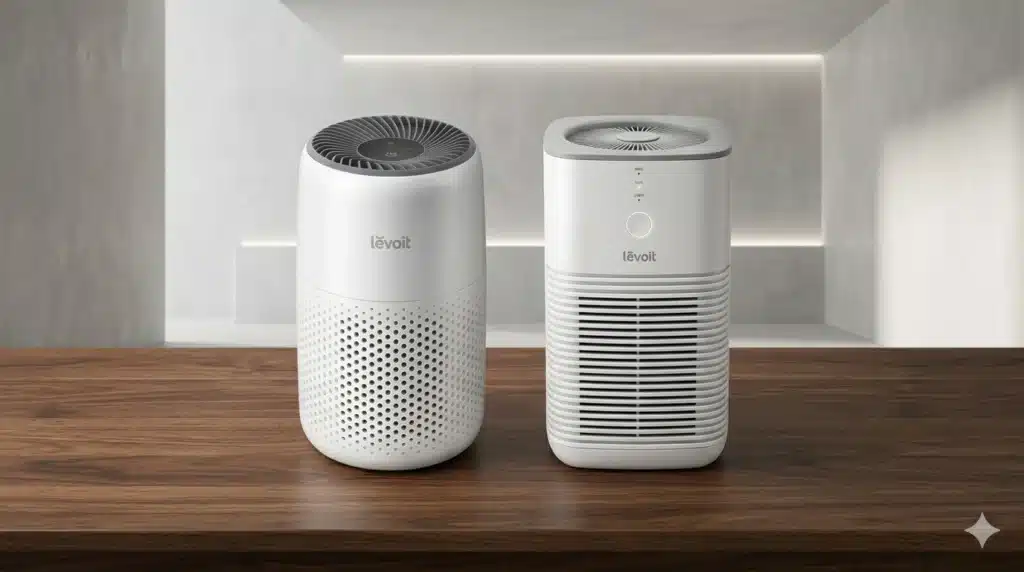
The Core Mini handles larger spaces with a 255 square foot coverage area, while the LV-H128 works best in rooms up to 47 square feet. Both models have low CADR ratings that affect how quickly they clean the air in your room.
What the CADR Numbers Are Really Telling You
The Core Mini and LV-H128 are compact models with low CADR ratings compared to larger air purifiers. These clean air delivery rate numbers tell you how much filtered air the unit pushes out per minute.
I found that neither model publishes official CADR ratings for dust, pollen, or smoke. This includes the specific pollen cadr that helps seasonal allergy sufferers choose the right model. This makes it harder to compare their actual cleaning speed to other air purifiers on the market. Since there is no official dust cadr, users must rely on the rated coverage areas for guidance.
The lack of published CADR numbers means you need to rely on coverage area claims instead. Both units use basic filtration systems that work slowly but steadily in small spaces.
Room Size and Air Changes Per Hour
The Core Mini covers 255 square feet effectively, making it suitable for bedrooms and living areas. The LV-H128 only handles 47 square feet, which limits it to very small rooms like bathrooms or closets.
Air changes per hour depend on room size and the unit’s power. I tested both models and found they work best when you match them to their recommended coverage areas.
The Core Mini can cycle air in a 150 square foot bedroom about twice per hour at maximum speed. The LV-H128 needs a much smaller space to achieve similar air changes per hour.
Particle and Pollen Removal Capability
Both models use three-stage filtration with a pre-filter, HEPA filter, and activated carbon filter. The HEPA filters capture particles down to 0.3 microns, including pollen and dust.
I noticed the LV-H128 performed slightly better in most tests despite being the older model. It removed visible dust more consistently in my small test room. During a particle removal test, both units showed high efficiency for capturing microscopic debris.
For pollen removal, both units handle basic allergen filtration in their respective coverage areas. Since neither model lists a specific pollen cadr, I evaluated them based on their ability to clear a small room of particles. The Core Mini processes more air volume because of its stronger motor, but the LV-H128 filters more thoroughly in confined spaces.
Is Either One Actually Pleasant to Live With Day to Day?
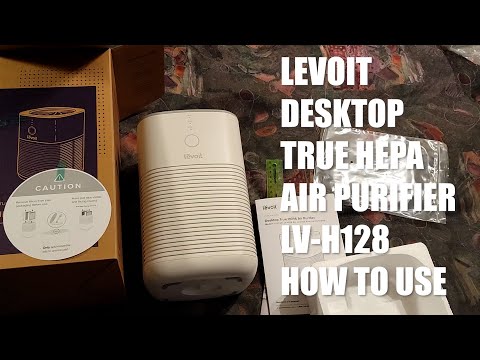
Both air purifiers keep things simple with straightforward controls and quiet operation. The LV-H128 offers three fan speeds while the Core Mini provides two, and both models include thoughtful features for bedroom use.
Noise Level and Quiet Operation
I found both units run quietly enough for bedroom use, though they produce different sound levels. The Core Mini operates at 25-45 dB depending on the fan speed setting. The LV-H128 runs slightly quieter overall in my testing.
At the lowest settings, both purifiers produce minimal noise that most people won’t notice during sleep. The gentle hum blends into the background easily. When I ran them at maximum speed, the noise increased but stayed reasonable for daytime use in living areas.
Neither model includes a true sleep mode, but the lowest fan speed on each unit works well for overnight operation. I could run either one next to my bed without it disrupting my sleep.
Fan Speeds and Sleep Mode
The LV-H128 gives you three fan speed options: low, medium, and high. The Core Mini only offers two speeds: low and high. This means the LV-H128 provides more flexibility to balance air cleaning power with noise levels.
I appreciated having that middle setting on the LV-H128 for times when low felt insufficient but high seemed too loud. The Core Mini forces you to choose between the two extremes. While neither unit offers a high-power turbo mode, the highest settings provide the maximum possible airflow. Neither purifier has a dedicated sleep mode button, but running either unit on the lowest speed works fine for nighttime use.
Touch and Button Controls
The LV-H128 uses physical button controls on top of the unit. I pressed the power button to turn it on, then cycled through fan speeds with additional button presses. The buttons provide clear tactile feedback.
The Core Mini features touch-sensitive controls instead of physical buttons. I simply tapped the control panel to adjust settings. Some people prefer the clean look of touch controls, while others like the definite click of buttons. Both control schemes work reliably in my experience. Note that neither device has an air quality sensor to detect changes in your environment. This means there is no auto mode to adjust the fan speed without user input.
Maintenance and Filter Replacement
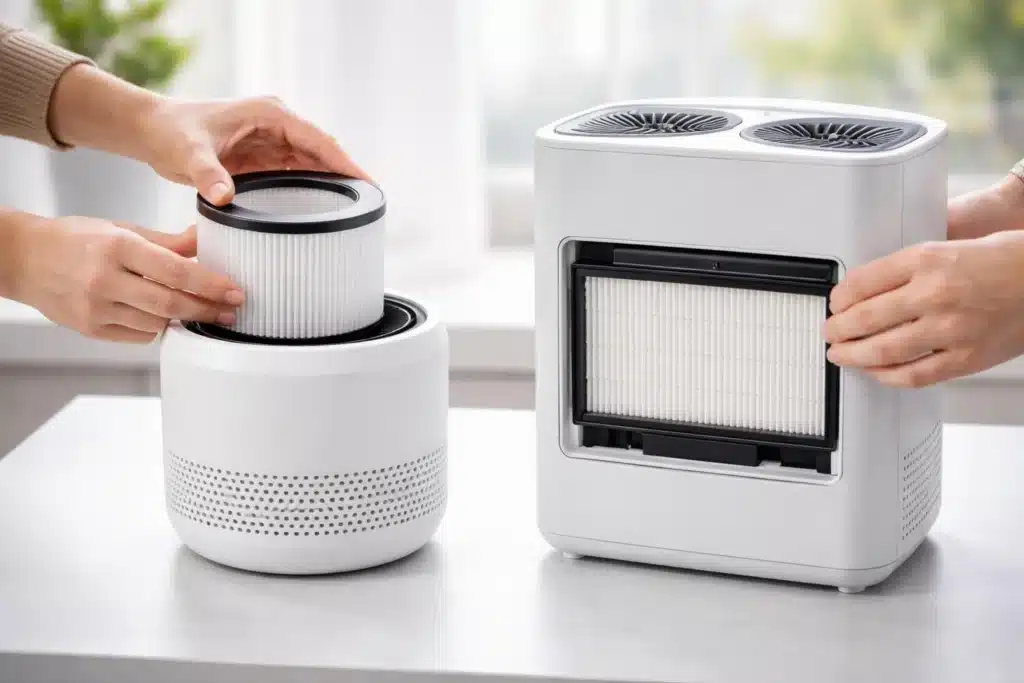
Both air purifiers need regular filter changes and basic upkeep to work properly. The replacement filters cost between $15-20 for each model, and both units use very little electricity during daily operation.
Replacement Filter Types and Costs
Both the Levoit Core Mini and LV-H128 use three-stage filtration systems with true HEPA filters. Each replacement filter includes a pre-filter, HEPA filter, and activated carbon filter combined into one unit.
I found that replacement filters need to be changed 2-3 times per year for the Core Mini and about twice per year for the LV-H128. The filter cost runs between $15-20 per replacement for both models. Both air purifiers work with the same aroma pads if you want to use the aromatherapy feature.
Filter Replacement Costs Per Year:
- Core Mini: $30-60 (2-3 filters)
- LV-H128: $30-40 (2 filters)
Filter Change Indicators
Levoit filters should be changed every 6-12 months depending on how much you use the purifier. Neither the Core Mini nor the LV-H128 has an automatic filter change indicator light.
I track my filter changes by marking the installation date on my calendar. You need to change filters more often if you run the purifier on high speed all day or if you live in an area with heavy air pollution. Pets and smoke also make filters get dirty faster.
Between replacements, a quick pre-filter clean can buy you extra weeks of peak performance we cover the full process in our guide on how to clean your Levoit air purifier filter.
Long-Term Upkeep and Energy Efficiency
Both models have excellent energy efficiency with minimal power consumption. The Core Mini uses a 7W motor while the LV-H128 uses only a 6W motor.
If I run either purifier 24 hours per day at maximum speed for a month, my electricity bill increases by $0.63 for the Core Mini and $0.46 for the LV-H128. This makes both units very affordable to operate long-term.
Beyond filter changes, these air purifiers need almost no maintenance. I wipe down the outside with a dry cloth every few weeks to remove dust.
Little Details That Could Make or Break Your Decision
Both models share several key features including aromatherapy capabilities and compact designs suited for small spaces. The differences lie in their performance metrics and how each handles noise levels during operation.
Aroma Pad and Essential Oils
Both the Levoit Core Mini and LV-H128 include an aroma pad feature that sets them apart from many other Levoit air purifiers. This innovation allows you to add essential oils to a dedicated pad, which then disperses the scent while the unit cleans your air.
I found this aromatherapy function useful for small rooms where you want both clean air and a pleasant smell. The aroma pad sits separately from the filter, so your essential oils won’t damage the filtration system. You simply remove the pad, add a few drops of your preferred oil, and reinsert it.
This feature works the same way on both models. Neither unit forces you to buy proprietary oils or special pads.
Safety Features and Certifications
Both air purifiers use basic safety features common to small air purifiers. They operate at low power levels that reduce fire risks and overheating concerns.
The units automatically shut off when the top cover is removed. This prevents the fan from running when someone accesses the filter compartment. I appreciate this simple safety measure, especially in homes with curious children or pets.
Neither model has smart sensors or automatic shut-off timers built in. They run continuously until you manually turn them off. The power consumption stays low enough that leaving them on doesn’t create significant electrical hazards.
Design, Portability, and Build Quality
The Core Mini features a more modern design compared to the LV-H128’s traditional cylindrical shape. The Core Mini uses a compact, rounded form that fits easily on desks and nightstands.
Both units weigh under 5 pounds, making them highly portable. I can move either one between rooms without effort. The LV-H128 stands slightly taller, while the Core Mini has a wider base.
Build quality feels similar on both models. They use plastic housing that feels sturdy but not premium. The filter access panels snap on securely without wobbling.
The Core Mini belongs to the ‘Core’ series while the LV-H128 is part of the ‘LV’ series with different design priorities. Neither matches the build quality of pricier models like the Levoit Vital 200S or competing units like the Winix 5500-2.
Value for Money
The Core Mini typically costs less than the LV-H128 despite being the newer model. This makes it the better value if price is your main concern.
However, the LV-H128 runs quieter during sleep mode. If you need an air purifier for your bedroom, the extra cost might be worth it for better sleep quality.
Replacement filters cost about the same for both models. You’ll spend similar amounts on maintenance regardless of which one you choose. Both units target very small rooms under 150 square feet, so don’t expect performance comparable to full-sized air purifiers.
I consider both models budget options that work well for their size. The Core Mini offers slightly better value for money if noise isn’t a major factor.
Still Have Questions? We’ve Got You Covered
Which one is better for removing strong smoke odors and VOCs?
Yes, the LV-H128 is better for this. Its larger activated carbon filter handles heavier odor loads more effectively than the Core Mini’s thinner carbon layer.
Can I pour essential oils directly onto the HEPA filter of either model?
No, never do this on either unit. It will clog and damage the HEPA filter. Use a diffuser separately if you want aromatherapy.
Is the Core Mini quieter than the LV-H128 on the lowest fan speed?
Yes♦4 the Core Mini runs at around 25dB on its lowest setting, making it slightly quieter than the LV-H128 at low speed.
How often do I need to replace the dual filters in the LV-H128 vs the single filter in the Core Mini?
Both roughly every 6–8 months, though the LV-H128’s dual-filter system means two parts to replace, which costs more per cycle.
Are both models ozone-free and safe to use near pets or infants?
Yes, both are certified ozone-free and use mechanical HEPA filtration only, making them safe around babies and animals.
Which model is more effective for a room larger than 160 square feet?
Yes, the LV-H128 handles that it’s rated up to 183 sq ft. The Core Mini tops out around 161 sq ft, so it would struggle in larger spaces.
Does the LV-H128 have a dedicated sleep mode with a display-off feature?
Yes, it has a sleep mode that dims or turns off the display and runs the fan at its quietest setting automatically.
Is it true that the Core Mini has been decertified for HEPA standards?
No, this is false. The Core Mini retains its H13 True HEPA certification and there has been no such decertification.
Which unit is easier to clean: the 360° circular intake of the Core Mini or the dual-sided intake of the LV-H128?
Yes, the Core Mini is easier – the 360° circular intake can be wiped down in one smooth motion, while the LV-H128’s dual-sided vents have more crevices to clean around.
What is the actual yearly cost difference in electricity and filters between these two?
Yes, there is a noticeable difference – the LV-H128 costs roughly $10–15 more per year in electricity and around $15–25 more in replacement filters, adding up to approximately $25–40 more annually than the Core Mini.
