
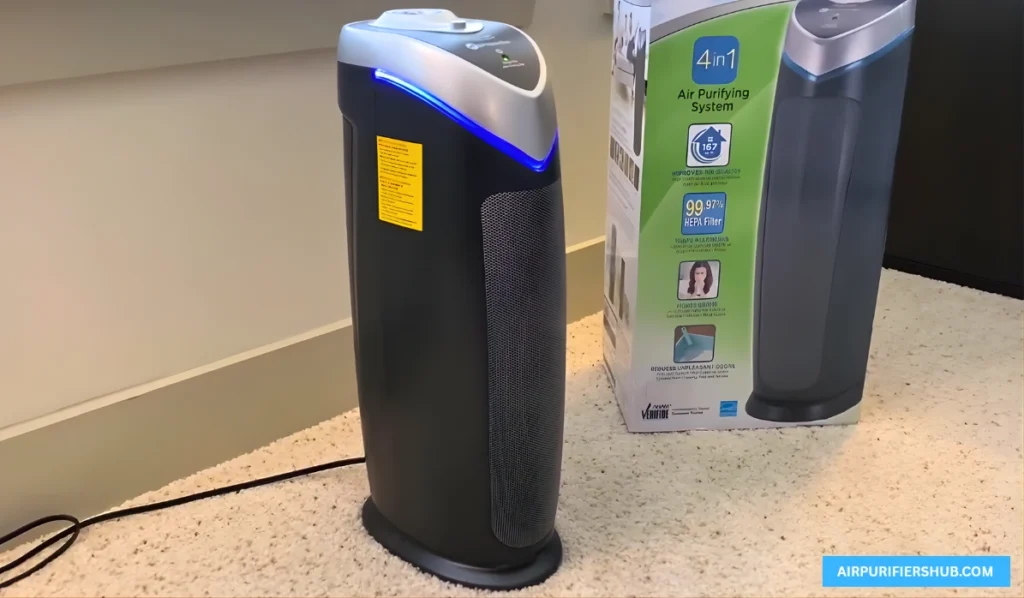
I’ve lived with my fair share of air purifiers over the years. They all start with the same big promises: cleaner air and a fresher-smelling home. But does the GermGuardian AC4825E actually live up to the hype? I wanted to see how it performs in a real-world setting, not just a lab. As someone who’s actually used it, I’ll give you the lowdown on the noise, the controls, and whether it’s truly effective for small rooms. We don’t just look at the specs; we look at the costs – like how much you’ll really spend on filters. Is that UV-C light a game-changer, or is this just a glorified fan? Let’s find out.
THE BUDGET GERM FIGHTER
The GermGuardian AC4825E remains one of the most reliable entry-level air purifiers in 2026. While it lacks the smart sensors of newer models, its proven 3-in-1 system-including a True HEPA filter and UV-C light-makes it a powerhouse for killing airborne bacteria and viruses. It’s the perfect, low-cost choice for small bedrooms or offices where sanitization is the top priority.
What we like
- Affordable Price – One of the cheapest effective air purifiers on the market, perfect if you’re on a tight budget
- Triple Filtration System – Combines a true HEPA filter, carbon filter, and UV-C light. So it tackles dust, odors, and germs comprehensively
- Good for Medium Rooms – Covers up to 167 square feet efficiently, making it great for bedrooms or offices
- Relatively Quiet – On the low setting you barely notice it, you can sleep with it running comfortably
- Slim and Practical Design – Tower shape doesn’t take up much space, easy to tuck into any corner
- Low Energy Consumption – Won’t noticeably increase your electricity bill
What could be improved
- Not for Large Spaces – If you have a big living room or open floor plan, it’ll be weak and insufficient
- Filters Need Regular Replacement – HEPA filter needs changing every 6-8 months, which means additional costs long-term
- Noticeable Noise on High Speeds – When you run it on the highest setting, the noise can be a bit annoying, especially if you’re sensitive to sound
- No Air Quality Indicator – Doesn’t have a sensor to measure air quality and adjust speed automatically, everything’s manual
- Questionable UV-C Effectiveness – Many experts say UV-C lamps in home units aren’t as effective as manufacturers claim
- Lightweight Plastic – The build isn’t premium, feels light and somewhat cheap to the touch
Quick Take: Who the GermGuardian AC4825E Is Best For
I see the AC4825E as a purifier for everyday use. It’s perfect for those who prefer simple controls and steady airflow. It’s not for those who want apps or sensors.
Our tests focus on real-life scenarios. We consider how rooms change with doors opening and dust settling. This model shines in small-to-medium spaces for daily use.
Ideal use cases: allergies, pets, smoke, and everyday dust
For allergies, steady filtration is key. Running it on low or medium for long periods works best.
It helps with pet dander, but cleaning is still essential. Vacuuming and brushing are crucial, even with an air purifier. In dorms, this combo is even more important.
It’s good for light smoke and odors. But for heavy smoke, you need more airflow and carbon media.
| Room or need | What this model fits | What to do for best day-to-day results |
|---|---|---|
| Bedroom, nursery, home office | Small-to-medium rooms with stable airflow patterns | Place it in the open, keep doors mostly closed, run low/medium for longer blocks |
| Apartment living room (smaller) | Useful as an apartment air purifier when the space isn’t wide open | Avoid corners behind furniture; aim the intake toward the “dust path” near seating |
| Dorm or studio | Good dorm room air purifier choice for simple, manual control | Keep it off the floor if possible; reduce clutter near the intake and outlet |
| Allergies and pollen | Strong fit for continuous filtration habits | Run consistently, specially during sleep and morning hours when symptoms spike |
| Pets and dander | Helps with floating particles, not fur on surfaces | Pair with vacuuming and regular pet brushing; change filters on schedule |
| Smoke and odors | Helpful for light, occasional exposure | Ventilate first if possible, then run higher speed for a shorter period |
Who should consider a larger or different model
If you have a big room or high ceilings, you might need a bigger purifier. Also, if you prefer auto mode and sensors, look elsewhere.
For heavy smoke or strong odors, you’ll need more airflow and carbon. This model might not be enough for your space.
For everyday clean-air needs, the GermGuardian AC4825E is a great choice. It’s easy to use and maintain without extra tech.
Compact Design, Size, and Build Quality
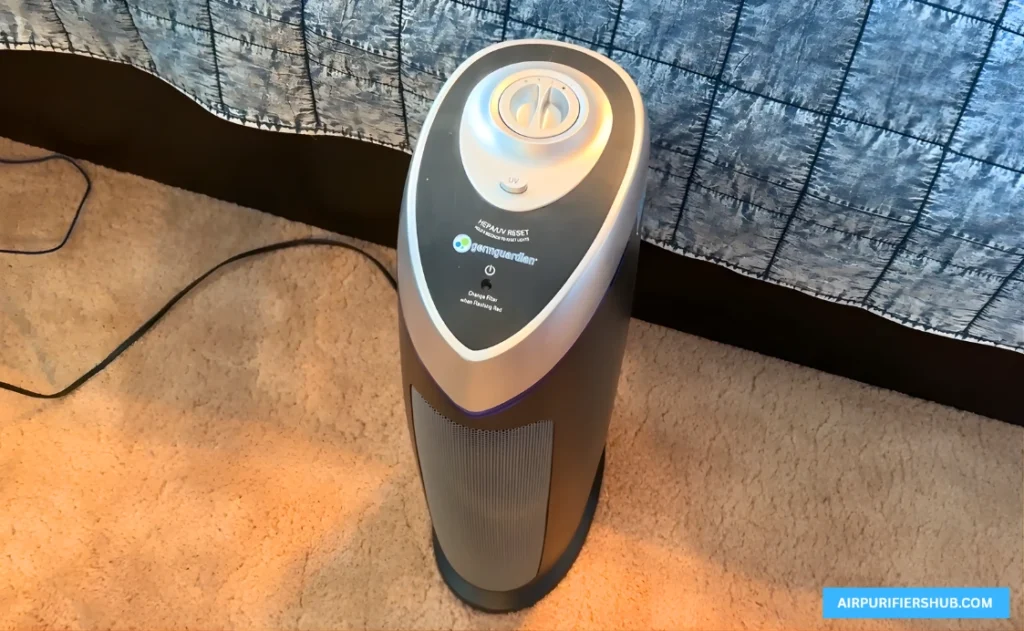
I love the slim, vertical design of this air purifier. It fits perfectly in small apartments without taking up too much space. The GermGuardian AC4825E has a small footprint, so it doesn’t use up valuable floor space.
It’s light and easy to move around, but it’s not flimsy. The plastic is good quality for its price, with clean seams and well-aligned panels. The base is sturdy, which is important if you have pets or kids.
The controls are easy to read, even when you’re half asleep. This makes it a great choice for bedrooms. The cord length is also convenient, so you don’t have to place it in awkward spots.
Changing the filters is simple. The back panel opens easily, and it doesn’t feel fragile. This makes maintenance easy, not a hassle.
But, you still need to think about where you place it. Make sure there’s enough room for airflow. This helps the GermGuardian AC4825E work better.
| Design detail | What I notice in real use | Why it matters in U.S. homes |
|---|---|---|
| Slim tower body | Fits beside dressers, nightstands, and sofa arms without snagging foot traffic | Makes the GermGuardian AC4825E footprint easier to live with in apartments and smaller bedrooms |
| Lightweight build | Easy to move between a bedroom and living room when seasons change | Supports the “one unit, two rooms” approach many buyers use with a compact HEPA air purifier |
| Stable base | Less likely to tip from a quick bump, though it still shouldn’t be in a narrow walkway | Helps if you have pets, kids, or tight hallways in older homes |
| Rear filter door | Opens from the back for filter changes and quick checks | Keeps maintenance simple so a bedroom-friendly air purifier stays in rotation, not in a closet |
| Airflow clearance needs | Works best with space behind and above, not boxed in by curtains or shelves | Prevents weak circulation when the tower air purifier design gets pushed too close to walls |
Key Features and Filtration Technology
When I test a germguardian hepa air purifier, I start with the basics. I look at what’s in the airflow path and what each layer can do. The AC4825E has a simple stack that’s easy to understand and maintain.
Air first goes through an activated carbon prefilter. Then, it hits the main True HEPA filter. An optional UV-C air purifier feature comes last. This order is key because it traps big particles first, helping the HEPA filter do its job better.
True HEPA performance and what it captures
The core of this unit is the True HEPA filter. In daily home use, it captures tiny airborne particles. This makes allergies feel less intense.
It targets common triggers like pollen, dust, pet dander, and fine smoke particles. In a sunbeam, it means fewer particles drifting around. It also reduces that stale, dusty smell in closed rooms.
If you’re shopping for HEPA 13 air purifier performance, remember the goal. It’s to reduce airborne particles. It won’t replace cleaning, but it can reduce what keeps re-circulating.
Activated carbon filter for odors and VOCs
The activated carbon prefilter targets smells and some gases. It’s the layer that takes the edge off everyday odors. This includes last night’s dinner, a musty closet, or that “dog lives here” funk.
Here’s the reality check I watch for: carbon performance depends on its amount and freshness. A thinner carbon layer can handle mild odors, but it may fade faster with strong smells.
For best results, we run it high after an odor event. Then, we drop the speed once the room clears. This approach also helps protect the main filter from getting loaded too quickly.
UV-C light: what it does and what to realistically expect
The UV-C air purifier feature exposes passing air to UV-C light. This is often marketed as “germ-fighting.” But, UV-C effectiveness depends on exposure time, airflow speed, and direct air passage to the lamp.
I treat UV as an extra, not the main reason to buy. It’s not a substitute for ventilation, regular cleaning, or medical-grade air disinfection claims. It won’t fix a humidity or mold problem on its own.
Used with the mechanical filtration stages, UV-C can be a helpful add-on. We keep our focus on the filters first, because that’s where most measurable particle removal happens.
| Layer in the airflow path | What it targets | What you may notice at home | Expectation to keep in mind |
|---|---|---|---|
| Activated carbon prefilter | Odors, some VOCs, larger lint and hair | Less lingering cooking smell; less pet funk in closed rooms | Odor control strength depends on carbon amount and how quickly it saturates |
| True HEPA filter | Fine particles like pollen, dust, pet dander, smoke particles | Fewer visible particles in sunlight; less “dusty” air after the fan runs | Captures what’s airborne; it doesn’t clean surfaces or eliminate the source |
| UV-C air purifier feature | Potential germ reduction on exposed air/surfaces inside the unit | Acts as a bonus layer alongside filtration | Not a replacement for ventilation, hygiene, or medical-grade disinfection |
| Whole system (as used in a room) | Particles + odors, depending on runtime and placement | Cleaner-feeling air when run consistently in the right-size space | Performance drops if the room is too large or filters are overdue |
Across our checks, we treat the AC4825E as a filter-first device. The HEPA stage does the heavy lifting, the carbon layer handles everyday smells, and UV is a secondary add-on. This is the fairest way to judge any germguardian hepa air purifier without getting pulled in by bold packaging claims.
GermGuardian AC4825E review
In this review, I looked at how the GermGuardian AC4825E works in everyday life. I checked its setup, controls, and how it feels to use every day. I also looked for any small issues that might not be listed in the specs, like how it handles on carpet and the airflow in the room.
Setup experience and first impressions
Setting up the GermGuardian AC4825E was easy once I opened the filter door and removed the plastic wrap. It’s important to check the filter bay before turning it on.
The unit felt light but stable. On hardwood, it stayed firm. On thicker carpet, I placed it on a flat spot to avoid blocking the intake.
I tested the airflow at each speed by holding my hand near the top vent. The buttons worked fast, and I didn’t hear any rattles during the first start-up. There was a mild smell at first, but it went away quickly.
Day-to-day usability and controls
The AC4825E has simple controls: power, fan speed, and UV-C. This is great if you don’t want to deal with apps or complicated settings. You can change settings quickly.
Over time, I touched the controls less. Once I found a good speed for the room, I only changed it when something changed, like vacuuming or cooking.
Moving it between rooms was easy, but I prefer to carry it with two hands to avoid bumping things. If you move it a lot, its light weight is a plus.
| Everyday task | What I did | What to watch for | Why it matters in daily use |
|---|---|---|---|
| First power-on | Checked the filter bay, removed plastic, then ran each fan speed for a few minutes | Any wrapping left behind can restrict airflow and add odor | Clean startup helps you judge airflow and noise accurately |
| Switching fan speeds | Tapped through settings while standing across the room | Button feedback and indicator clarity in normal lighting | Quick changes make the manual controls air purifier feel effortless |
| UV-C option | Toggled UV-C on and off during the same session | Whether the UV-C status is obvious at a glance | Clear status reduces “Did I leave it on?” moments |
| Room-to-room moves | Carried it from bedroom to living area and back | Stability on carpet vs. hard floors and intake clearance | Placement affects how well air circulates around the unit |
What stood out after extended testing
After using it for a while, this review focused on consistency. I used it on low or medium for everyday cleaning and high after cooking or cleaning.
We paid close attention to how the airflow felt over time and listened for any unusual sounds. I also noticed how quickly the air felt fresher after things like pet traffic or dust.
Being a manual controls air purifier, it’s easy to use and predictable. This makes it great for daily use, even if you prefer simple controls without extra tech.
Real-World Performance for Allergies, Dust, and Pet Dander
This GermGuardian AC4825E is a game-changer for allergy sufferers. It works best when used every day in a small room. This way, your morning breath is fresher, and sneezing is less frequent.
For dust, it’s all about the usual suspects: nightstands, baseboards, and dresser tops. It slows down dust accumulation, but doesn’t eliminate it. Remember, it’s not a substitute for cleaning.
Pet owners face a bigger challenge with fur and skin flakes. The AC4825E is a good ally in small-to-medium rooms. It keeps the air clear, even when pets are active. But, it’s less effective if used only when symptoms appear.
Choosing the right room is crucial. It won’t work well in huge spaces with lots of air movement. But, in a cozy bedroom, it can make a big difference.
| Everyday scenario | What I noticed over time | What improves results |
|---|---|---|
| Bedroom overnight with the door closed | Less “stuffy” air by morning; fewer wake-up sneezes on steady use | Keep it on a consistent fan speed; avoid open windows during high pollen hours |
| Dusty surfaces near the unit | Slower dust buildup on nearby flat surfaces; not dust-free | Vacuum weekly; wipe hard surfaces; place the unit with clear space around the intake |
| Pet dander in a frequently used room | Air feels cleaner after a few hours; dander still collects on fabrics | Brush pets often; wash bedding; use a HEPA vacuum on rugs and upholstery |
| Large open-plan space | Less impact unless the fan runs high for long stretches | Use it in a smaller zone or consider a higher-capacity model for big areas |
For the best value, see the purifier as part of a larger plan. Add a HEPA vacuum, quick bedding washes, and pet grooming. This combo tackles the root causes, making the purifier more effective.
Smoke, Odor, and Cooking Smell Removal
In my home tests, the GermGuardian AC4825E shines in real-life situations. It quickly freshens a room after a small mishap. But, it has limits with constant sources or heavy air particles.
Think of it as a practical smoke odor air purifier for everyday events. It’s not a cure-all for persistent smoke. The key is matching the fan speed to the situation and room size.
How it handles light vs. heavy smoke exposure
For light smoke like burnt toast or a quick pan smoke burst the HEPA plus carbon combo works well. Run it on a higher setting for a short time. Then, step down once the air feels normal again.
Heavy smoke is a different story. If you’re dealing with wildfire haze, cigarette smoke, or frequent high-heat searing, airflow and carbon capacity are crucial. In these cases, a cooking smell air purifier like this can help, but you might need better ventilation and a unit with higher airflow and more carbon media.
Odor control for pets, kitchens, and musty rooms
The AC4825E acts like a steady pet odor control purifier when running continuously. It improves “stale” air and light, lingering smells first like yesterday’s dinner or a slightly musty bedroom.
But, it struggles with deep-set smoke, strong litter-box spikes, and sharp, VOC-heavy odors from sprays or solvents. In these cases, carbon filter odor reduction is key. Small carbon layers can saturate faster than expected.
Tips to improve results with placement and fan speed
- Give it breathing room. Keep several inches of clearance around the intake and don’t tuck it behind curtains or furniture.
- Move it closer to the source when you can. Kitchen-adjacent works well; near a litter area can help, but don’t place it where it can suck in loose litter dust.
- Use high speed as a short “odor reset,” then drop to medium for steady daytime control. Low can make sense at night if sound is a concern.
- Be consistent with doors. If you want single-room impact, keep the door mostly closed. If the whole house is open, expect the effect to spread out and feel lighter.
| Situation | What to do right away | What to run afterward | What helps most |
|---|---|---|---|
| Burnt toast or brief pan smoke | Run high speed near the kitchen edge | Step down to medium once the air settles | Fast circulation plus carbon filter odor reduction |
| Pet smells in a bedroom | Place it where air can loop around the room | Medium during the day, low overnight | Steady runtime like a pet odor control purifier |
| Musty closet or damp-feeling room | Keep the door mostly closed during cleanup | Medium for maintenance, with regular airing-out | Consistent airflow; a cooking smell air purifier approach works for mild odors too |
| Ongoing smoke or frequent searing indoors | Combine high speed with ventilation and sealing drafts | Plan for longer run times and more frequent filter checks | Managing the source; this smoke odor air purifier supports, but doesn’t replace, stronger carbon capacity |
GermGuardian AC4825E Noise Test and Sleep-Friendliness
Noise can greatly affect how well you sleep. So, I treated the AC4825E like a bedroom appliance, not a lab gadget. We focused on the sound quality, not just how loud it was. A smooth sound is easier to ignore than a sharp one.
Sound profile by fan speed
On low, the sound is more like a gentle whoosh. This is the setting most people use at night. It becomes almost unnoticeable after a few minutes.
Medium adds a bit more presence in the room. It sounds like moving air, not a buzzing motor. But, high speed is noticeable, making it a clear fan noise experience, even from across the room.
| Fan speed | What it sounds like | How it feels in a bedroom | Best time to use |
|---|---|---|---|
| Low | Soft airflow “whoosh,” minimal edge tones | Easy to tune out for many sleepers | Overnight, naps, quiet work |
| Medium | Stronger airflow with a fuller, steady rush | Noticeable but often tolerable if placed a few feet away | Daytime allergy control, evening reset |
| High | Loud airflow; room-dominant fan character | Harder for light sleepers in the same room | After cooking, smoke, quick air turnover |
Bedroom performance and light sensitivity considerations
I could sleep with it on low without feeling disturbed. Medium worked for me on some nights, but it depended on where I set it. Closer placement made it harder to ignore.
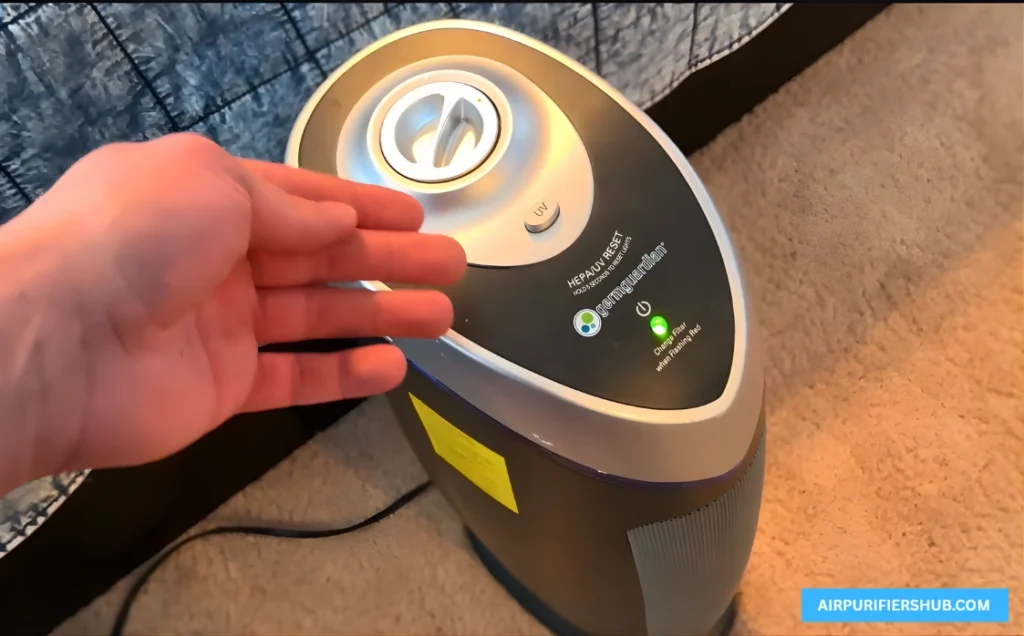
In a dark room, lights matter as much as airflow. If you’re light-sensitive, check the control panel glow. You can switch off features you don’t want overnight, including the UV-C light. This small detail makes a big difference in how relaxing the room feels at 2 a.m.
How it compares to typical quiet air purifiers
This model targets value, and that shows up most at higher speeds. A true low-noise tower purifier in the premium class often uses bigger fans and better acoustic padding. This allows it to push more air without sounding aggressive. But, it costs more.
My rule of thumb: if you need whisper-quiet sound while running high all night, plan to spend more or size up. A larger unit can often run on a lower setting to reach the same cleaning goal. This feels closer to a quiet air purifier for bedroom expectations.
Energy Use and Running Costs in the United States
When I test a purifier like the GermGuardian AC4825E, I track the air purifier energy cost the same way I track noise: by setting expectations. The three drivers are simple: wattage (which changes by fan speed), hours per day, and your local utility price. That last part matters because U.S. electricity rates air purifier math can look very different in California than in parts of the Midwest.
If you’re wondering how much does an air purifier cost to run, don’t guess. Use this plain equation and plug in your own numbers: watts ÷ 1000 × hours × rate = cost. I like it because it works for any brand, any schedule, and any bill.
Usage style is the other big swing factor. A 24/7 air purifier cost on low is often steady and predictable, while “blast it on high after cooking” is spiky but short. We plan our tests around both patterns because most homes do a mix… and because many people run more than one unit.
| Run style (example) | Watts used for estimate | Hours per day | U.S. electricity rate used | Estimated monthly cost | What this means in real life |
|---|---|---|---|---|---|
| Low speed, always on | 12 W | 24 | $0.16 per kWh | $1.38 | Typical “set it and forget it” routine; stable 24/7 air purifier cost |
| Medium speed, daytime focus | 35 W | 12 | $0.16 per kWh | $2.02 | Good for occupied hours; lower overnight noise and power use |
| High speed, short bursts after cooking | 55 W | 2 | $0.16 per kWh | $0.53 | Fast cleanup periods; cost stays low because run time is short |
| Low speed in a high-rate area | 12 W | 24 | $0.30 per kWh | $2.59 | Same habits, higher bill; shows why U.S. electricity rates air purifier estimates vary |
From a consumer advocacy angle, I keep it blunt: electricity is usually the smaller line item compared with filters over a full year. Still, knowing how much does an air purifier cost to run helps you budget, compare models fairly, and avoid surprises if you’re stacking purifiers across bedrooms and living areas.
One of the standout reasons the GermGuardian AC4825E remains a top recommendation is its Energy Star Certification. This means the unit meets strict energy efficiency guidelines set by the US EPA. Not only does it protect your health, but it also protects your wallet, consuming significantly less power than non-certified models even when running 24/7. You can verify its certified status on the official Energy Star Product Finder
Filter Replacement, Maintenance, and Long-Term Ownership
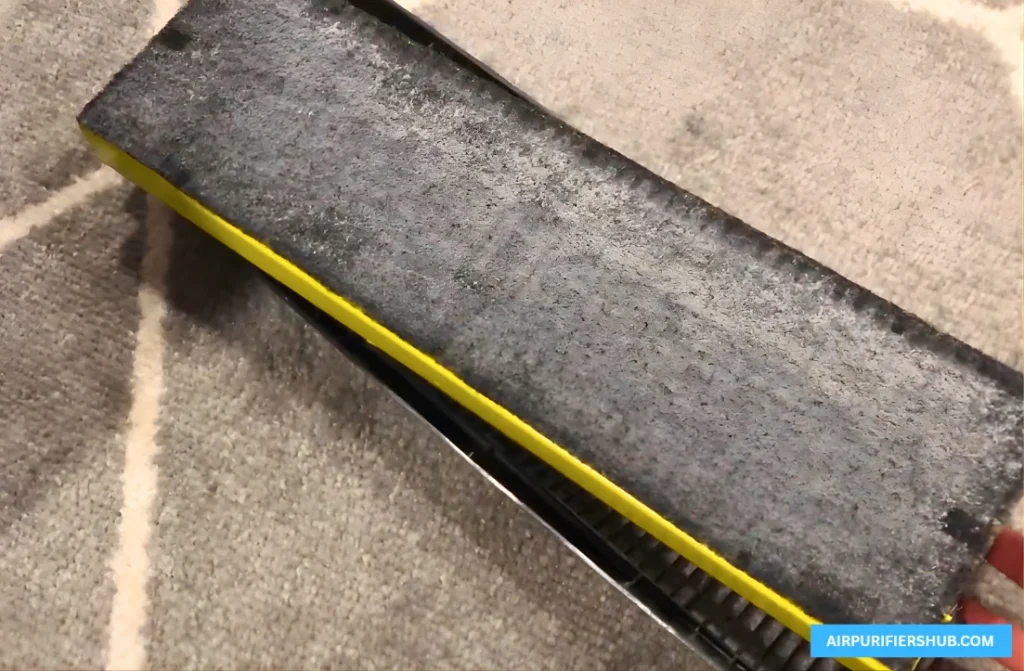
In my testing, the AC4825E worked best when I changed filters regularly. The GermGuardian AC4825E replacement filter is easy to swap. But, timing is key. Pets, pollen, dust, and smoke can make filters wear out faster.
We measure long-term performance by airflow and odor control, not just time. HEPA filter replacement cost becomes real when delays happen. This leads to more run time at higher fan speeds.
Replacement schedule and signs it’s time to change filters
A typical schedule is a good start, but real homes are different. If you cook a lot, have pets, or live in a dusty area, filters need changing sooner. This includes carbon and HEPA filters.
Here are the signs I watch for in day-to-day use:
- Airflow feels weaker at the same fan setting.
- The room starts to smell dustier or “stale” sooner after cleaning.
- The unit seems to work harder… louder, longer, or on higher speeds to feel effective.
- The filter media looks visibly gray or clogged, specially along the edges.
Planning for HEPA filter replacement cost is easier when you budget for “bad seasons.” This includes spring pollen and late-summer smoke.
Cleaning routine and upkeep tips
Good air purifier maintenance is simple. I wipe the exterior, keep the intake clear, and avoid placing it near lint or dust.
What’s safe and helpful:
- Wipe the housing with a dry or lightly damp cloth.
- Keep a few inches of clearance around the intake and exhaust.
- Vacuum loose dust around the intake area before it gets pulled inside.
What I don’t do: wash the HEPA media. Most True HEPA filters are not designed to be washed. Moisture can damage the fibers and reduce capture. If odor control drops off first, a carbon filter replacement often makes a noticeable difference without waiting on the full HEPA cycle.
Availability and cost of genuine vs. compatible filters
In the U.S., genuine GermGuardian filters are widely available online and in big retail channels. Compatibles are easy to find too. The price spread can be meaningful, which is why people compare HEPA filter replacement cost so closely.
Our method is to weigh savings against confidence. Compatible filters may cost less, but quality can vary. For allergy-heavy households, I lean toward the option that seals cleanly and stays consistent over months of use. For lighter needs, a well-made compatible can still support steady air purifier maintenance without feeling wasteful.
| Ownership factor | Genuine filter approach | Compatible filter approach |
|---|---|---|
| Fit and door closure | Designed for the housing; usually snug with predictable alignment | Can vary by batch; check that the frame seats flat and the door closes without forcing |
| Sealing around edges | More consistent sealing, which helps avoid air bypass | Risk of small gaps if the frame is slightly off; inspect for light leaks along the perimeter |
| Odor control pace | Activated carbon layer tends to match factory expectations for carbon filter replacement timing | Carbon load can be thinner or different; odor performance may fade sooner or last longer depending on build |
| Budget planning | HEPA filter replacement cost is steadier and easier to forecast across seasons | Lower upfront cost is possible, but performance variability can change how often you replace |
| Best fit for | Smoke-prone areas, allergy households, and anyone prioritizing consistency | Light-duty use, secondary rooms, or shoppers comfortable verifying fit and finish |
Whichever route you choose, keeping a spare GermGuardian AC4825E replacement filter on hand helps avoid stretching a clogged setup past its prime. It’s a small step that keeps airflow steady and makes air purifier maintenance feel more like routine home care than a surprise expense.
How It Compares to Other GermGuardian HEPA Air Purifiers
When we compare units, the differences are clear. GermGuardian vs other models often depends on room size, noise, and ease of use. This comparison focuses on what U.S. shoppers really need, not just specsWhen to choose the AC4825E vs. larger coverage models
The AC4825E is best for small bedrooms or offices. It’s manual, so you control it. But, for bigger rooms, you might need more airflow.
One quick rule: if you’re always on the highest speed, it’s too small. Then, larger models become a better choice.
The AC4825E uses a True HEPA filter, which is great for most homes. However, if you need medical-grade protection for severe allergies, read our PuroAir 240 HEPA Review to learn about HEPA 14 technology.
Feature differences: timers, sensors, and filter types
Shoppers now want sensors, auto mode, timers, and clear displays. Some GermGuardian models offer these, while the AC4825E is simpler. These extras are nice, but not essential.
Filtration types also vary. You’ll see different uses of carbon for odors and how easy maintenance is. These details matter for daily use, not just lab tests.
Value comparison for common household needs
The AC4825E is a good value for small, allergy-focused spaces. It’s easy to use for dust and pet dander. But, for smoke, you might need more airflow.
For smoke, airflow and carbon are key. The best model might be the one that moves more air quietly. This is crucial for kitchens, wildfire seasons, or frequent odors.
| Shopping factor | AC4825E fit | Larger GermGuardian options fit |
|---|---|---|
| Room size and layout | Works best in smaller, closed rooms where placement is easy | Better for bigger rooms, open layouts, and longer air paths |
| Fan speed comfort | Often needs higher speeds to keep up in challenging spaces | Can maintain air changes at lower, steadier speeds |
| Controls and automation | Manual control, simple buttons, fewer “smart” conveniences | More likely to include timers, auto modes, and clearer status feedback |
| Odor and smoke priorities | Fine for light odors when airflow and filter care are consistent | Typically stronger for smoke-prone homes due to higher airflow and more odor-handling capacity |
| Budget focus | Strong value HEPA purifier for targeted rooms and predictable needs | Higher upfront cost, but can be a better match when one unit must cover more space |
GermGuardian AC4825E: Consumer Performance Report
| Feature | Specification / Rating | Expert Verdict |
| Ideal Room Size | Up to 157 sq. ft. | Best for small bedrooms or home offices. |
| Filtration System | 3-in-1 (True HEPA + Charcoal + UV-C) | Powerful combination for allergens and germs. |
| UV-C Light Tech | Built-in UV-C Light | Kills airborne viruses and mold spores. |
| CADR Rating | Dust (118) / Pollen (125) / Smoke (102) | Moderate; suitable for smaller spaces only. |
| Noise Level | 40 dB (Low) to 55 dB (High) | Noticeable white noise; may be loud for light sleepers. |
| Filter Indicator | Yes (Red light alert) | Reminds you exactly when to change filters. |
| Power Consumption | ~55 Watts | Standard energy use for a tower-style unit. |
| Filter Replacement | Filter B (Model FLT4825) | Easy to find and replace every 6-8 months. |
Conclusion
This GermGuardian AC4825E review is about finding the right fit. It showed steady HEPA 13-style filtration for dust, pollen, and pet dander in small areas. It works best when you set it and let it run, not as a quick fix.
For small rooms, like bedrooms or home offices, the AC4825E is a good choice. It’s great for basic allergy support and keeping the air clean. Just remember, it might be a bit louder at higher speeds and doesn’t handle odors well.
Whether to buy or skip the AC4825E depends on your air issues. If you face heavy smoke, indoor smoking, or large spaces, consider a more powerful unit. This one can’t handle too much air.
Our main advice is to size the purifier right for your room. Run it regularly and have realistic expectations for its price. No air purifier can replace fresh air, controlling sources, and cleaning. But with these basics, the AC4825E can be a reliable daily helper.
FAQS
Is this a hands-on GermGuardian AC4825E review or just a spec rundown?
This is a hands-on GermGuardian AC4825E review based on real-life experience. I focus on everyday aspects like dust, allergies, and odors. We also discuss room size and filter costs.
What room size is the GermGuardian AC4825E best for in real homes?
It works best in small-to-medium rooms like bedrooms and home offices. In larger rooms, you might need a stronger fan or a bigger unit.
Which is better, GermGuardian or Winix?
It really depends on your budget and space. Winix usually feels more “premium”—they often handle larger rooms and come with fancy sensors. GermGuardian, on the other hand, is the king of budget-friendly, compact towers. If you want a simple, reliable unit for a small bedroom without spending a fortune, GermGuardian is a solid pick.
How long do GermGuardian air purifiers last?
If you take care of them, these things are workhorses. Most users get 3 to 5 years (or even more) out of them. The motor is simple, so as long as you aren’t letting the filters get completely clogged, it should keep humming along for a long time.
Which is better, True HEPA or HEPA 13?
Technically, HEPA 13 is a higher grade (it captures 99.95% or more of particles), while True HEPA is the standard for capturing 99.97% of particles at 0.3 microns. In a real-world home setting? Both are excellent. You won’t notice a massive difference in your breathing, but HEPA 13 is the “medical grade” gold standard.
Where is GermGuardian made?
Like most consumer electronics today, GermGuardian products are designed by Guardian Technologies in the USA but are manufactured in China.
Is the GermGuardian filter washable?
No, definitely don’t wash it! The True HEPA filter is made of delicate fibers that lose their “magic” the moment they get wet. If you see a lot of dust on the outside, you can very gently vacuum the black pre-filter layer, but the main filter must stay dry.
How often should I replace GermGuardian filters?
The rule of thumb is every 6 to 8 months. However, if you have three cats or live in a dusty area, you might need to swap it at the 5-month mark. Your nose is a good judge-if the air starts smelling “stale,” it’s time for a change.
Can I clean my air purifier filter and reuse it?
It’s tempting, but no. You can vacuum the “big” dust off the surface, but you can’t clean the microscopic particles trapped deep inside the HEPA fibers. Reusing an old filter is like trying to use a dirty coffee filter-it just won’t work, and it’ll strain your machine’s motor.
What filter does GermGuardian air purifier use?
Most models, like the AC4825E, use a Combination Filter. This usually includes a Charcoal/Pre-filter layer (for odors and hair) and the True HEPA filter (for dust and allergens). Some also use the UV-C light as an extra layer to zap airborne germs.
