
Picking the wrong air purifier for your bedroom means wasted money and poor air quality while you sleep. Many people buy units that are too small to clean their room effectively or too large, creating unnecessary noise and energy costs. Getting the size right matters more than most features advertised on the box.
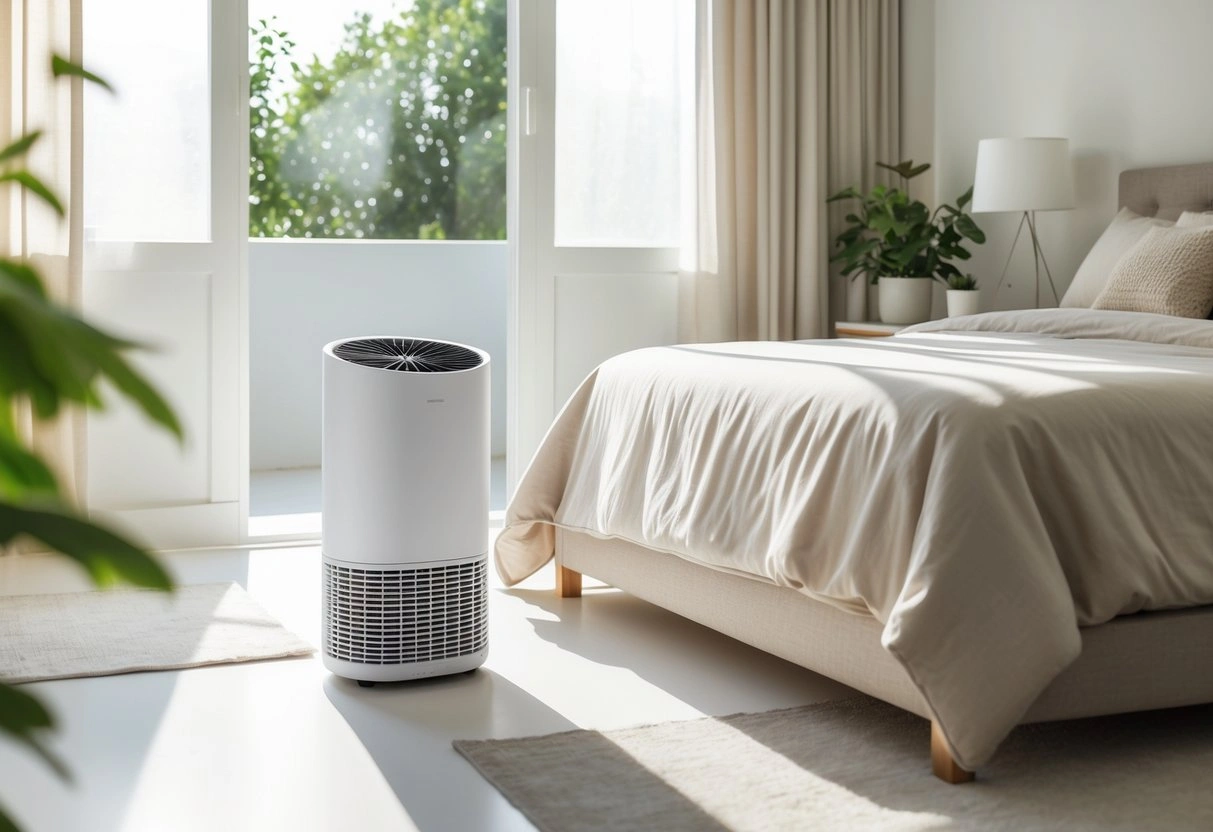
To find the right bedroom air purifier size, multiply your room’s length by width to get square feet, then look for a unit with a CADR rating that matches your room size and desired air changes per hour. I’ve created a simple calculator and guide to help you figure out exactly what you need without complicated math or guessing.
Your bedroom is where you spend about a third of your life. The air purifier you choose needs to handle your specific room size and clean the air multiple times each night. I’ll show you how to measure your space, understand CADR ratings, and pick the perfect unit for better sleep and healthier air.
Table of Contents
Key Takeaways
- Calculate your bedroom’s square footage by multiplying length times width to determine the minimum air purifier size you need
- Match the CADR rating on air purifiers to your room size and multiply by your ceiling height for the most accurate sizing
- Consider factors like air changes per hour, noise levels, and specific bedroom needs when choosing your final unit
💡 Quick Bedroom CADR Formula
To get clean air in your bedroom (5 air changes per hour), use this simple math:
Step 1: Measure your room’s square footage (Length × Width).
Step 2: Multiply the total square footage by 0.75.
Example: If your bedroom is 200 sq. ft., you need a CADR of at least 150.
Understanding Bedroom Air Purifier Sizing
Importance of Sizing for Air Purifiers
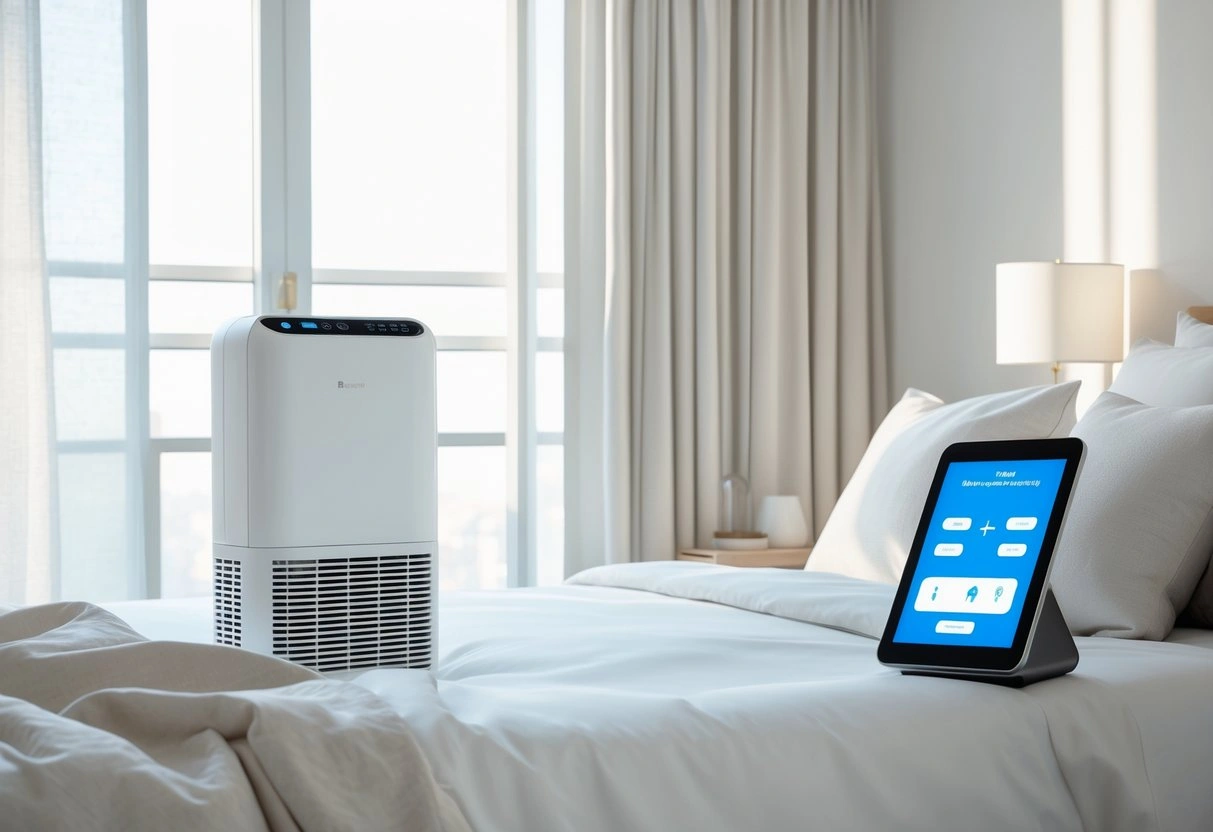
An oversized unit wastes your money upfront and on electricity bills. You pay for power you don’t need every single night. The excess capacity gives you no extra benefit in a smaller space.
The right size purifier cleans your bedroom air 4-5 times per hour. This rate removes allergens, dust, and particles effectively while you sleep. Your unit runs efficiently without overworking or underperforming.
Factors Affecting Purifier Size Requirements
Room volume is your starting point, not just square footage. I calculate this by multiplying length × width × ceiling height. A 12×12 foot bedroom with 8-foot ceilings contains 1,152 cubic feet of air.
Air changes per hour (ACH) determines how often you need your air filtered. Bedrooms typically need 4-5 ACH for good air quality. People with allergies or asthma may need 5-6 ACH for better relief.
Your CADR rating must match your room size and desired ACH. I look for a CADR that equals at least two-thirds of your room’s square footage. A 144 square foot bedroom needs a minimum CADR of 96 CFM.
Ceiling height changes everything. Standard 8-foot ceilings need less power than 10-foot or vaulted ceilings. Higher ceilings mean more air volume to clean.
Common Sizing Mistakes to Avoid
Guessing room size leads to wrong purchases. I always measure the actual dimensions instead of estimating. Even being off by 2 feet in one direction significantly changes the air volume.
Ignoring ceiling height throws off your calculations. Many people use only square footage and end up with an underpowered unit. The vertical space matters as much as the floor area.
Buying based on maximum room coverage creates problems. Manufacturers list the largest room a unit can handle, but that usually assumes only 2 ACH. I recommend choosing a purifier rated for a space 20-30% larger than your bedroom.
Forgetting about doorways and air flow impacts performance. Open doors let unpurified air in from other rooms. I account for this by sizing up slightly if my bedroom door stays open at night.
How to Calculate the Right Air Purifier Size
Finding the right air purifier size involves measuring your bedroom, understanding CADR ratings, and using those numbers to match a purifier to your space. I’ll walk you through each calculation step so you can choose a unit that actually cleans your air effectively.
Measuring Room Dimensions Accurately
I start by measuring the length and width of my bedroom in feet. I use a tape measure and record both numbers.
Next, I multiply length × width to get the square footage. For example, a 12 ft × 15 ft bedroom equals 180 square feet.
The ceiling height matters too. Most bedrooms have 8-foot ceilings, but I always measure mine to be sure. Some homes have 9-foot or even 10-foot ceilings.
I multiply the square footage by ceiling height to get the room volume in cubic feet. Using my example: 180 sq ft × 8 ft = 1,440 cubic feet. This volume tells me exactly how much air the purifier needs to filter.
What Is CADR and Why It Matters
CADR stands for Clean Air Delivery Rate. It measures how many cubic feet of clean air a purifier delivers per minute (CFM).
The CADR rating tells me how fast a purifier can clean my room. A higher CADR means faster air cleaning. Three separate CADR numbers exist for smoke, dust, and pollen.
I look for a CADR that matches my room size and air quality goals. The rating helps me compare different purifiers directly since all manufacturers use the same testing standards.
CADR ratings are standardized by AHAM to ensure consumers can compare the performance of different brands accurately
Step-by-Step Purifier Size Calculation
I need to determine my desired ACH (Air Changes Per Hour). For bedrooms, I target 4-5 air changes per hour for good air quality.
The formula I use is: (Room Volume × ACH) ÷ 60 = Required CADR
Using my 1,440 cubic foot bedroom with 4 ACH: (1,440 × 4) ÷ 60 = 96 CFM minimum CADR.
For 5 ACH, the calculation changes to: (1,440 × 5) ÷ 60 = 120 CFM. I prefer the higher number for better filtration, especially during allergy season.
I always round up when choosing a purifier. If my calculation shows 120 CFM, I look for units rated at 125-150 CFM to ensure adequate coverage.
If your calculation shows a need for a medium-sized unit, models like the AMEIFU FXAP2W are specifically designed to balance energy efficiency with the CADR needed for standard bedrooms
Using the Bedroom Air Purifier Size Calculator
The calculator does all the math automatically. I enter my room length, width, and ceiling height into the input fields.
I select my desired ACH level from the dropdown menu. The calculator instantly shows my required CADR rating in both CFM and cubic meters per hour (m³/h).
The tool gives me a specific number to match against purifier specifications. I can compare this number directly to product listings when shopping. No guessing required.
Additional Considerations for Bedroom Air Purifiers
Beyond room size calculations, bedroom air purifiers need specific features that affect your sleep quality and daily comfort. The noise level, filter technology, and where you place the unit change how well it works in your space.
Noise Levels and Comfort
I look for air purifiers that operate at 30 decibels or lower on their sleep mode setting. This noise level matches a quiet whisper and won’t disturb light sleepers.
Many bedroom air purifiers include a dedicated sleep or night mode. This setting dims the display lights and reduces fan speed to minimize sound. The trade-off is slower air cleaning, but it maintains acceptable air quality while you rest.
Acceptable bedroom noise levels:
- 20-30 dB: Whisper-quiet, ideal for light sleepers
- 30-40 dB: Soft hum, suitable for most people
- 40-50 dB: Noticeable sound, may disturb sensitive sleepers
- Above 50 dB: Too loud for comfortable sleep
I recommend testing the unit’s lowest setting before buying. Some models claim quiet operation but still produce annoying mechanical sounds or vibrations that affect sleep.
In our testing of the LEVOIT Core 300, we found its sleep mode to be among the quietest for light sleepers
Filter Types and Efficiency
HEPA filters capture 99.97% of particles as small as 0.3 microns. This includes dust, pollen, pet dander, and most airborne allergens that affect sleep quality.
I find three-stage filtration works best for bedrooms. The pre-filter catches large particles like hair and dust. The HEPA filter handles microscopic allergens. An activated carbon filter removes odors and volatile organic compounds.
Filter replacement costs matter for long-term budgeting. HEPA filters typically need replacement every 6-12 months, while carbon filters last 3-6 months. I check the manufacturer’s replacement schedule and filter prices before purchasing.
Some air purifiers use washable pre-filters that reduce ongoing costs. I clean these monthly to maintain proper airflow and extend the life of the main HEPA filter.
According to the EPA, True HEPA filters are essential for capturing microscopic particles that other filters might miss
Room Layout and Placement Impact
I place air purifiers at least 6-12 inches away from walls and furniture. This clearance allows proper air intake and prevents blocked airflow that reduces cleaning efficiency.
The best spot in a bedroom is near the area where you spend most time, typically beside or across from the bed. Air purifiers work by pulling in dirty air and releasing clean air, so proximity to your breathing zone matters.
Avoid placing units directly behind curtains, under desks, or in corners where airflow gets restricted. I also keep them away from open windows, which introduce new pollutants faster than the purifier can clean.
Ceiling height affects performance beyond what basic square footage calculations show. Rooms with 10-foot ceilings contain more air volume than 8-foot ceilings, even with identical floor space. I account for this by choosing units with higher CADR ratings for rooms with tall ceilings.
Frequently Asked Questions
Finding the right air purifier size involves understanding room measurements, CADR ratings, and air change rates. These common questions address the specific calculations and factors that determine which unit will work best for your bedroom.
How can I determine the appropriate size air purifier for my bedroom?
I measure my bedroom’s square footage by multiplying the length times the width. Then I multiply that number by the ceiling height to get the cubic footage.
For a bedroom, I look for an air purifier that can clean the air at least 4-5 times per hour. I take my room’s cubic footage and multiply it by 5, then divide by 60 to get the minimum CADR rating I need.
What factors should I consider when choosing an air purifier for a particular room size?
I consider the room’s square footage as my starting point. Ceiling height matters too because higher ceilings mean more air volume to clean.
My specific needs affect the size I choose. If I have allergies or pets, I need a higher CADR rating than the minimum recommendation.
I also think about where I’ll place the unit. Corner placement or furniture blocking airflow means I might need a more powerful model.
Is there a formula to calculate the capacity needed for an air purifier based on room dimensions?
I use this formula: (Room Length × Room Width × Ceiling Height × 5) ÷ 60 = Minimum CADR needed. The 5 represents air changes per hour, and 60 converts minutes to hours.
For a 12-foot by 15-foot bedroom with 8-foot ceilings, I calculate: (12 × 15 × 8 × 5) ÷ 60 = 120 CADR minimum. I typically choose a unit with 20-30% higher CADR than my minimum to ensure good performance.
How does the Clean Air Delivery Rate (CADR) influence the size of air purifier I should select?
CADR measures how many cubic feet of clean air the purifier delivers per minute. A higher CADR number means the unit can handle larger spaces or clean faster.
I match the CADR rating to my room size. If my bedroom is 180 square feet with standard 8-foot ceilings, I need a CADR of at least 120 for adequate cleaning.
CADR ratings come in three categories: smoke, pollen, and dust. I look at all three numbers and choose based on which particles concern me most.
What guidelines should I follow to choose an air purifier for a living room or larger space?
I calculate the square footage of my living room the same way I would for a bedroom. Large open-concept spaces need higher CADR ratings, often 300 or more.
For rooms over 400 square feet, I sometimes use two medium-sized units instead of one large unit. This provides better air circulation throughout the entire space.
I make sure the unit’s maximum room size rating exceeds my actual room size by at least 20%. This ensures the purifier won’t struggle to keep up.
Can I use a standard air purifier size chart to select the right model for my needs?
I use size charts as a starting reference point. They provide general guidelines based on common room sizes and standard ceiling heights.
Charts don’t account for my specific factors like pets, smoking, or allergies. I adjust upward from chart recommendations if I have these concerns.
I verify any chart recommendation with the actual CADR calculation for my room. Charts assume 8-foot ceilings, so I recalculate if my ceilings are higher or lower.
What is a good CADR for a 200 sq. ft. bedroom?
A Smoke CADR of at least 150 is ideal for a 200 sq. ft. room.
Can I use a larger air purifier than needed?
Yes, a larger unit will clean the air faster and can often run on a lower, quieter fan speed.
