
No, most air purifiers do not use a lot of electricity. On average, an air purifier consumes between 30 to 50 watts, which is similar to a modern LED light bulb. Running one 24/7 typically costs between $2 to $5 per month, depending on your local energy rates.
Many of us prioritize indoor air quality by using purifiers to eliminate pollutants. But do these devices significantly impact your electric bill? For environmentally-conscious users and those on a budget, understanding energy consumption is key
This knowledge helps us make choices that are good for our health and our wallets. By understanding this, we can pick the best air purifiers for our needs.
Table of Contents
Key Takeaways
- Air purifiers are essential for improving indoor air quality.
- Understanding energy cost is key for budget-conscious consumers.
- Electricity usage varies by model and settings.
- Cost implications need to be considered in overall energy consumption.
- Making informed choices can lead to savings on energy bills.
Understanding Air Purifier Energy Consumption
When looking into air purifiers, it’s key to understand their energy use. Knowing how they work and what affects their energy use helps me choose wisely. This way, I can keep the air clean and save money too. Air purifiers use different filters to catch dust, allergens, and pollutants indoors.
How Air Purifiers Filter Air
Air purifiers use advanced filters to improve indoor air. Most have HEPA filters that catch particles as small as 0.3 microns. Activated carbon filters also help get rid of smells and harmful chemicals.
The better the filter works, the less energy it needs. This means lower costs over time.
Factors Affecting Energy Usage
Several things can change how much energy an air purifier uses. The type of filter, how efficient it is, and the settings it’s on all play a part. For instance, air purifiers with high-efficiency filters use more power because they filter better.
Also, running the purifier faster uses more energy. Knowing these details helps me use less energy while still getting clean air.

Do Air Purifiers Use a Lot of Electricity? Energy Cost Explained
Understanding how much electricity air purifiers use is key to knowing their impact on your bills. With many models out there, it’s important to check their wattage. This tells you how much power they need to run.
This info helps you decide if these devices really use a lot of electricity.
Typical Wattage of Air Purifiers
Most home air purifiers use between 30 to 300 watts. Smaller ones, like those from Honeywell or Blueair, might use 20 to 60 watts. This makes them good for everyday use.
Larger units for bigger spaces can use over 100 watts. This can increase your electricity bill a lot. People often wonder, do air purifiers use a lot of electricity? It really depends on the model and its wattage.
Expert Tip: In our recent testing of the AMEIFU FXAP2W, we measured a power draw of only 34 watts. This confirms that modern HEPA purifiers are incredibly energy-efficient, costing less than a small latte per month to run continuously.
On the other hand, if you need more coverage, my testing of the YARIKI P280 showed that even larger-capacity units can remain efficient, balancing high airflow with manageable power consumption
| Air Purifier Model | Power (Watts) | Estimated Monthly Cost (24/7) |
| AMEIFU FXAP2W | 34W | ~$3.30 |
| YARIKI P280 | ~40W | ~$3.80 |
| Typical Large Unit | 80W-100W | ~$8.00 – $10.00 |
Comparing Residential and Commercial Models
Commercial air purifiers need a lot more power than home versions. They can use 150 to over 600 watts, perfect for big spaces or heavy-duty filtration. Brands like IQAir or Austin Air make models for commercial use, showing their higher energy needs.
When looking at if air purifiers use a lot of electricity, commercial ones clearly do. They need more power, which means higher costs to run.
Calculating Air Purifier Operating Costs
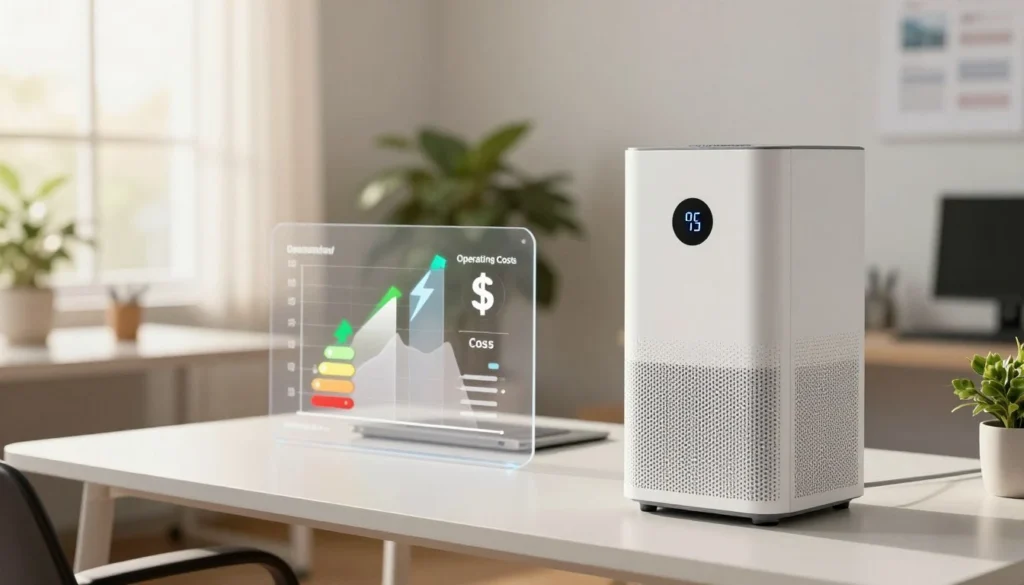
It’s important to know how much an air purifier costs to run. By doing some math, I can figure out what I’ll spend each month and year. This helps me understand the electricity cost of running an air purifier, based on its wattage and my local electricity rates.
Estimating Monthly Energy Usage
To figure out how much energy an air purifier uses each month, I follow a simple formula:
- First, find out the air purifier’s wattage. Most home models use between 40 and 200 watts.
- Then, multiply the wattage by how many hours it runs each day.
- Next, turn the total watt-hours into kilowatt-hours (kWh) by dividing by 1,000.
- Lastly, multiply the kWh by my local electricity rate to find the monthly cost.
Calculating Annual Costs
To find the yearly cost, I just multiply the monthly cost by 12. Here’s how:
- First, calculate the monthly cost as shown above.
- Then, multiply that by 12 to get the yearly cost.
By doing these calculations, I can understand how much my air purifier costs to run. This helps me plan my budget better and choose energy-efficient options.
| Wattage (W) | Daily Hours of Operation | Monthly Cost ($) | Annual Cost ($) |
|---|---|---|---|
| 50 | 24 | 36.00 | 432.00 |
| 100 | 12 | 18.00 | 216.00 |
| 150 | 6 | 10.80 | 129.60 |
Air Purifier Electricity Cost: What to Expect
The cost of running an air purifier can change a lot. It depends on where I live and how often I use it. Knowing these factors helps me save money and keep the air clean.
Regional Variations in Electricity Rates
Electricity prices vary across the United States. Where I live affects how much I pay for electricity. This, in turn, changes the cost of running an air purifier.
States like Hawaii and California have higher rates. But places like Louisiana and Washington have lower rates. Here’s a quick look:
| State | Average Electricity Rate (cents/kWh) |
|---|---|
| California | 24.98 |
| Texas | 11.80 |
| Florida | 12.93 |
| Louisiana | 10.24 |
| Hawaii | 36.22 |
Impact of Usage Patterns on Costs
How often I use the air purifier affects my costs. Running it all day increases my bill a lot. But using it only when pollution is high helps keep costs down.
To save money, I can:
- Use a timer for scheduled operation.
- Switch to energy-saving modes when applicable.
- Keep windows closed when the air purifier is in use to minimize workload.
Energy Efficient Air Purifiers: A Smart Choice
Choosing energy efficient air purifiers is a smart move. They help improve indoor air quality and cut down on energy use. Look for models with Energy Star certification to find the best ones.
Certification Standards for Energy Efficiency
Energy Star is a top certification for energy efficiency. Air purifiers with this label meet high standards. They have a strong Clean Air Delivery Rate (CADR) and use less energy than others.
Other certifications, like UL, also show these purifiers are safe and work well.
Benefits of Using Energy Star Rated Purifiers
Energy Star rated purifiers save money and help the planet. Here are the main benefits:
- Reduced Energy Costs: They use less electricity, saving you money over time.
- Enhanced Performance: These purifiers often have the latest technology for better air cleaning.
- Lower Environmental Impact: They use less energy, which means less carbon emissions.
- Longer Lifespan: Built with quality parts, they last longer and need less replacing.
How Much Power Do Air Purifiers Use During Operation?
It’s important to know how much power air purifiers use to save on energy costs. They often have different power settings. This affects how much electricity they use.
Understanding the Power Settings
Air purifiers have various power settings for different needs. You can adjust the fan speed and how much air is filtered. For instance:
- Low Setting: Uses the least energy, ideal for continuous operation during sleep hours.
- Medium Setting: Balanced power usage, suitable for regular daily air cleaning.
- High Setting: Consumes the most energy, effective for quick air purification in large areas.
The wattage of air purifiers varies. Most use between 20 to 100 watts. Knowing this helps estimate your electric bill better.
Impact of Continuous vs. Intermittent Use
Running an air purifier all the time means it uses power constantly. But using it only when needed can save a lot on electricity. How often you use it affects your energy costs and monthly bills.
| Operation Type | Hours of Use per Day | Estimated Monthly Energy Consumption (kWh) | Estimated Monthly Cost* |
|---|---|---|---|
| Continuous Use | 24 | 1440 | $216 |
| Intermittent Use | 8 | 240 | $36 |
*Assuming an average electricity cost of $0.15 per kWh. This table shows how much you can save by choosing intermittent use over continuous.
Conclusion
Understanding if air purifiers use a lot of electricity is key to choosing the right one for our homes. The power use of an air purifier varies based on its wattage, how long it runs, and the model. Many energy-saving air purifiers are out there, helping to cut down on electricity bills.
By looking at energy ratings and following the tips in this article, I can use my air purifier wisely without spending too much. I can check local electricity rates or change how I use it to save energy.
The goal is to keep our indoor air clean while keeping electricity costs low. With this information, I can pick the best air purifier for my home, knowing it won’t use too much energy.
FAQS
Do air purifiers use a lot of electricity?
Air purifiers use different amounts of electricity. Most use between 30 to 100 watts. This means they can slightly increase your electricity bill, more so if they run all the time.
What is the typical wattage of an air purifier?
Air purifiers for homes usually use 30 watts for small ones and over 100 watts for bigger ones. Knowing this helps you understand how much energy they use.
How can I estimate the monthly energy usage of my air purifier?
First, multiply the wattage of your air purifier by how many hours it runs each day. Then, divide by 1000 to get kilowatt-hours (kWh). Lastly, multiply by your local electricity rate to find the monthly cost.
What factors affect air purifier energy consumption?
Several things affect how much energy an air purifier uses. These include the type of air purifier, the filter’s efficiency (like HEPA and activated carbon), and the fan speed you choose.
Are there energy-efficient air purifiers available?
Yes, many air purifiers are designed to be energy-efficient. Look for those with the Energy Star certification. They help save on electricity while still cleaning the air well.
How does continuous use of an air purifier impact electricity costs?
Running an air purifier all the time will increase your electricity bill more than using it sometimes. The exact cost depends on the purifier’s wattage and your local electricity rates.
What is the electric bill impact of using an air purifier?
The effect on your electric bill depends on the air purifier’s wattage, how long you use it, and your local rates. Generally, it’s a small increase, but it can vary a lot based on how often you use it.
What should I consider when choosing an air purifier for energy efficiency?
Look for air purifiers with Energy Star certification for energy efficiency. Also, consider the purifier’s size and filter type. These factors greatly affect its energy use and how well it works.
How can regional electricity rates affect air purifier operating costs?
Electricity rates vary by region. So, the same air purifier can cost different amounts to run. It’s smart to consider your local rates when figuring out the costs.
