
Ever walked into your home and smelled something that wouldn’t leave? Many people ask, do air purifiers help with smell well? These devices catch airborne particles, but they can only get rid of smells if they have the right filters.
Getting a top-notch air purifier for fresh indoor air can change your home. They use activated carbon filters to catch smells and gases that regular filters can’t. This keeps your home smelling nice and clean.
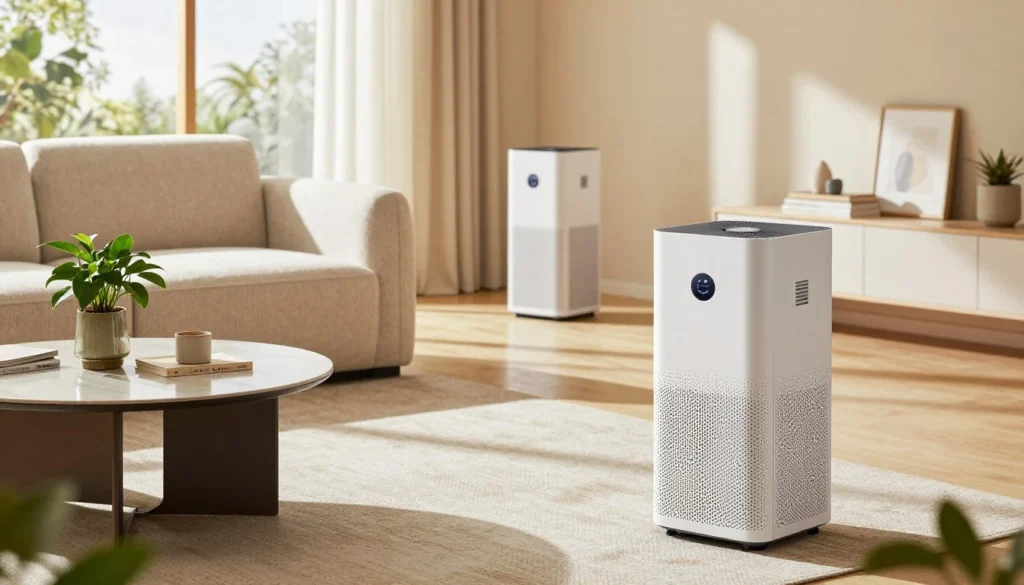
Knowing how these systems work is key to better air.
We’ll dive into the science of getting rid of smells.
We’ll also look at what makes a device good for your home.
Table of Contents
The Science Behind Odor Removal in Indoor Spaces
Odors in indoor spaces are not just a nuisance; they show air quality issues. To get rid of these odors, we need to understand why they stick around and how they affect our air.
Odors come from tiny molecules of substances that can travel through the air. These can be from cooking, pets, mold, and household products.
Understanding Volatile Organic Compounds and Odor Molecules
Volatile Organic Compounds (VOCs) are chemicals that evaporate easily at room temperature. Many VOCs have strong smells and are big contributors to indoor air pollution. Understanding VOCs is crucial because they are a primary source of indoor odors.
VOCs can come from cleaning products, paint, and even furniture. Once in the air, they can cause bad smells and harm our health.
| Source | Type of VOC | Odor Characteristic |
|---|---|---|
| Cleaning Products | Chlorine-based compounds | Pungent, irritating |
| Paint | Solvents (e.g., toluene, xylene) | Strong, chemical-like |
| Furniture | Formaldehyde | Pungent, suffocating |
Why Standard HEPA Filters Are Not Enough for Smells
High Efficiency Particulate Air (HEPA) filters are great at catching 99.97% of particles as small as 0.3 microns. But, standard HEPA filters are not designed to capture gases or VOCs, which are the main causes of odors.
VOCs and odor molecules are often gases. They can go through HEPA filters without being caught. This means HEPA filters can improve air quality by removing particles, but they can’t get rid of odors on their own.
To really remove odors, air purifiers need to use more than just HEPA filters. They need technologies like activated carbon filters, which can catch gases and VOCs.
Do Air Purifiers Actually Remove Odors? (The Science of Activated Carbon)
Many people wonder if air purifiers can get rid of bad smells. These devices aim to clean the air inside, and they’re good at removing odors. Knowing how they work can help you choose the right one for your needs.
For instance, if you are looking for a balance between particle capture and smart features, you might want to check out our detailed review of the Blueair Blue Pure 311i Max, which explores its HEPASilent technology in real-world settings
Best Air Purifier for Kitchen Smells: The Power of Activated Carbon
Activated carbon filters are your first line of defense against stubborn cooking odors. Unlike HEPA filters that only trap physical particles, high-grade carbon adsorbs gas molecules from frying, spices, and burnt food, neutralising them before they spread through your home
The Role of Ionizers and Photocatalytic Oxidation in Odor Control
Ionizers and photocatalytic oxidation (PCO) also help control odors. Ionizers release negative ions that attract and trap positive particles, including some smells. While not always perfect, they can work well with other filters.
PCO uses light to break down pollutants into harmless substances. This method not only gets rid of smells but also cleans the air.
Some top air purifiers use a mix of these technologies. For example, a device with activated carbon and PCO can handle many types of pollutants.
- Activated carbon is crucial for adsorbing VOCs and odors.
- Ionizers can help trap odor-causing particles.
- Photocatalytic oxidation breaks down pollutants into harmless components.
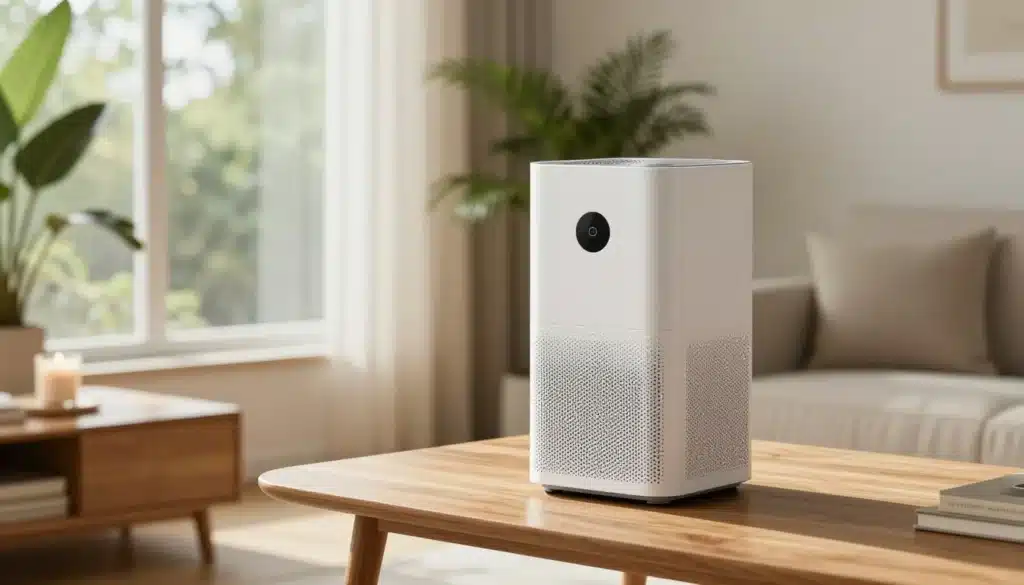
Understanding these technologies helps you pick the best air purifiers. This way, you can have a fresher, healthier home.
Essential Features for the Best Air Purifier for Removing Smells
Not all devices are created equal. If your goal is total odor elimination, you must look for two things: the weight of the activated carbon (more is better) and a high CADR rating to ensure the air in your room is cycled frequently enough to stay fresh.
The Importance of High-Grade Activated Carbon Weight
Activated carbon is great at grabbing gases and smells. But, not all activated carbon is the same. The weight and quality of the carbon matter a lot. More weight means more carbon to soak up odors.
When picking an air purifier, choose one with lots of high-grade activated carbon. This ensures it can catch and get rid of bad smells.
A True Pet Odor Eliminator: Why You Need Dual Filtration
To effectively eliminate pet smells, you need a “team” of filters. A HEPA filter acts as a Pet Odor Eliminator by catching dander and fur that carry smells, while the activated carbon layer soaks up the ammonia and organic gases associated with litter boxes and doggy smell.
Choosing the Right CADR for Your Room Size
The Clean Air Delivery Rate (CADR) shows how well an air purifier cleans the air. Picking the right CADR for your room size is crucial for getting rid of odors. A higher CADR means the air purifier can handle bigger spaces or tougher cleaning jobs. To ensure the device performs as claimed, always look for AHAM Verifide standards which standardize these measurements across different brands. Make sure the CADR fits your room size for the best results.
Best Practices for Maintaining Fresh Indoor Air
To keep your indoor air fresh and clean, it’s key to follow best practices. These practices help your air purifier work its best. It’s not just about getting rid of smells; it’s about making your home healthier.
By using a few simple strategies, you can greatly improve your home’s air quality. This makes your living space better for everyone.
Strategic Placement of Air Purifiers for Maximum Efficiency
Where you put your air purifier matters a lot. Put it in a central spot to make air flow better. Don’t place it near walls or in corners, as this can block air.
Also, keep it away from pollution sources like kitchens and bathrooms. This helps your air purifier do its job better.
In big homes, use more than one air purifier. This is key for homes with many levels. Air purifiers work best when on each floor.
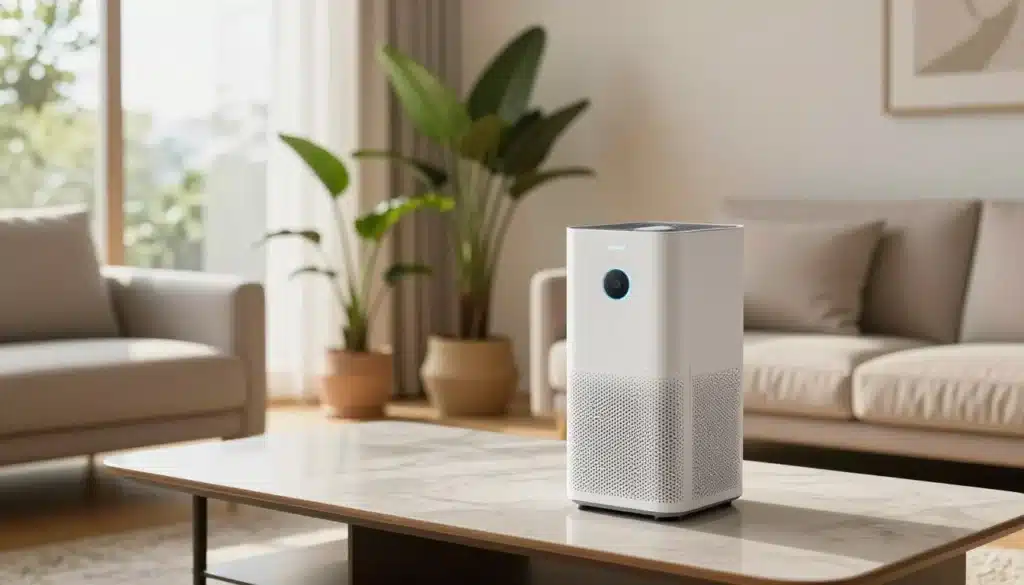
The Critical Schedule for Filter Replacements
Changing filters regularly is vital for your air purifier’s success. Check your filter every month and replace it when needed, usually every 6 to 12 months. A dirty filter can make your air purifier less effective. To get the most out of your device, follow a comprehensive filter maintenance guide to ensure your system continues to capture odors efficiently. Some air purifiers have lights that tell you when to change the filter. Use these lights to keep up with maintenance.
Pro Tip: The Sniff Test
Even if your air purifier’s indicator light hasn’t turned on yet, your nose is the best sensor. If you start noticing lingering cooking smells or a “musty” odor coming from the device, it means the activated carbon is saturated and needs immediate replacement, regardless of the schedule
Managing Humidity Levels to Prevent Odor Buildup
High humidity can lead to more odors in your home. Use a dehumidifier in humid areas like basements or bathrooms. This keeps moisture levels down.
It also stops mold and mildew from growing. This is good for your health and helps with breathing problems.
Make sure your home has good air flow. Open windows when you can and use fans in kitchens and bathrooms. This helps remove moisture and prevents smells.
We recommend: Top Air Purifiers for Odor Removal
Based on our testing and the science of carbon filtration, here are the best units for specific needs:
Best for Smart Features & Bedrooms: Blueair Blue Pure 311i Max – Features HEPASilent™ technology and RealTrack filter monitoring, perfect for medium spaces up to 387 sq. ft.
Best for Large Living Rooms & Auto Mode: Levoit Core 400S – A powerful smart purifier with a high CADR that quickly cycles air to remove persistent household odors. Check our full Levoit Core 400S review.
Best for Pet Odors & Multi-Stage Filtration: Shark Air Purifier HP152 – Known for its Anti-Allergen HEPA and specialized carbon filters that target pet smells effectively. See our Shark HP152 in-depth review.
Best for Personal Spaces & Desktop Use:Levoit LV-H128 – A compact dual-filter unit perfect for removing localized smells in small offices. Read our Levoit LV-H128 review.
Best Value for Small Bedrooms: Yariki P280 – An affordable option that provides decent carbon filtration for its size. Check out the Yariki P280 performance review.
FAQS
Do air purifiers help with smell from cooking or pets?
Yes! Air purifiers can definitely help with smells, as long as they have an activated carbon filter. HEPA filters are good for dust and pet dander. But, units like the Coway Airmega or Blueair Blue Pure series use carbon to catch gas molecules. This makes them great for getting rid of smells.
What are the best air purifiers for removing smells in a large living room?
For big rooms, look for air purifiers with a high CADR and lots of carbon. The Austin Air HealthMate is a top pick. It has 15 pounds of carbon and zeolite to tackle odors in open spaces.
Why can’t a standard HEPA filter handle tough odors on its own?
HEPA filters catch solid particles like pollen. But, smells are made of gases and VOCs, which are too small for HEPA filters. To get rid of smells, you need a system like Levoit models. They combine HEPA for particles and carbon for smells.
Are there specific air purifiers for odor control that use more than just carbon?
Yes. Some air purifiers use advanced tech like PECO or PCO. For example, Molekule air purifiers break down odor molecules at a molecular level. This makes them excellent for removing smells.
How often should I replace my filters to keep my home smelling fresh?
Replace your activated carbon pre-filter every 3 to 6 months for best results. Honeywell air purifiers often have lights to remind you. If smells come back, it’s time to change the carbon.
Does the placement of the device affect how air purifiers help with smell?
Yes, where you place the air purifier matters. Put it in a spot with good airflow, away from walls or furniture. For kitchen smells, a Dyson Purifier Cool near the source can capture VOCs.
Can air purifiers help with the smell of smoke?
Yes, but you need a strong unit. Smoke has particles and gases, so you need a lot of carbon. The IQAir HealthPro Plus is great for smoke smells. It has a professional-grade filter for gases and odors.
