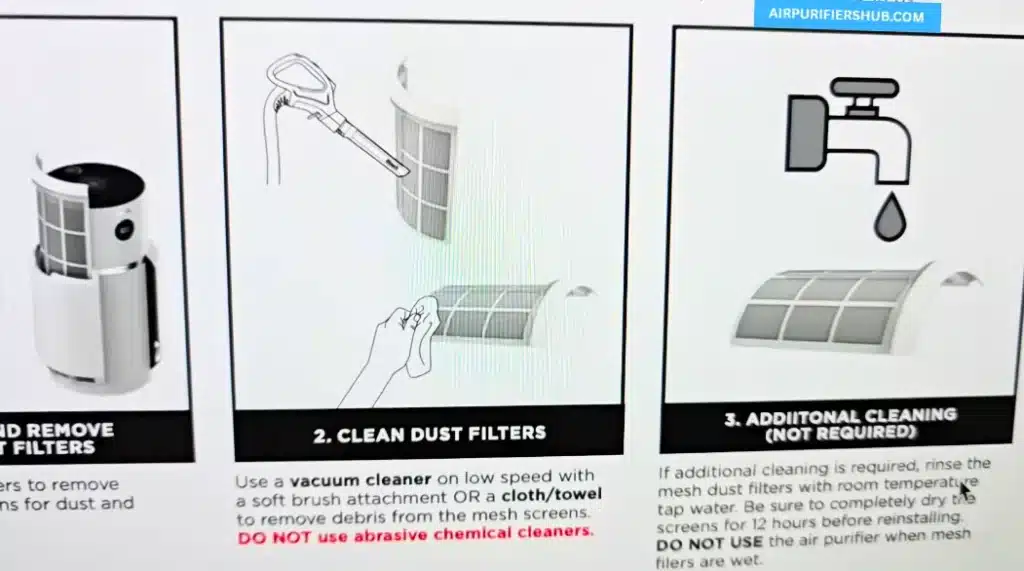
Step-by-Step: How to Clean Your HEPA FilterEver think a dirty filter might spread more dust than it catches? I used to overlook my air purifier’s state. But learning how to clean Air Purifier HEPA filters at home changed my indoor air.
Now, I’m sure my air is cleaner. A clean filter means fewer sneezes and less odd smells. In this guide, I’ll share my easy steps and tools for cleaning HEPA filters.
Poor indoor air quality can lead to various respiratory issues and long-term health effects. According to the Environmental Protection Agency (EPA), using an air cleaner is a vital step in reducing indoor pollutants.
Table of Contents
Key Takeaways
- A dirty filter can weaken air purifier performance.
- Simple home methods can keep your purifier running better.
- Regular care helps lower airborne toxins.
- A clean HEPA filter may reduce allergy triggers.
- Following a set schedule boosts indoor air quality.
Understanding the Importance of a Clean Air Purifier Filter
I think a clean filter is key to better indoor air. When dust and dirt pile up, the purifier can’t work well. So, I always remember to clean the filter at home to keep air clean.
Why a Dirty Filter Reduces Air Quality
A dirty filter blocks air from flowing. This means pollutants stay in the air longer. It’s frustrating when I see dust on surfaces faster than I’d like.
How Regular Cleaning Improves Efficiency
Regular cleaning keeps my purifier running smoothly. I choose a cleaning schedule based on how fast the filter gets dirty. This saves energy and reminds me to clean the filter. It also makes my air purifier last longer and keeps my breath fresh.
Gathering the Right Tools and Materials
I start by getting all the items I need for a clean job. A few tools are key for safely cleaning HEPA filters. I keep them ready to avoid any hiccups.
Essential Cleaning Supplies
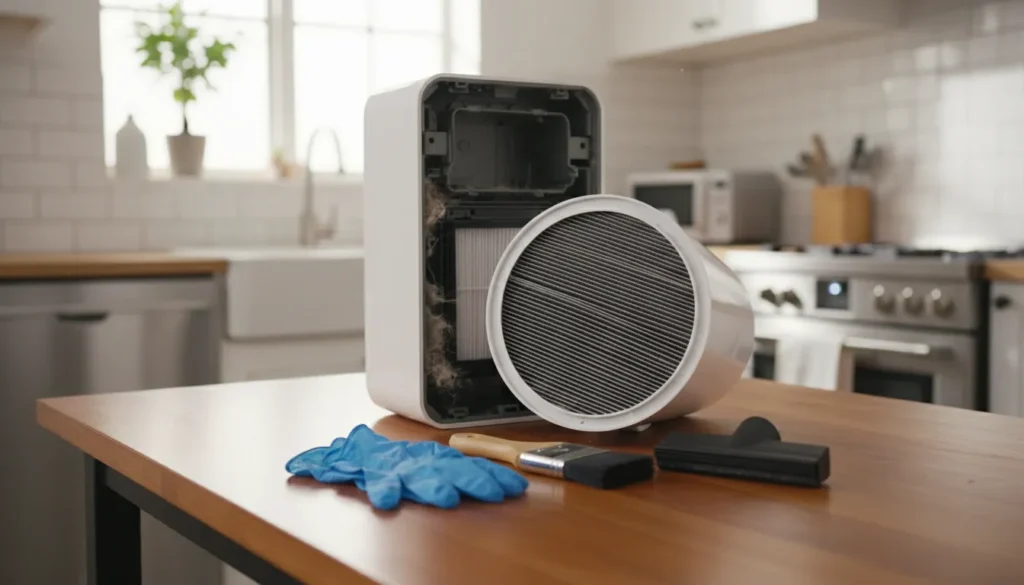
I lay out a soft-bristle brush, vacuum attachment, and microfiber cloth. My manual tells me if mild detergent is okay. I check to make sure I don’t harm the filters.
| Item | Purpose |
|---|---|
| Soft-Bristle Brush | Loosens dust without harming filter fibers |
| Vacuum Attachment | Removes trapped debris from tight corners |
| Microfiber Cloth | Wipes away residue for a clean finish |
| Mild Detergent | Cleans washable filters if recommended by the maker |
Safety Measures to Take
I wear gloves to protect myself from dust allergies. A mask keeps me from breathing in particles. This way, I keep my lungs safe and handle everything with care.
How to Clean Air Purifier HEPA Filters at Home
I keep my devices in top shape by knowing the most effective ways to refresh my filters. I follow a few simple steps to tackle debris build-up and lingering odors. This method ensures I clean my HEPA filters without causing damage.
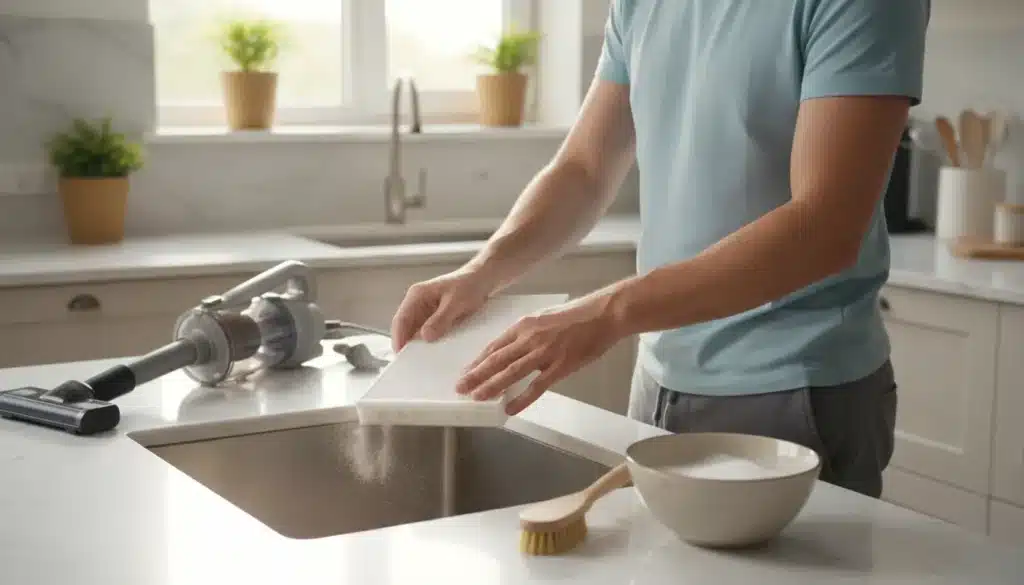
I start with a dry cleaning process. I gently tap the filter to remove loose dirt.
Then I use a vacuum attachment on the reverse side for a deep clean.
A narrow nozzle helps me get rid of tiny particles from the edges.
Dry Cleaning Method
I use a gentle motion to avoid straining the fibers. Tapping or vacuuming gives quick results without causing tears or punctures.
Rinsing and Drying Techniques
If the filter is washable, I rinse it under lukewarm water. I follow Dyson’s guidelines or the manufacturer’s instructions to see if mild soap is okay. I let it air dry for at least a full day to ensure no moisture remains.
Reassembling Your Air Purifier
Components fit best when aligned exactly as they were. I put the cleaned filter back in its housing and secure any latches. I make sure each piece is steady. This method keeps the filter working well.
Maintaining Your Air Purifier Filter Between Cleanings
I check my filter often to keep dust and pet hair away. Quick checks help me catch problems early. This makes cleaning easier and saves time.
For smudges, I use a soft cloth for a gentle wipe. I vacuum the edges to remove particles, being careful not to damage the filter. This helps prevent bad smells from trapped debris.
I watch for things in my home that might affect air quality. Cooking with smoke or pets shedding means I need to check my purifier more often. Being aware of these factors helps me clean faster. My filter stays clean, and I enjoy fresh air without surprises.
Mistakes to Avoid When Cleaning Your Air Purifier Filter
I once found out that some mistakes can harm your air purifier and air quality. I want to share what to avoid so you can clean your HEPA filter air purifier safely. These filters are very delicate, and small mistakes can hurt their performance.
Using Harsh Chemicals
Strong cleaners can damage the fibers in air purifiers from Dyson or Honeywell. It’s better to use mild soap and follow the manufacturer’s advice. Avoiding harsh chemicals helps keep your filter in good shape.
Skipping Periodic Checks
Regular checks every month can prevent dust buildup and catch problems early. Setting a reminder on your phone can make this a simple habit.>
| Mistake | Consequence |
|---|---|
| Harsh Chemicals | Damaged Filter Fibers |
| Missed Inspections | Reduced Airflow |
Our Conclusion
I view my purifier as a key player in keeping my home air clean. I aim to breathe easier without breaking the bank on new filters. Regular maintenance is crucial for this.
Keeping up is easy with simple steps that fit into my daily life. A quick dusting and watching for signs of trouble prevent big issues. By following the right steps to clean my HEPA filters, I make my purifier last longer and keep my home safe.
Being meticulous is essential. I check my filter and rinse it to ensure it works well. Doing this myself gives me peace of mind. I hope my tips inspire you to improve your home’s air quality too.
HEPA Filter Maintenance: Everything You Need to Know
Do HEPA filters need to be cleaned?
Generally, no. Standard HEPA filters are designed to be replaced, not cleaned. While you can vacuum the pre-filter (the outermost layer) to remove large dust and hair, the internal HEPA fibers are so delicate that cleaning them usually damages their ability to trap microscopic particles.
Can a HEPA filter be cleaned and reused?
Only if it is specifically labeled as “Washable” or “Permanent.” Most high-quality purifiers, like the Levoit Core series or Blueair, use “Disposable HEPA” filters. Attempting to wash a non-washable HEPA filter will ruin the fiber structure and may lead to mold growth inside your device.
What is HEPA cleaning?
HEPA cleaning refers to the process of removing contaminants using a vacuum equipped with a HEPA filter, or the maintenance of a “permanent” HEPA filter. For permanent filters, this involves gently vacuuming the surface or rinsing it under cold water (if specified by the manufacturer) to remove built-up debris without damaging the media.
What is the best way to clean a filter?
The best way to clean a reusable filter is to use a vacuum cleaner with a brush attachment on a low-suction setting. Gently run the brush over the surface of the pre-filter. If the filter is certified as washable, rinse it under low-pressure water and allow it to air dry completely for at least 24 hours before reinstalling it to prevent motor damage or odors.
Why should I learn how to clean HEPA filters regularly?
Keeping my HEPA filter clean makes my home air much better. It ensures my air purifier works well. This gives me cleaner, healthier air to breathe.
Do Air Purifier Filter Cleaning Steps Vary by Brand?
Most air purifier filters can be cleaned the same way. But, I always check my model’s manual first. This is crucial if I plan to rinse the filter, as not all are washable.
How to Clean Washable vs. Non-Washable HEPA Filters
Yes, there’s a big difference. Washable HEPA filters can be rinsed under running water and then air-dried. Non-washable filters need a dry cleaning method, like vacuuming, to avoid damage.
How often do I really need to clean my air purifier filter at home?
It depends on your home’s air quality and how often you use the purifier. I check my HEPA filter every month for dirt. If it’s dirty, I clean it right away to keep it working well.
Do HEPA Air Purifier Filters Require Special Cleaning Products?
I use a soft brush or vacuum attachment for dry cleaning. For washable filters, I might use mild soap if allowed by the manufacturer. But, I avoid strong chemicals to protect the filter fibers.
Why is thorough drying essential after I rinse my HEPA filter?
Any moisture left in the filter can cause mold or mildew. I let the filter air-dry for at least 24 hours. This ensures it’s completely dry before putting it back in my air purifier.
Tips for Maintaining an Air Purifier Filter Between Deep Cleanings
Between deep cleanings, I vacuum the pre-filter (if there is one), wipe the exterior, and check the HEPA filter for dust. These steps help keep my air fresh and extend the time between deep cleanings.