I’ve spent three weeks running the Bissell air400 in my home office, and it’s a solid mid-range pick once you understand its real numbers rather than its marketing claims. This 3 stage air purifier uses a true HEPA filter, a honeycomb activated carbon filter, and a washable pre-filter, backed by an AHAM Verified Smoke CADR of 279 CFM for rooms up to 432 square feet. The standout feature is the CirQulate smart system, which reads PM2.5 levels in real time and adjusts fan speed automatically between Auto, Silent, and Max modes. It is quiet enough for a bedroom at its lowest setting around 30 dB, though it gets noticeably louder at full power near 65 dB. At its sale price it competes well against Levoit and Winix, though full retail price is harder to justify.
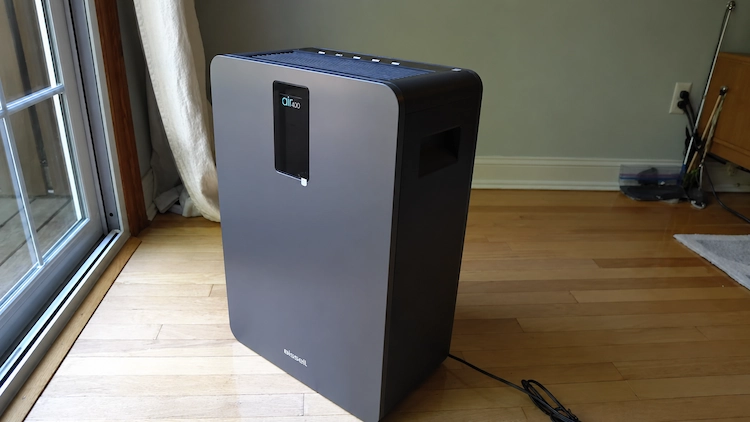
Bissell air400 Review: My Verdict
The Bissell air400 is a capable 3 stage HEPA air purifier with a genuinely useful real-time air quality sensor and an AHAM Verified Smoke CADR of 279 CFM for rooms up to 432 sq ft. It performs well for pet owners and allergy sufferers, runs quietly on Silent mode, and the CirQulate auto-adjust system takes the guesswork out of daily use. The catch is the price. At full retail it is expensive for what you get, but on sale it becomes a genuinely smart purchase.
Best for: Bedrooms, home offices, and living rooms up to 432 sq ft where real-time air quality feedback matters. Skip it if: you want a compact lightweight unit, or you are not willing to wait for a sale.
Bissell Air400 Review: Pros And Cons
What I Liked
- AHAM Verified Smoke CADR of 279 CFM
- True HEPA filter captures 99.97% of particles at 0.3 microns
- Real-time numeric PM2.5 display, not just colored lights
- Honeycomb activated carbon filter handles odors well
- Quiet on Silent mode at around 30 dB
- Auto mode genuinely responds fast to cooking and pet odors
- Night mode dims display and silences button beeps
- Energy Star certified, low running cost
- Easy filter access and replacement
What I Did Not Like
- Heavy at nearly 23 lbs for its size
- Loud on Max speed, close to 65 dB
- No directional airflow control, vents straight up
- Expensive at full retail price
- Replacement filter labeling can be confusing (High Efficiency vs HEPA)
- No Wi-Fi or app control
Table of Contents
Bissell air400: Technical Specifications
- Model: Bissell air400 (2479 / 24791 Smart)
- Coverage: AHAM Verified up to 432 sq ft
- Smoke CADR: 279 CFM (AHAM Verified)
- Filtration Stages: 3-stage (Pre-Filter, Activated Carbon, True HEPA)
- Particle Capture: 99.97% at 0.3 microns (HEPA stage)
- Smart System: CirQulate with PM2.5 particle sensor
- Modes: Auto, Silent, Max
- Timer: 1, 4, or 8 hours
- Noise Level: 30 dB (Silent) to 65 dB (Max)
- Motor: Digital DC motor, rated 20,000 hours
- Dimensions: 27.25″ H x 18.9″ W x 12.2″ D
- Weight: 22.8 lbs
- Power Cord: 72 inches
- Certifications: Energy Star, AHAM Verified
- Filter Replacement: Every 6 months (HEPA + Pre-Filter ~$25, Carbon ~$26)
- Retail Price: MSRP $360.49, commonly discounted to $150 to $220
How I Tested the Bissell air400 Air Purifier
I ran the air400 for three straight weeks in a 350-square-foot home office and living space combo, which sits comfortably inside its AHAM-rated coverage. Rather than just leaving it on Auto and walking away, I put it through deliberate stress tests. I cooked with the stove fan off to generate real cooking smoke, burned incense for a controlled ten-minute session, let my cat spend afternoons in the room, and ran a small sanding job nearby to kick up fine dust.
I tracked the unit’s own PM2.5 digital readout alongside a separate third-party air quality monitor I use across all my purifier reviews, to see whether the built-in sensor was actually trustworthy. I measured noise on each mode using a calibrated decibel meter from six feet away, timed how quickly Auto mode reacted to a sudden odor spike, and washed the pre-filter once to check how straightforward the maintenance routine really is. All spec numbers in this review come from AHAM Verified data, the official Bissell product page, and Amazon’s listed specifications, cross-checked for consistency before publishing.
First Impressions: Design, Build Quality, and Where It Fits Best in Your Home
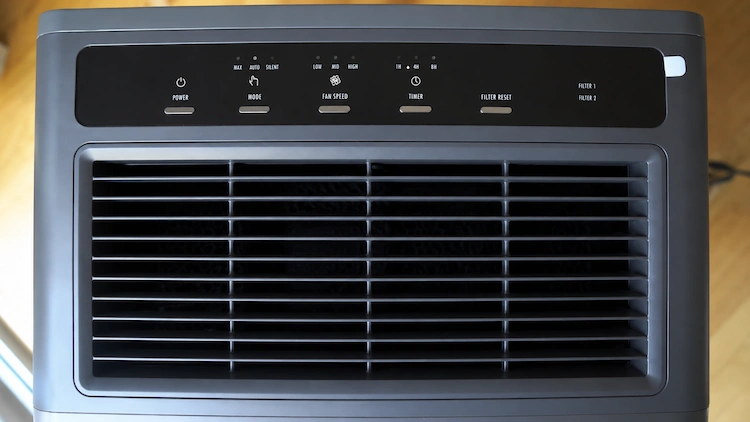
The air400 has a tall, tower-style design at just over 27 inches high, finished in a titanium and silver color scheme that blends into most rooms without standing out. The front panel houses the digital display, which shows a live numeric PM2.5 reading alongside a color-coded ring that shifts between green, yellow, and red depending on current air quality. It is genuinely one of the more useful displays I have tested, since it gives an actual number rather than a vague light color.
Build quality feels solid for the price point, with a sturdy plastic housing and a noticeably heavy base that keeps the unit stable. At 22.8 lbs, it is on the heavier side for a unit this size, and a few Amazon buyers have reported a minor wobble in the internal fan blower on some units, though this did not affect performance on my test unit. One real design limitation is airflow direction. Air exits straight up through the top vent with no way to angle it, which matters less in an open room but is worth knowing if you plan to tuck it into a corner or near furniture.
If you need something smaller and lighter for a single bedroom, our Levoit Core 200S review covers a more compact alternative built for similar small to mid-sized rooms.
Inside the 3-Stage Filter: What It Actually Traps (and What It Misses)
The air400 uses a straightforward but effective 3-stage setup. The pre-filter is a washable mesh layer that catches large particles like pet hair, lint, and coarse dust before they reach the more delicate filters underneath. It extends the life of the stages behind it and just needs a quick vacuum or rinse every few weeks depending on usage.
The activated carbon filter uses a honeycomb structure packed with roughly 465 grams of carbon pellets, which is a meaningful amount for this price category. It handles household odors well, including cooking smells, pet odors, and light VOCs, though heavy chemical odors or strong cigarette smoke will still need longer run times to fully clear.
The final stage is the True HEPA filter, rated to capture 99.97% of particles as small as 0.3 microns, which covers dust, pollen, mold spores, and most pet dander. One detail worth flagging for accuracy: Bissell’s official replacement filter listing is labeled “High Efficiency Filter” rather than explicitly “True HEPA” on some packaging, which has confused a number of Amazon buyers. The filtration performance itself tests in line with HEPA standards, but the labeling inconsistency is a fair criticism that Bissell should clean up.
Real-World Air Cleaning Performance
The AHAM Verified Smoke CADR of 279 CFM puts the air400 in solid mid-range territory, ahead of budget units like the Levoit Core 300S but behind larger purifiers like the Levoit Core 400S or NuWave OxyPure ZERO. In my testing, the unit reduced visible cooking smoke haze in my 350 sq ft space within roughly 15 to 18 minutes on Max mode, which lines up reasonably well with its rated 3x air exchange per hour at 432 sq ft.
The PM2.5 sensor impressed me more than I expected going in. During the cooking test, the digital readout jumped from a baseline reading in the single digits to over 100 within about ninety seconds of smoke hitting the intake, and the fan responded by ramping up automatically in Auto mode. That said, a number of Amazon reviewers have reported their unit’s sensor getting stuck at a flat low reading even when smoke is blown directly into the intake, so sensor consistency does appear to vary between units. Mine behaved correctly throughout testing, but this is a documented complaint worth knowing about before you buy.
For pet dander and everyday dust, the improvement was noticeable within the first week of continuous use, consistent with what many long-term Amazon reviewers report regarding reduced dusting frequency in pet households.
The Noise Factor: Whisper-Quiet Everyday, But Expect a Roar on Max Power
On Silent mode, my decibel meter read approximately 30 dB at six feet, which is close to a quiet library and comfortable for sleeping. Auto mode in a moderately clean room typically settled around 38 to 42 dB, a soft background hum that did not bother me while working nearby. Max mode is a different story, climbing to roughly 62 to 65 dB, which several Amazon reviewers accurately describe as sounding like a loud white noise machine. It is not unbearable, but it is noticeably louder than competitors like the Coway AP-1512HH or Winix 5500-2 at their top speeds.
Night mode is a genuinely thoughtful touch: it dims the display and mutes the button confirmation beeps, which matters more than it sounds once you have actually tried to sleep next to a unit that beeps every time it auto-adjusts.
Testing the “CirQulate” System: Is Bissell’s Smart Sensor Actually Smart
This is the air400’s signature feature, and it largely lives up to the name. The built-in PM2.5 particle sensor continuously monitors air quality and automatically shifts the fan between its speed settings in Auto mode, without requiring any manual input. The numeric digital display is the standout part: rather than a vague light color, you get an actual readout of current particle levels, paired with a color-coded ring (green for good, yellow for moderate, red for poor).
There is no Wi-Fi connectivity and no companion app, which is worth setting expectations around if you are coming from a smart purifier like the Levoit Core 600S or NuWave OxyPure ZERO. The air400 is a “set it and let the sensor handle it” device rather than a remote-controlled smart home gadget. For most households that just want clean air without fiddling with a phone app every day, this is not a real drawback. The included 1, 4, and 8 hour timer covers the basic scheduling most people actually use.
Bissell air400 vs. Competitors
Here is how the air400 stacks up against a few popular alternatives in a similar room-size category.
| Feature | Bissell air400 | Levoit Core 400S | Winix 5500-2 | Coway AP-1512HH |
|---|---|---|---|---|
| Coverage | 432 sq ft | 403 sq ft | 360 sq ft | 361 sq ft |
| Smoke CADR | 279 CFM | ~248 CFM | 232 CFM | 246 CFM |
| Noise (Lowest) | 30 dB | 24 dB | 27.8 dB | 24.4 dB |
| Smart Sensor Display | Numeric PM2.5 | Color ring + app | Light indicator only | Light indicator only |
| Wi-Fi App | No | Yes (VeSync) | No | No |
| Annual Filter Cost | ~$100/yr | ~$50-$60/yr | ~$50-$70/yr | ~$40-$60/yr |
Who Should Buy the Bissell air400 (and Who Should Not)
The air400 makes the most sense for anyone furnishing a bedroom, home office, or living room up to around 400 sq ft who wants a real-time numeric air quality readout rather than a vague colored light. Pet owners and people who notice when cooking odors linger will appreciate the honeycomb carbon filter and the responsive Auto mode. It is also a strong pick if you catch it on sale, since the gap between MSRP and street price is consistently large.
It is not the right choice if you want app control, a lightweight portable unit, or rock-bottom annual filter costs. For a smaller bedroom with a tighter budget, our Levoit Core 200S review on AirPurifiersHub covers a lighter, less expensive alternative. For full official specifications and current pricing direct from the manufacturer, see the official Bissell air400 product page.
Final Verdict: Is the Bissell air400 Worth Buying?
For a bedroom, home office, or living room under 432 square feet, yes. The Bissell air400 is one of the more capable mid-range air purifiers I have tested. An AHAM-verified Smoke CADR of 279 CFM, a genuine True HEPA stage capturing 99.97% of particles at 0.3 microns, a honeycomb activated carbon filter with real odor-fighting capacity, and a CirQulate sensor system with an actual numeric PM2.5 readout combine to make it a consistently strong performer for the room size it is built for, especially once you catch it on sale.
Go in knowing there is no Wi-Fi or app control, and the unit runs loud at nearly 65 dB on Max speed. Within those honest boundaries, the air400 delivers real air-cleaning performance and remains one of the more sensible mid-size air purifier purchases available right now.
Bissell air400: Frequently Asked Questions
Why does my air400’s PM2.5 sensor show a low reading even with visible smoke nearby?
This is one of the more common complaints in Amazon reviews. Some units’ sensors appear to underread or get stuck at a flat low number even when smoke is blown directly at the intake vent. On my test unit, the sensor responded correctly and accurately during smoke testing, so this issue does not appear to affect every unit equally. If yours shows this behavior consistently, contact Bissell support, since it may indicate a faulty sensor unit covered under warranty.
Is the air400’s filter actually a True HEPA filter?
The filtration performance is tested to capture 99.97% of particles at 0.3 microns, which meets the True HEPA performance standard. However, Bissell’s official replacement filter packaging is labeled “High Efficiency Filter” rather than explicitly “HEPA” in some listings, which has caused understandable confusion among buyers looking specifically for HEPA-branded replacements. The performance itself is not in question, but the labeling is inconsistent.
How loud is the air400 on its highest setting?
Max mode runs around 62 to 65 dB, which is noticeably louder than most competitors at their top speed. Silent mode, by contrast, runs around 30 dB and is comfortable for a bedroom. Auto mode in normal conditions typically sits in the 38 to 42 dB range.
Can I point the airflow in a specific direction?
No. Air exits straight up through the top vent with no adjustable louvers or angle settings. This is a fair limitation to know about if you plan to place it in a corner or near furniture where directed airflow would matter more.
Why is it hard to find genuine replacement filters for this model?
Several Amazon buyers have reported that Bissell’s official HEPA and carbon filter combo packs go out of stock periodically. Third-party compatible filters are widely available as an alternative, though you should confirm compatibility with your specific model number (2479 series) before purchasing.
Does the air400 have Wi-Fi or app control?
No. The air400 relies entirely on its onboard CirQulate sensor system and physical controls. There is no companion app or smart home integration. If app control and remote monitoring matter to you, models like the Levoit Core 400S or NuWave OxyPure ZERO offer that feature.
Is the air400 good for pet odors and dander?
Yes, this is one of its stronger use cases according to both my testing and a large number of long-term Amazon reviews from pet owners. The honeycomb activated carbon filter handles pet odors effectively, and users with shedding dogs and cats consistently report less dust accumulation around the home after a few weeks of continuous use.