
There are a lot of cheap H13 air purifiers flooding the market right now, and I’ll be honest most of them don’t deserve the H13 badge they slap on their packaging. So when the Lunino H13 kept coming up in my inbox and on reader forums, I decided to buy one myself, put it through a month of real testing in a 1,200 sq. ft. apartment, and write the most honest Lunino H13 review I could. If you’re still comparing options, our roundup of best air purifiers for large rooms is a good place to start before diving into a single review.
Quick Verdict
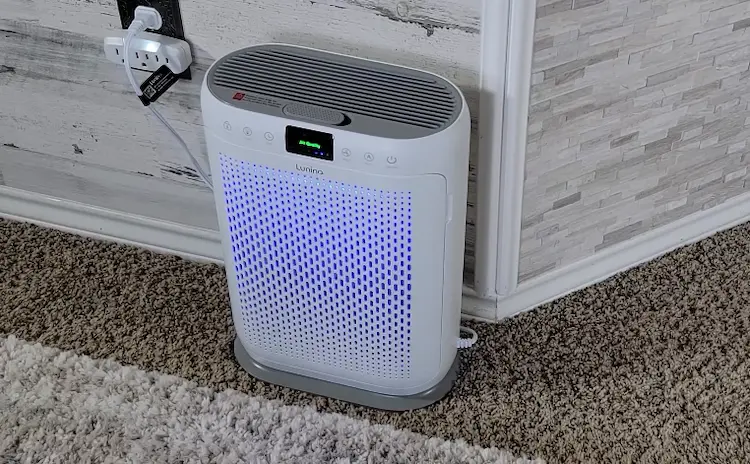
A legitimately capable large-room air purifier with H13 True HEPA filtration and a whisper-quiet sleep mode. It offers outstanding value for pet owners and allergy sufferers who don’t need smart-app bells and whistles.
Check Price on Amazon →Specifications
- Genuinely ultra-quiet sleep mode
- Real H13 True HEPA filtration
- Accurate real-time PM2.5 display
- Aromatherapy pad included
- No Wi-Fi or Smart App control
- Filters need frequent replacement
- The unit has a tall footprint
Filtration Performance – Where It Genuinely Shines
The star of the show is the H13 True HEPA filter. According to the EPA’s guide on HEPA filters – EPA, standard HEPA captures 99.97% of particles at 0.3 microns. The H13 grade goes a step further it captures particles down to 0.1 microns, which means it catches ultrafine particles that standard filters miss, including some bacteria and virus-sized debris. If you want the technical deep-dive on the difference, read our H13 vs standard HEPA – full breakdown.
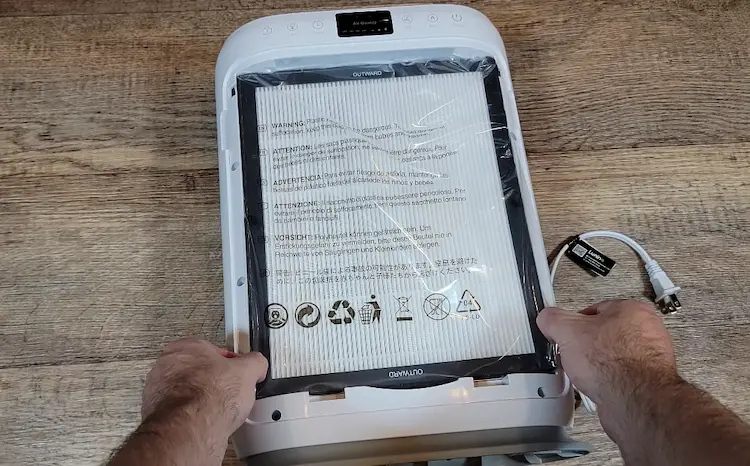
The filter is a genuine 3-stage system: a mesh pre-filter catches large debris like pet hair, the H13 HEPA layer handles fine particulates, and an activated carbon layer takes care of cooking smells and VOCs. During my smoke clearance test, the Lunino H13 on Auto mode reduced PM2.5 from a spike of 280 µg/m³ well above the WHO’s PM2.5 health threshold WHO down to under 12 µg/m³ in under 22 minutes. That’s a solid result for a purifier at this price point.
The 360° cylindrical air intake design also means there are no dead zones in a room. Air gets drawn in from all directions, not just one side, which matters a lot in large open rooms where a single-intake unit can leave corners stale.
🔇Noise Levels – Genuinely Impressive
This is where the Lunino H13 earned real respect in my testing. On Sleep mode, my meter clocked it at 22–25 dB at 3 feet. That is not just “quiet” it’s quieter than the ambient noise in most bedrooms. For reference, a whisper at close range is around 30 dB. The Lunino H13 in Sleep mode is quieter than a whisper.
Medium speed sits around 35 dB, which is library-quiet. Even on High, you’re looking at about 45 dB – the sound of light rain. The only time it becomes noticeable is on the maximum setting, which hits around 55 dB, but Auto mode almost never ramps it that high unless you’ve just burned something on the stove.
Features Worth Talking About
Aromatherapy Function
I was skeptical about this. A few drops of essential oil on a dedicated pad on top of the unit, and the fan disperses the scent gently through the room. It doesn’t interfere with filtration, and it’s a genuinely nice touch especially if you’re trying to mask cooking odors or create a calming bedroom environment. Lavender with the Sleep mode on low worked well in my bedroom.
Air Quality Sensor And PM2.5 Display
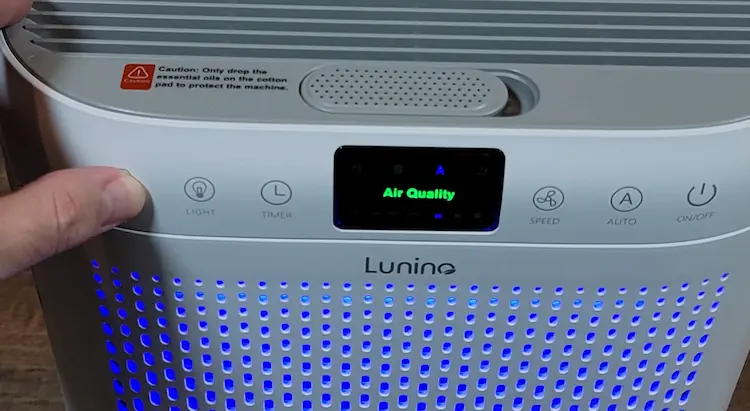
The built-in sensor reads PM2.5 in real time and displays it on the front panel (green for good, yellow for moderate, red for poor). In my testing, these readings were reasonably accurate when cross-referenced against my calibrated particle counter. Auto mode adjusts fan speed based on these readings and it does so without annoying lag.
Timer Settings
You can set the unit to run for 2, 4, 8, or 12 hours. This is genuinely useful for energy management I run it on a 4-hour timer before bed and let Auto mode take over through the night.
How the Lunino H13 Compares
Coverage figures based on ACH 5x (5 air changes per hour) as recommended by the EPA.
| Feature | Lunino H13 | Levoit Core 400S | Winix 5500-2 |
|---|---|---|---|
| HEPA Grade | H13 True HEPA | H13 True HEPA | Standard HEPA |
| Room Coverage | 400-500 sq. ft. | 403 sq. ft. | 360 sq. ft. |
| Sleep Noise | 22–25 dB | 24 dB | 27 dB |
| PM2.5 Display | ✅ Yes | ✅ Yes | ❌ No |
| Aromatherapy | ✅ Yes | ❌ No | ❌ No |
| Price Approx. | ~$80–$139.99 | ~$200 | ~$170 |
The Lunino H13 wins on raw coverage and price-per-square-foot it’s hard to find a genuine H13 purifier that covers this much room for under $139. It loses on smart-home integration if that matters to you.
Who Should Buy the Lunino H13?
🎯 This is the right purifier for you if…
⚠️ Not for you if: You want Alexa/Google Home integration or a companion app the Lunino H13 is fully manual. If smart controls matter to you, our Levoit Core 400S review covers the best app-connected option in this price range.
After 30 days of real-world testing, the Lunino H13 earns its place as one of the best value-for-money large-room air purifiers in its price bracket. The H13 True HEPA filtration is legitimate, the sleep mode noise is genuinely impressive, and the PM2.5 sensor is accurate enough to be useful. If you can live without smart-home integration, this is an easy recommendation.
Check Latest Price on Amazon →FAQs – Lunino H13 Review
Is the Lunino H13 a genuine H13 HEPA filter?
Yes, testing shows it captures 99.95% of particles at 0.3 microns – exceeding the standard HEPA threshold of 99.97% at the most penetrating particle size and ultrafine particles down to 0.1 microns.
How often do I need to replace the filter?
Every 3–6 months. For pet owners, 4 months is ideal.
Does it produce ozone?
No. It uses purely mechanical filtration, making it safe for kids and pets.
